— Attributed to Einstein; no verified source in his papers – classed as doubtful
About this quote
हिन्दी में
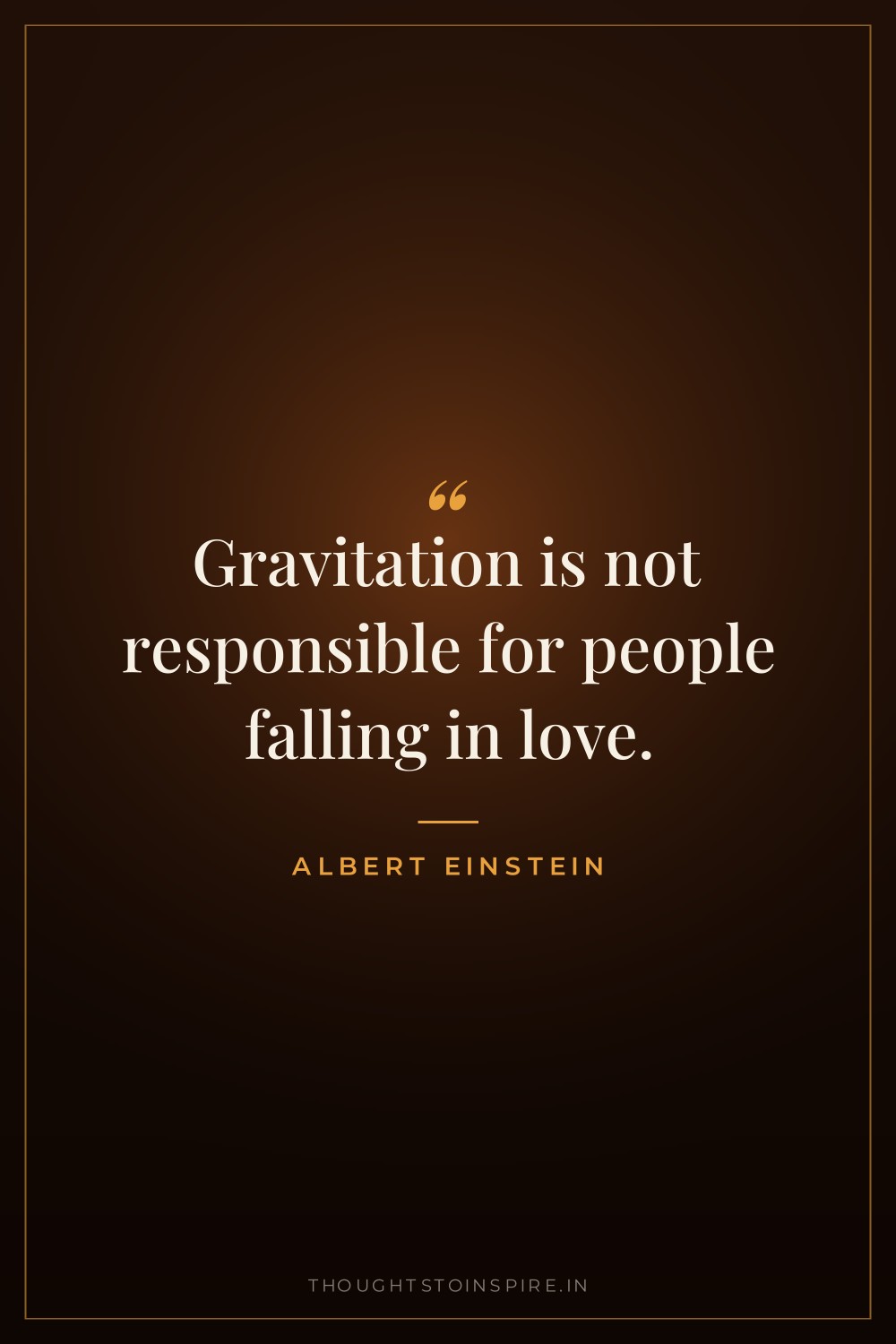
लोग प्यार में पड़ते हैं, इसके लिए गुरुत्वाकर्षण ज़िम्मेदार नहीं है।
What it means
The whole line turns on a dead metaphor being taken seriously for a moment. Falling in love is a figure of speech nobody hears any more; this sentence hears it, tests it against the force that actually makes things fall, and files a straight-faced denial.
It is usually quoted as proof that love lies beyond science, which is considerably more than it says. The sentence acquits exactly one force, and a physicist declining jurisdiction over one phenomenon is not a physicist declaring it inexplicable. The keeper here is the method rather than the sentiment: it is a joke about how casually we borrow the vocabulary of physics for things physics is not describing.
What it teaches you
Listen for borrowed physics in ordinary talk — chemistry between two people, momentum in a career, a team’s energy, a toxic atmosphere. The words feel like explanations and carry none; when you catch yourself reaching for one, say the same thing without it and see whether a claim is still standing.
अर्थ और सीख
यह पंक्ति एक घिसे हुए मुहावरे को पल भर के लिए गंभीरता से ले लेने का मज़ाक है — ‘प्यार में पड़ने’ वाले गिरने का गुरुत्वाकर्षण से कोई लेना-देना नहीं। इसे अक्सर यह साबित करने के लिए उद्धृत किया जाता है कि प्यार विज्ञान से परे है, जबकि वाक्य सिर्फ़ एक बल को ज़िम्मेदारी से बरी कर रहा है। सीख: रोज़मर्रा की भाषा में उधार लिए गए वैज्ञानिक शब्दों — केमिस्ट्री, एनर्जी, मोमेंटम — पर ध्यान दीजिए; वे समझाते कुछ नहीं, बस समझाने जैसे लगते हैं।
Where it comes from
Attributed to Einstein in countless collections, sometimes tied to a letter with the phrase ‘how on earth can you explain in terms of chemistry and physics so important a biological phenomenon as first love?’ The witty one-line form, however, has no verified source in his papers, and quote researchers class it as doubtful.