— Jane Eyre (1847), Chapter 23
About this quote
हिन्दी में
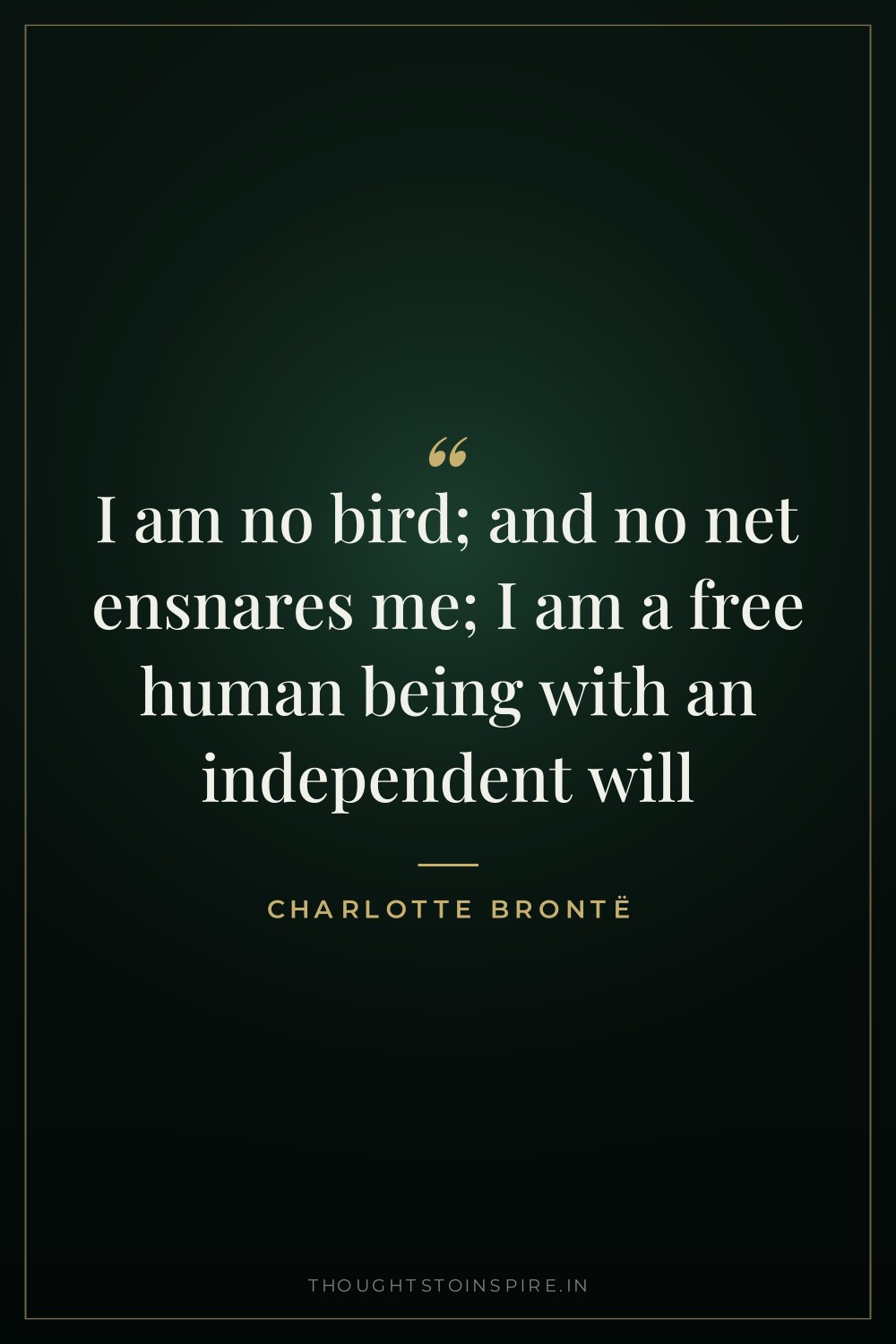
मैं कोई पंछी नहीं; कोई जाल मुझे नहीं फँसा सकता; मैं एक स्वतंत्र मनुष्य हूँ, अपनी स्वाधीन इच्छाशक्ति के साथ।
What it means
The line opens with a denial, which means a comparison had just been offered: someone has described Jane as a caught bird, and she answers the image before she answers the person. Only once the metaphor is cleared away does she assert anything — and what she asserts is human being, not woman, and will, not feeling.
What makes it worth keeping is that order of operations. She does not argue that she deserves freedom or that her feelings should be considered; she refuses the category she has been placed in, then names the faculty that made the refusal possible. A will is something you exercise, which is why the sentence reads as an act rather than a sentiment.
What it teaches you
Notice when a request arrives wrapped in a description of you that makes the request sound reasonable — you are too emotional to decide this now, you are like family here, you would never manage on your own. The description is the part to answer first; accepting it while disputing the request leaves you arguing on ground the other side has already surveyed.
अर्थ और सीख
जेन पहले उस उपमा को ख़ारिज करती है जिसमें उसे जाल में फँसा पंछी बताया गया था, और उसके बाद ही अपनी बात रखती है — वह ख़ुद को ‘स्त्री’ नहीं, ‘स्वतंत्र मनुष्य’ कहती है, और भावना नहीं, इच्छाशक्ति का नाम लेती है। सीख यह कि जब कोई अपनी माँग के साथ आपकी कोई परिभाषा भी थमा दे, तो पहले उस परिभाषा का जवाब दीजिए। परिभाषा मान लेने के बाद बहस आधी पहले ही हारी जा चुकी होती है।
Where it comes from
Jane to Rochester, refusing to be handled. Brontë used a semicolon where almost every modern quotation uses a colon, and the sentence continues past its famous ending — ‘which I now exert to leave you.’
That continuation matters. The declaration is not an abstract statement of independence; it is a woman announcing that she is walking out of the room, and then doing it.