— Discourses and the Enchiridion (tr. George Long)
About this quote
हिन्दी में
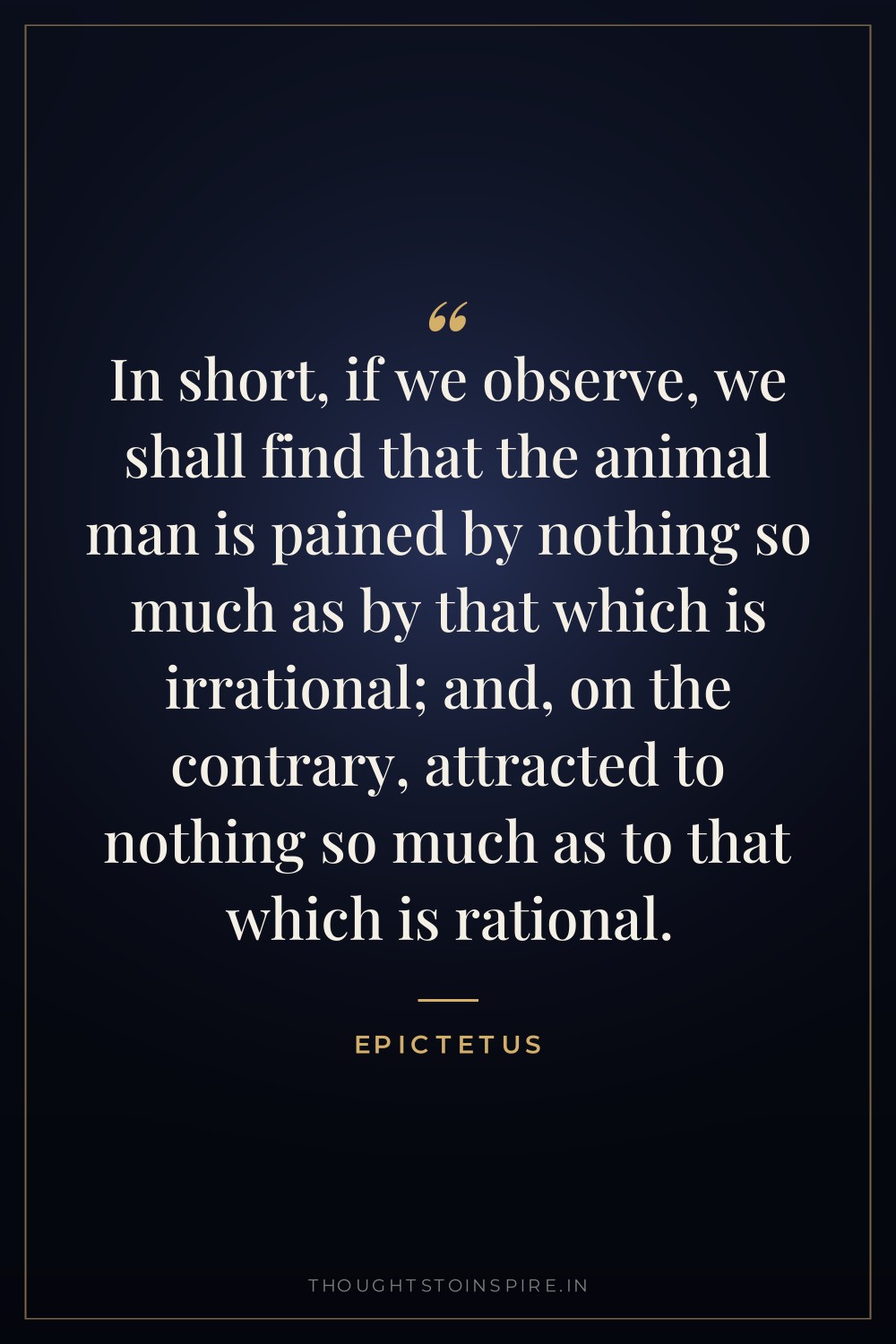
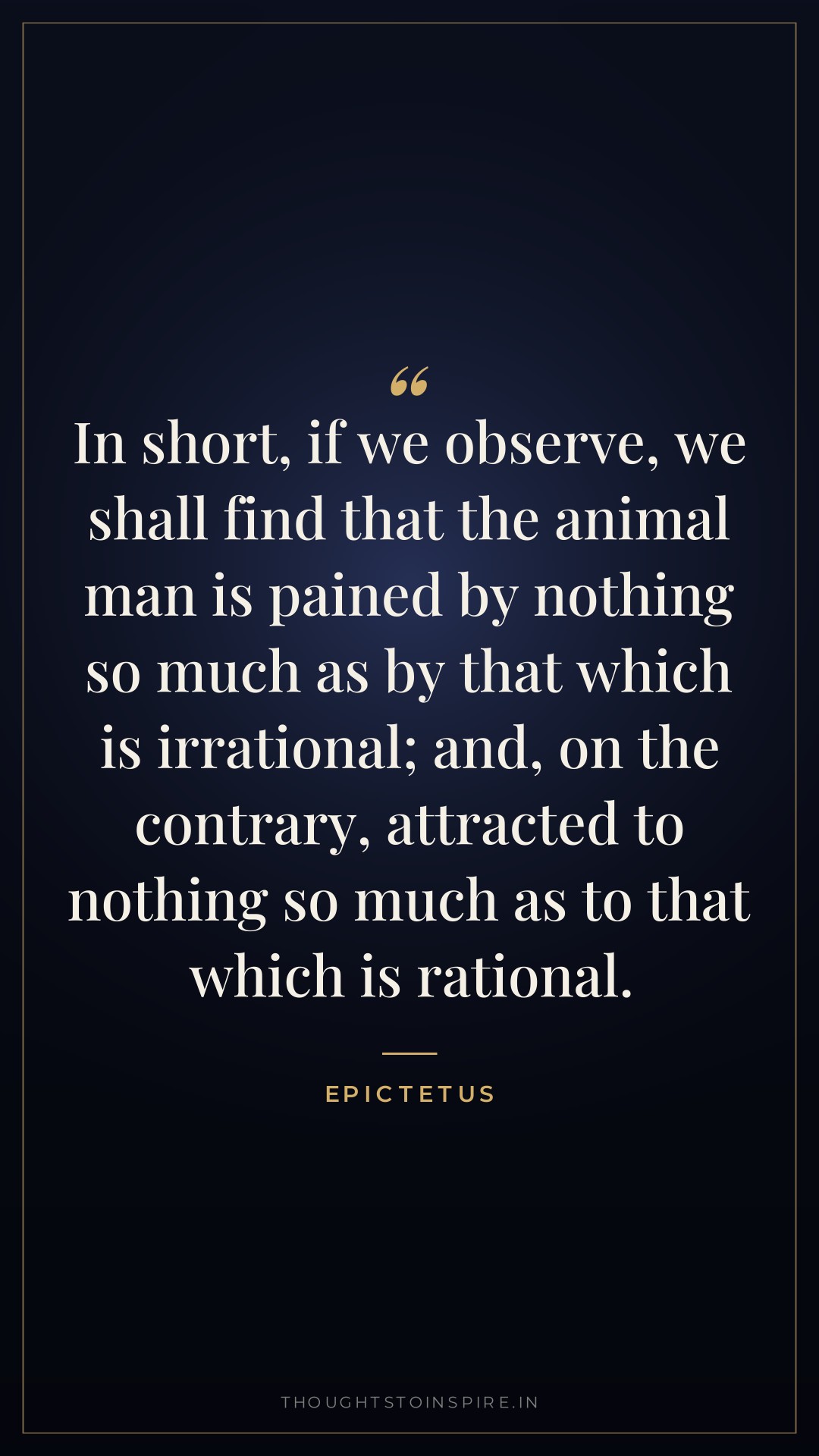
संक्षेप में, यदि हम ध्यान से देखें तो पाएँगे कि मनुष्य नामक प्राणी को किसी बात से इतनी पीड़ा नहीं होती जितनी अविवेकपूर्ण बात से; और इसके उलट, वह किसी चीज़ की ओर इतना नहीं खिंचता जितना विवेकसंगत बात की ओर।
What it means
This is offered as an observation, not a rule — “if we observe, we shall find” — and it is the sort of claim you can test within a week. It also quietly displaces the standard account of motivation: the hinge is not pleasure against pain but sense against senselessness, which is why a long queue with a posted reason is bearable and a two-minute wait with no reason given is not.
The honest complication sits in the word “rational”, which here can only mean what strikes the person as reasonable. Read that way the claim explains more than its cheerful surface suggests: it accounts for the tenacity with which people hold on to poor reasons, and for the appetite for rumour and conspiracy — a bad explanation still beats the intolerable state of a thing making no sense at all. What attracts, on this account, is reasonableness as it looks from the inside, not truth.
What it teaches you
When someone — a colleague, a child, a clerk — digs in over something small, read the reaction as a signal that a reason is missing rather than that the pressure needs raising; supplying the reason is almost always cheaper than applying force. Apply it inward as well: when a task feels disproportionately draining, check whether the accurate word is “hard” or “pointless”, since those two call for entirely different fixes.
अर्थ और सीख
एपिक्टेटस का दावा है कि मनुष्य को सबसे गहरी चोट अविवेक से लगती है और सबसे तेज़ खिंचाव विवेक की ओर होता है — सुख-दुख से भी ऊपर “बात समझ में आना” मायने रखता है। इसीलिए कारण बता देने पर लोग बड़ी तकलीफ़ भी उठा लेते हैं, और बेतुकी लगने वाली छोटी बात भी असहनीय हो जाती है। ध्यान रहे कि यहाँ “विवेकसंगत” का अर्थ वही है जो व्यक्ति को उचित लगे — इसी से यह भी समझ आता है कि लोग कमज़ोर तर्कों से भी क्यों चिपके रहते हैं।
Where it comes from
The claim here is about what actually wounds a person. Epictetus argues that human beings are not primarily driven away by pain or toward pleasure, but repelled by the irrational and drawn to the reasonable. Give someone a convincing reason and they will shoulder a hardship; leave them convinced a thing is senseless and even a small imposition becomes intolerable. The practical edge is that persuasion, not pressure, is what moves people — and that the sense of being treated unreasonably explains more human misery than suffering itself does.
Attributed to Epictetus and drawn from the collection published as Discourses and the Enchiridion, in George Long’s English translation. The phrase “the animal man” is archaic usage, meaning simply the human creature considered as one kind of living thing among others, and carries none of the dismissiveness it might suggest to a modern ear.