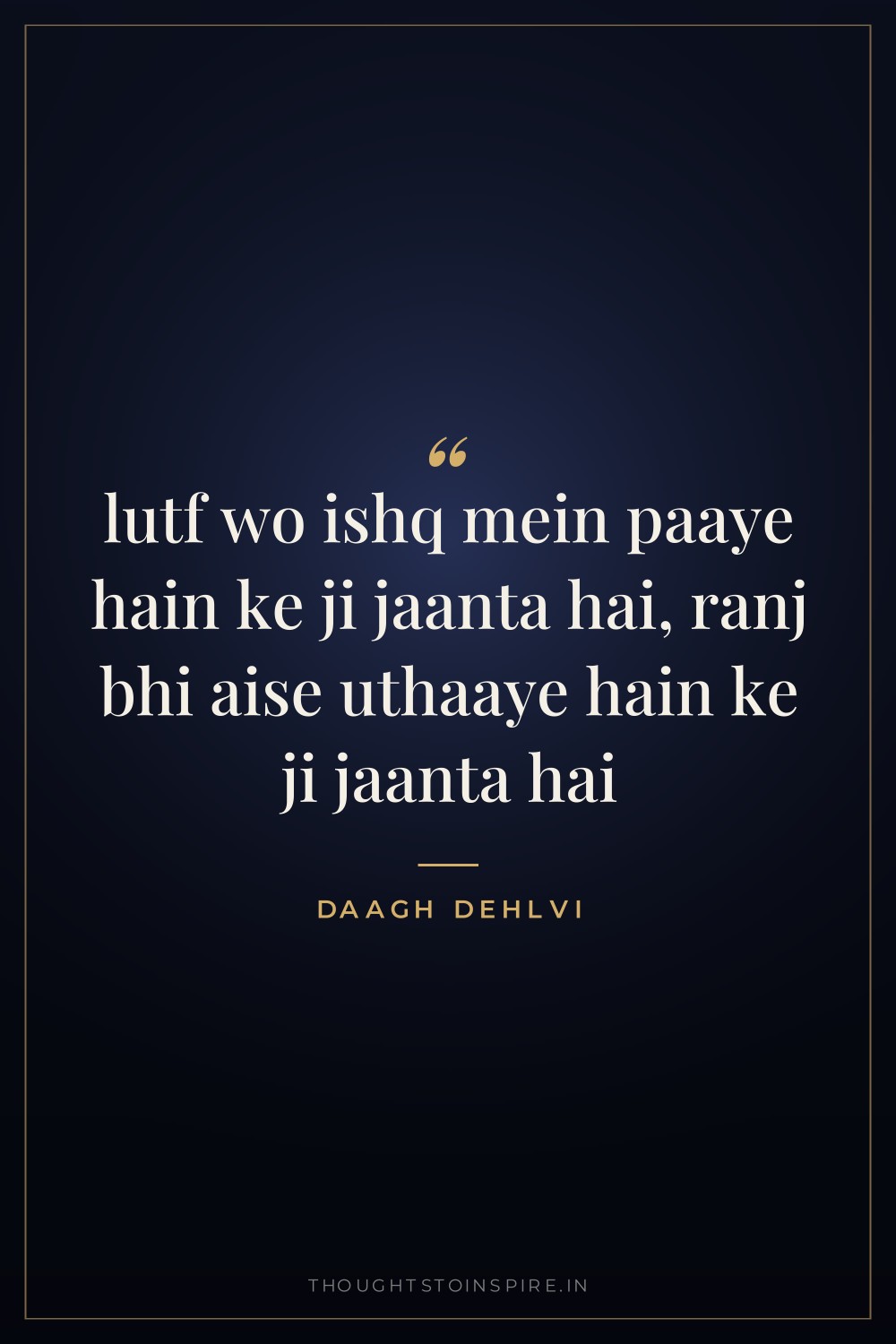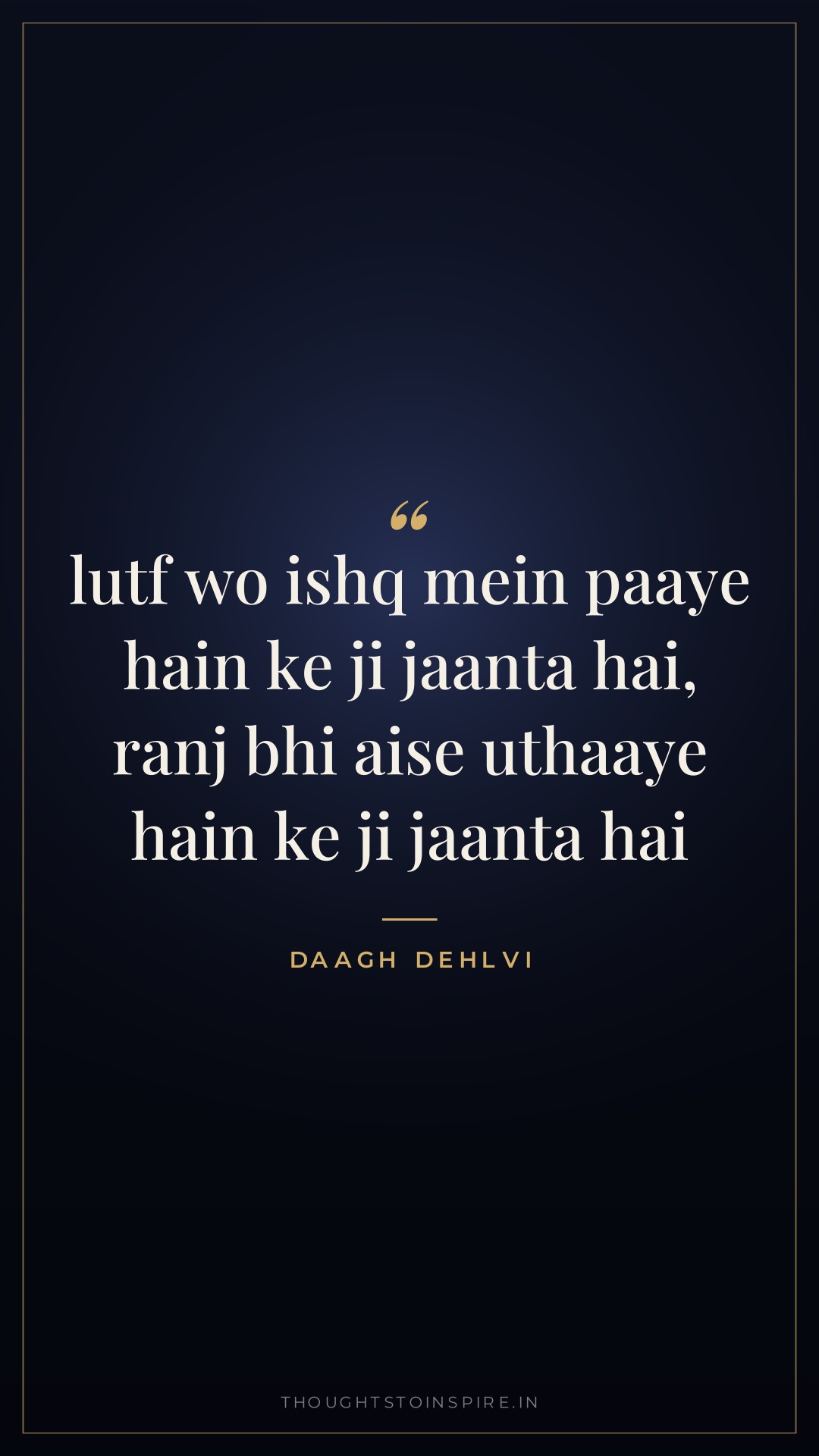
— from the ghazal beginning “lutf wo ishq mein paaye hain ke ji jaanta hai”, Daagh Dehlvi (1831–1905)
About this quote
देवनागरी
लुत्फ़ वो इश्क़ में पाए हैं कि जी जानता है
रंज भी ऐसे उठाए हैं कि जी जानता है
اردو
لطف وہ عشق میں پائے ہیں کہ جی جانتا ہے
رنج بھی ایسے اٹھائے ہیں کہ جی جانتا ہے
English
I have found such pleasure in love as only the heart knows — and borne such sorrows as only the heart knows.
What it means
The same phrase closes both lines and means something different each time, which is the whole trick: ji jaanta hai first as delight too private to describe, then as pain too private to describe. Daagh does not choose between them.
What it teaches you
Watch what the repeated phrase does, because it changes how you should listen to people. Ji jaanta hai is a refusal to elaborate, and Daagh uses the identical refusal for joy and for grief — which means that when someone closes a sentence this way, you cannot tell from the closing alone which one they are protecting, and pressing for detail treats a boundary as an omission. The other half of the lesson is that he never totals the two lines up. There is no verdict here on whether the love was worth it, and the couplet suggests that demanding such a verdict — of a friend, or of your own past — is asking for an arithmetic that the experience does not actually support.
अर्थ और सीख
इश्क़ में ऐसी ख़ुशियाँ भी मिलीं जो बयान नहीं हो सकतीं, और ऐसे दुख भी उठाए जो बयान नहीं हो सकते। एक ही रदीफ़ दोनों मिसरों में दो अलग मतलब देती है।
जब कोई ‘जी जानता है’ कहकर बात ख़त्म करे, तो वह ख़ुशी भी हो सकती है और दुख भी — ब्यौरा माँगना उस हद को न समझना है। और दाग़ दोनों का हिसाब नहीं लगाते: हर तजुर्बे से नफ़ा-नुक़सान का फ़ैसला माँगना ज़रूरी नहीं।
Where it comes from
Verified against the collected work of Daagh Dehlvi (1831–1905) on Urdu Wikisource, in the poem beginning لطف وہ عشق میں پائے ہیں کہ جی جانتا ہے (source). Devanagari transliteration and English rendering are our own.