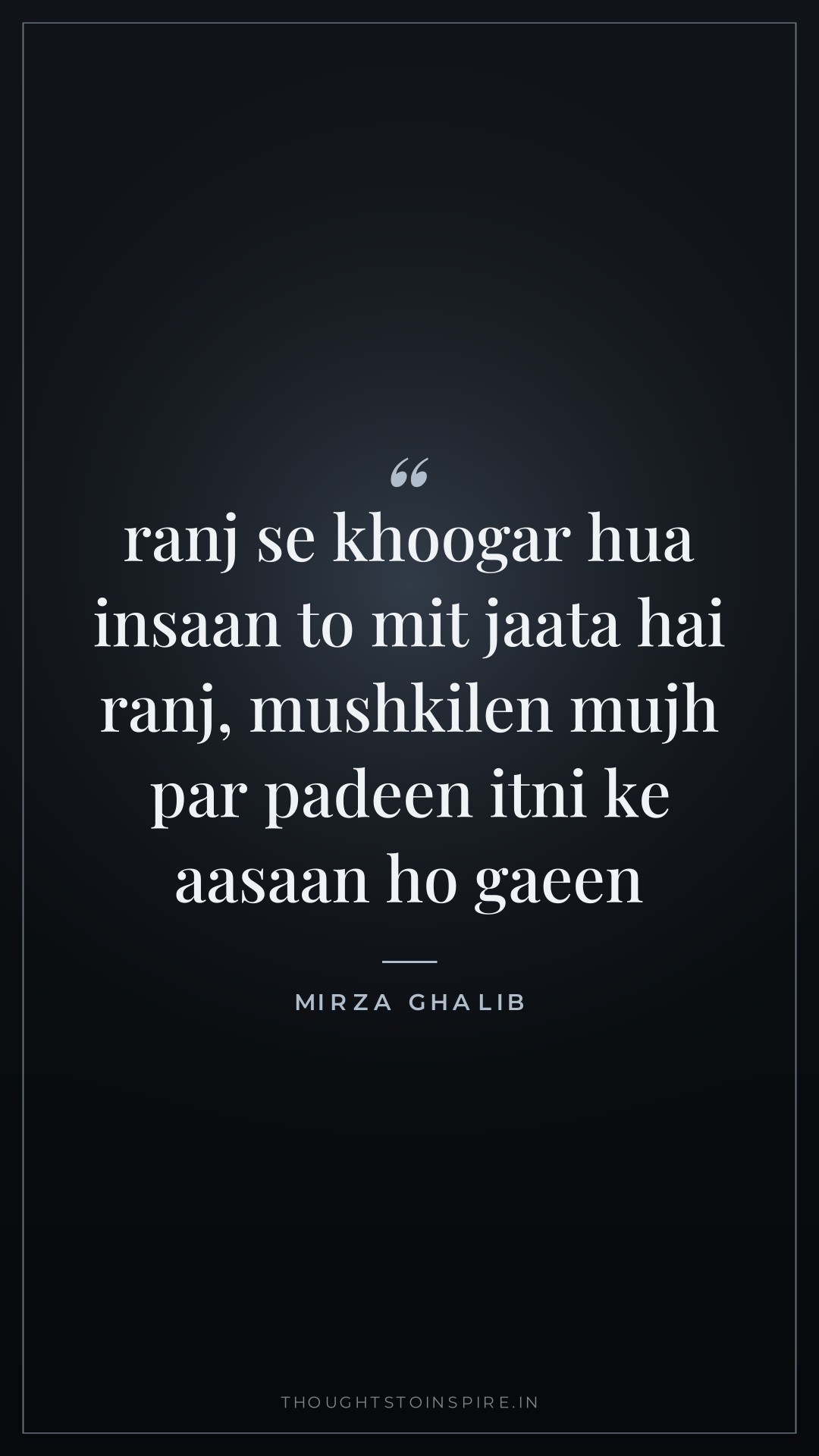
— Divan-e-Ghalib, from the ghazal "sab kahan kuchh lala-o-gul"
About this quote
देवनागरी
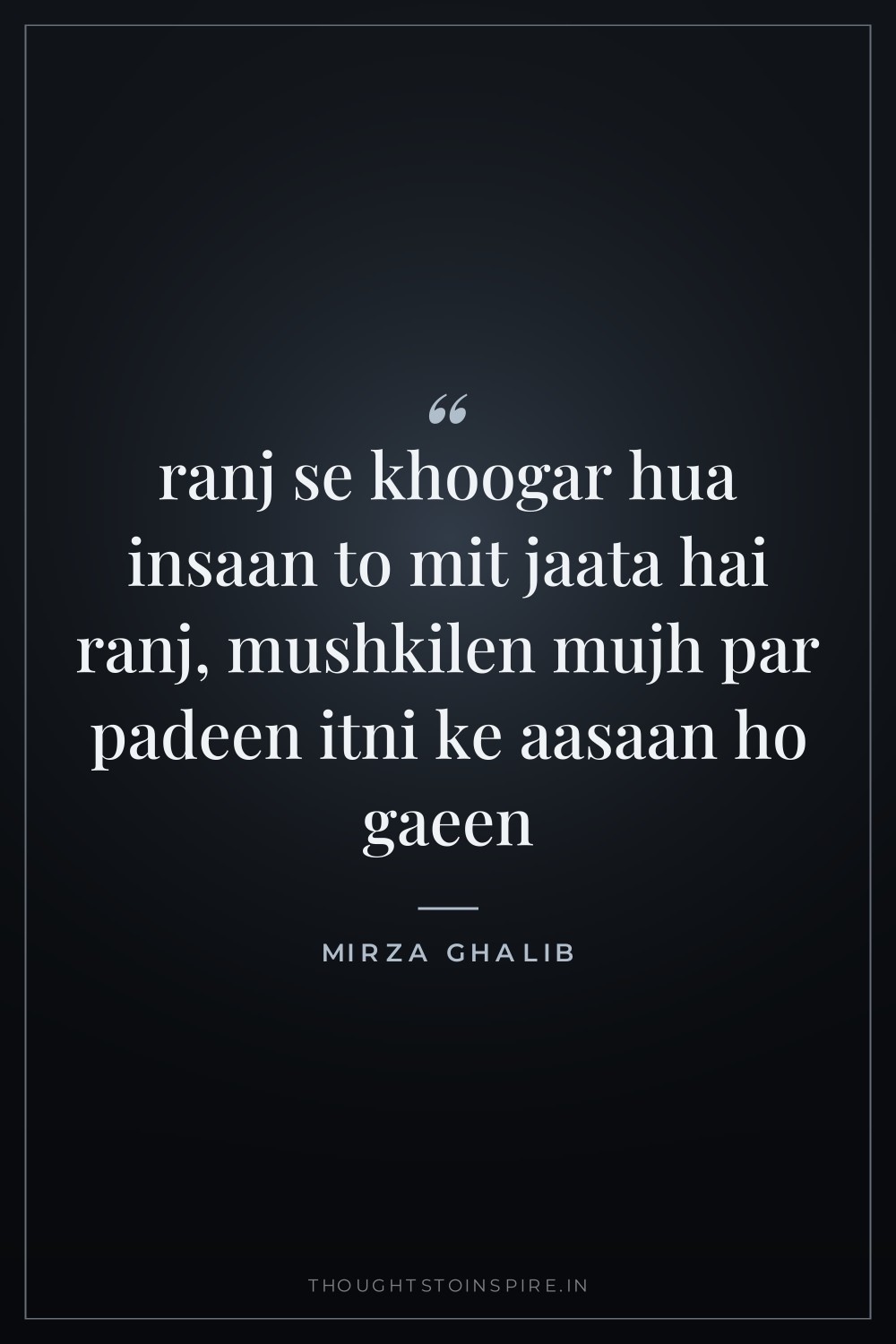
रंज से ख़ूगर हुआ इंसाँ तो मिट जाता है रंज
मुश्किलें मुझ पर पड़ीं इतनी कि आसाँ हो गईं
English
Grow used to grief, and grief itself disappears — so many hardships fell on me that they became easy.
What it means
Ghalib’s resilience formula, two centuries before psychology named it. Suffering repeated becomes familiarity; familiarity becomes ease. The line is quoted wherever endurance needs a language.
The hinge is the word khoogar — not strong but broken in, the way an animal is made used to a yoke. So the first line says something colder than it first sounds: what vanishes is not the hardship but the ranj, the registering of it. The second line does not argue the point, it testifies to it — the general maxim suddenly becomes first person, and the proof offered is the speaker’s own worn-down capacity to feel. The couplet is most often misread as a boast about toughness; the grammar makes it closer to a diagnosis, with aasaan ho gaeen sounding less like victory than like numbness noticed too late.
What it teaches you
Pick one thing in your week that used to cost you effort and now costs none — a commute, a hostile tone from someone, an unpaid hour. Then ask which happened: you got better at it, or you stopped counting it. The two feel identical from inside. If it is the second, do not let I am used to it now stand as the reason to keep accepting it, because habituation is an argument about your nerves, not about whether the thing is fair or fixable.
अर्थ और सीख
इतनी मुश्किलें पड़ीं कि मुश्किलें ही आसान हो गईं — दुख की आदत पड़ जाए तो दुख मिट जाता है। सहनशीलता का इससे बड़ा बयान नहीं।
जिस तकलीफ़ या काम को आप आज ‘अब तो आसान है’ कहते हैं, उसे एक बार जाँचिए — क्या आप सचमुच बेहतर हुए हैं, या बस उसे महसूस करना छोड़ चुके हैं? आदत पड़ जाना किसी ऐसी तकलीफ़ को चुपचाप सहते रहने की वजह नहीं है जिसे बदला जा सकता है।
Where it comes from
An authentic couplet from the Divan-e-Ghalib, the collected Urdu ghazals of Mirza Asadullah Khan Ghalib (1797–1869), from the ghazal beginning “sab kahan kuchh lala-o-gul”. Transliteration and English rendering are our own.