— Meditations, Book 6 (tr. George Long, 1862)
About this quote
हिन्दी में
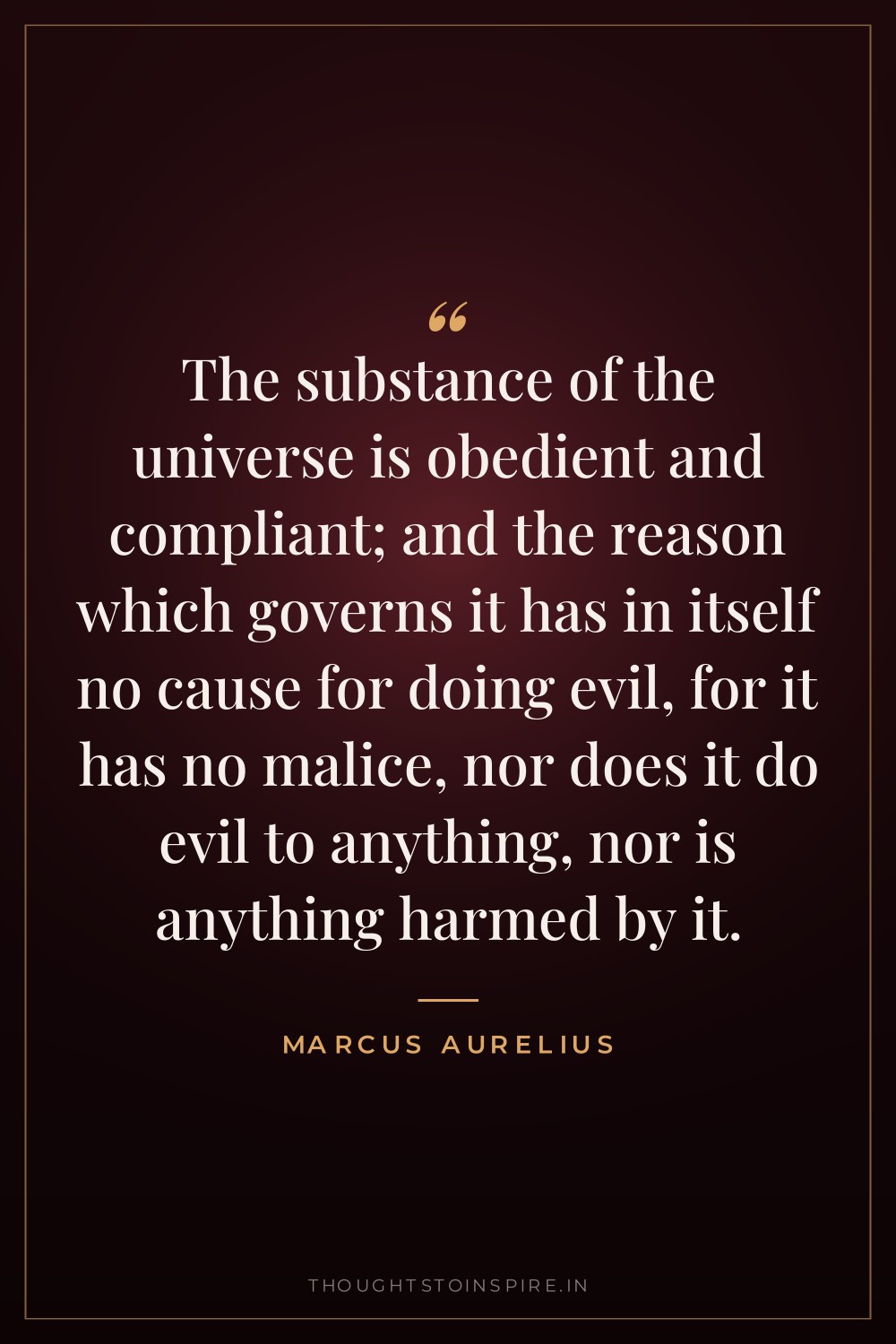
इस विश्व का पदार्थ आज्ञाकारी और सुनम्य है; और जो बुद्धि इसे चलाती है, उसके पास बुराई करने का कोई कारण नहीं — न उसमें द्वेष है, न वह किसी का अहित करती है, न उससे किसी की हानि होती है।
What it means
Two claims sit here, and the second is far stronger than it first appears. The first is about matter: the substance of the world puts up no resistance to the reason that orders it. The second says not merely that this reason intends no harm but, at the end, nor is anything harmed by it — no harm is actually done, anywhere.
That second claim is hard to hold alongside ordinary experience, and it only works because of how narrowly harm is being defined: damage to a person’s character and choices, not to their body, property or plans. Read without that definition, the line sounds like a denial that suffering exists. Read with it, it is a technical statement — losses are real, harm is something else — and its value is mostly in forcing that distinction into the open. It is also, plainly, an assertion about the cosmos rather than an argument for one.
What it teaches you
The next time you call something harm, finish the sentence: harmed what? If the answer is a plan, a sum of money, a reputation or an hour of comfort, you have named a loss, and the word you reached for was borrowed from another category. The exercise will not make the loss smaller; it stops you spending the particular anger reserved for injury on something that had no author.
अर्थ और सीख
मार्कस कहते हैं कि विश्व का पदार्थ उसे चलाने वाली बुद्धि के आगे कोई अड़चन नहीं डालता, और उस बुद्धि में द्वेष नहीं, इसलिए उससे किसी की हानि नहीं होती। ध्यान रहे कि यहाँ ‘हानि’ का अर्थ संकुचित है — चरित्र और चुनाव की क्षति, न कि धन, शरीर या योजनाओं का नुक़सान। सीख यह है कि जब कुछ बुरा हो तो पूछो कि टूटा आख़िर क्या है; प्रायः वह नुक़सान होता है, चोट नहीं।
Where it comes from
Marcus makes a claim about the character of the world itself: the reason ordering the universe carries no malice, so nothing that happens is aimed at anyone. If that holds, then misfortune is never an insult, and the resentment we feel toward events has no target to attach itself to.
From Book 6 of the Meditations by Marcus Aurelius, in the English translation made by George Long in 1862.