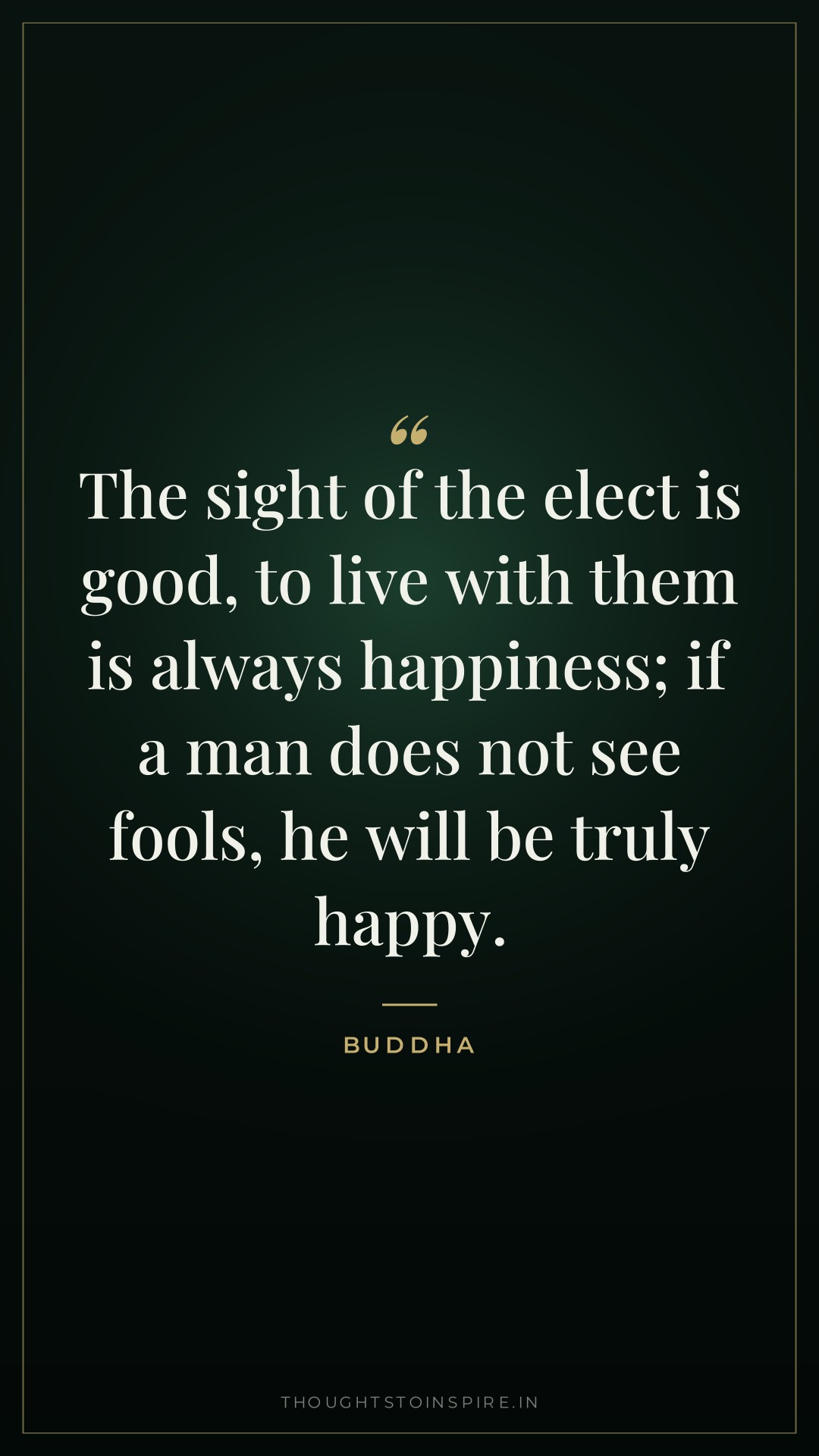
— The Dhammapada, verse 206 (tr. F. Max Müller, 1881)
About this quote
हिन्दी में
सत्पुरुषों के दर्शन भी शुभ हैं, उनके साथ रहना तो सदा सुख है; और जिसे मूर्खों को देखना ही न पड़े, वह सचमुच सुखी है।
What it means
The verse makes happiness a matter of company rather than of character. It does not say the wise man is happy; it says the sight of the wise is good, living with them is happiness, and then makes the negative case — not seeing fools at all. There is no instruction to correct the fool, argue with him, or bear him patiently. The remedy on offer is distance.
Müller’s elect is Victorian English and carries a Christian ring the sense does not need; read it as the wise or the awakened, not as a chosen few. The line is often taken as licence for contempt, which its grammar does not support — it describes what proximity does to a mind, not what fools deserve. It is worth keeping because it treats the people you are around as an input, on the level of sleep or diet, rather than as a moral test you are supposed to pass.
What it teaches you
The verse is about recurring exposure, not single encounters, so the audit that matters is of standing arrangements — the group chat you check hourly, the colleague at the next desk, the feed you open before getting out of bed. Ask what state of mind you are reliably in an hour after each one, and treat a consistently bad answer as a reason to change the arrangement rather than to win the next exchange.
अर्थ और सीख
यह श्लोक कहता है कि सुख का बड़ा हिस्सा संगति से तय होता है — बुद्धिमानों का दर्शन भी शुभ है, उनके साथ रहना तो सुख ही है, और मूर्खों से दूरी ही असली प्रसन्नता है। ध्यान रहे, इसमें मूर्ख को सुधारने, उससे बहस करने या उससे घृणा करने की सलाह नहीं है — केवल दूरी की। सीख यह कि जिन लोगों के बीच आप रोज़ रहते हैं, उन्हें अपनी मनःस्थिति का कारण मानिए, महज़ संयोग नहीं।
Where it comes from
This is verse 206 of the Dhammapada, from the chapter called Happiness — living happily without hatred among the hating, and the sweetness of solitude.
The Dhammapada is a collection of 423 verses in Pali, among the oldest and most widely read records of the Buddha’s teaching. This English translation is by F. Max Müller (1881), the pioneering Oxford scholar of Indian texts; the verse number is cited with this quote.