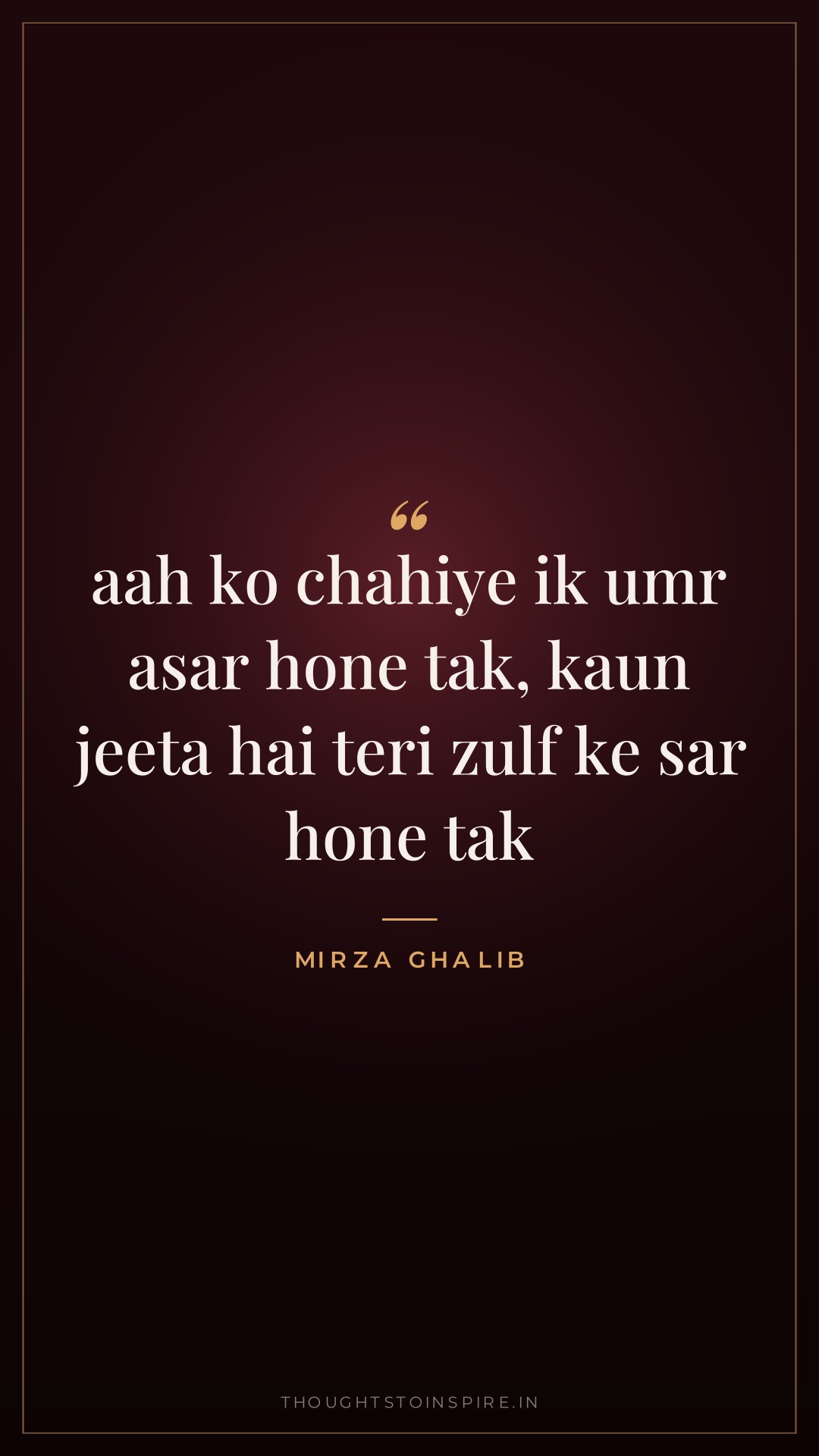
— Divan-e-Ghalib, from the ghazal "aah ko chahiye ik umr"
About this quote
देवनागरी
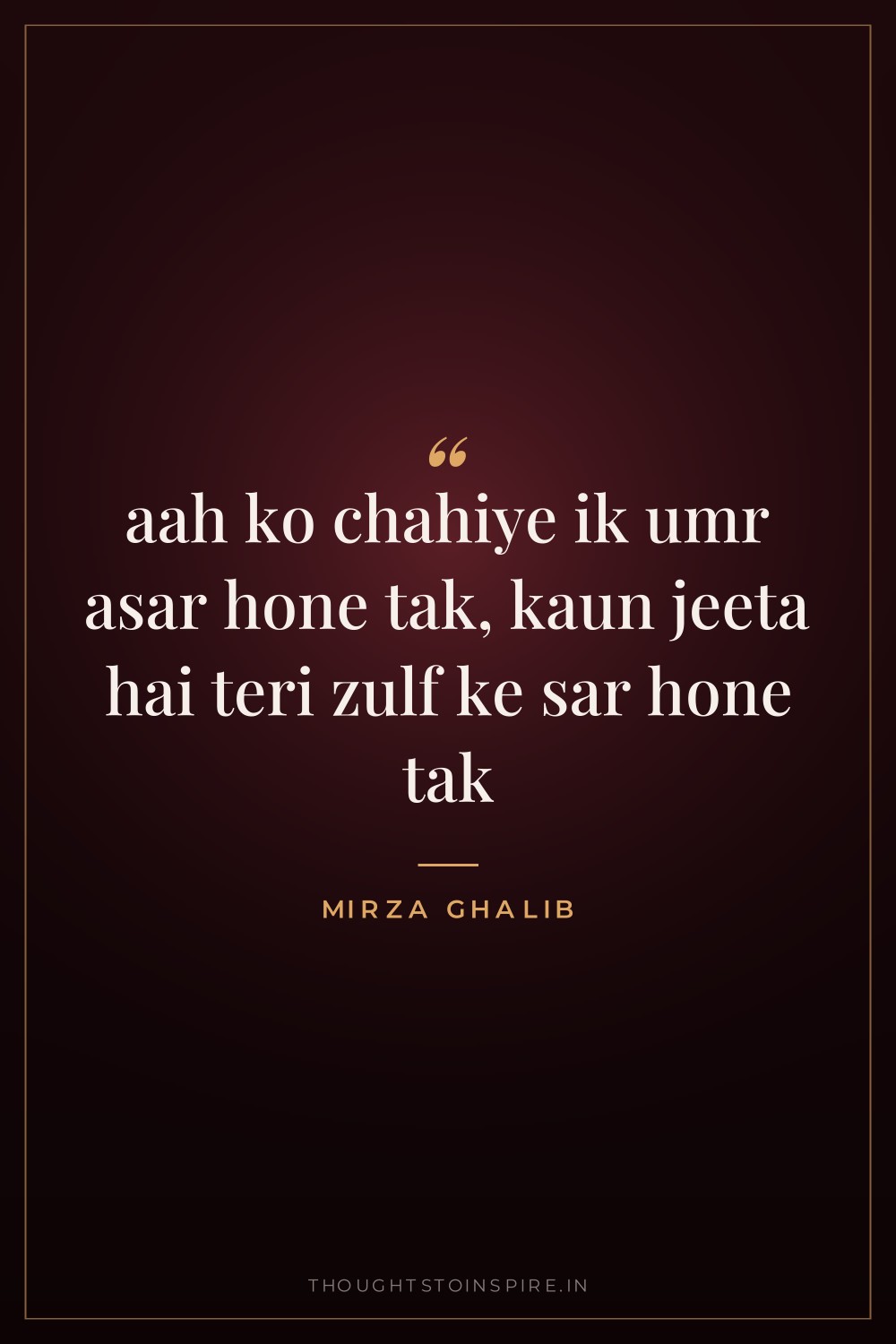
आह को चाहिए इक उम्र असर होने तक
कौन जीता है तेरी ज़ुल्फ़ के सर होने तक
English
A sigh needs a lifetime to take effect — and who lives long enough to win your tousled hair?
What it means
Prayers and sighs work, says Ghalib, but on a timescale longer than a human life. The couplet is about every longing whose fulfilment outruns the span allotted to us.
Two clocks are set against each other: ik umr, a lifetime, is offered as the sigh’s ordinary working unit, and kaun jeeta hai answers with the much shorter one we actually get. The verb in the second line is sar hona, the word for subduing or taking a fort, so the beloved’s zulf becomes a stronghold and its tangle is defensive terrain — this is a siege, not a courtship. That is also why the couplet is misread as despair: the first line concedes that the sigh does work. What fails is the lifespan. The grievance is with arithmetic, not with prayer.
What it teaches you
Keep two failures apart: ‘this method does not work’ and ‘this works, but slower than I will last’. They call for opposite responses — the first means change the method, the second means either change the timescale you are measuring by or accept openly that someone else finishes it. Most people misfile the second as the first and abandon work that was on course. Decide now which of your long efforts you are content to hand over unfinished.
अर्थ और सीख
आह असर ज़रूर करती है, पर उसमें उम्र लग जाती है — और उतना कौन जीता है? हर वो चाहत जो ज़िंदगी से लंबी है, इस शेर में समाई है।
दो नाकामियों में फ़र्क़ करना सीखिए — “यह तरीक़ा काम नहीं करता” और “काम करता है, पर मेरी उम्र से धीमा”। दूसरी सूरत में तरीक़ा बदलिए या यह क़ुबूल कर लीजिए कि फ़सल कोई और काटेगा; उसे नाकामी समझकर छोड़ देना सबसे बड़ी भूल है।
Where it comes from
An authentic couplet from the Divan-e-Ghalib, the collected Urdu ghazals of Mirza Asadullah Khan Ghalib (1797–1869), from the ghazal beginning “aah ko chahiye ik umr”. Transliteration and English rendering are our own.