— Attributed to Rumi; a well-known modern English version, not a literal translation
About this quote
हिन्दी में
ज़मीन पर झुककर उसे चूमने के हज़ार तरीक़े हैं; घर लौटने के भी हज़ार रास्ते हैं।
What it means
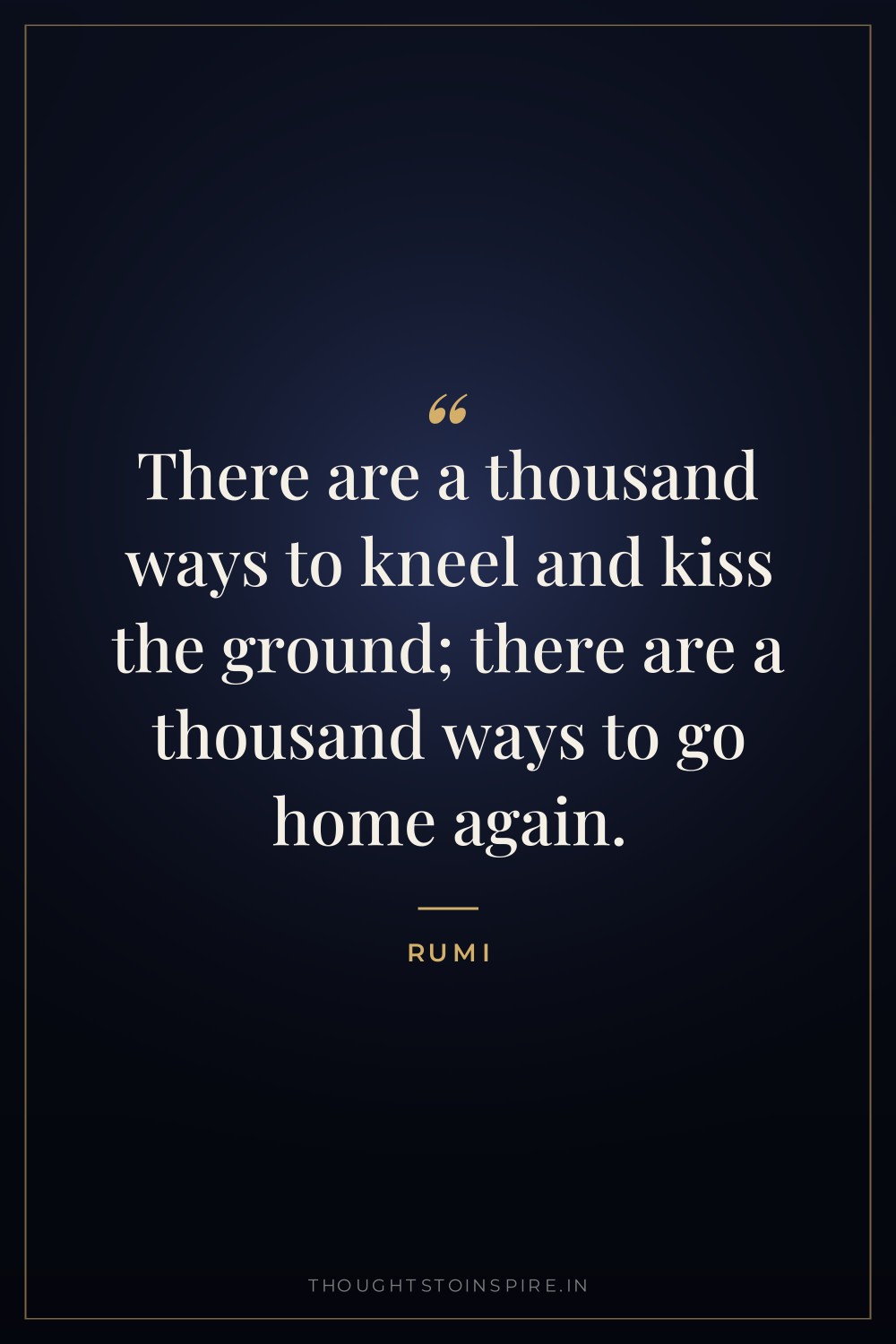
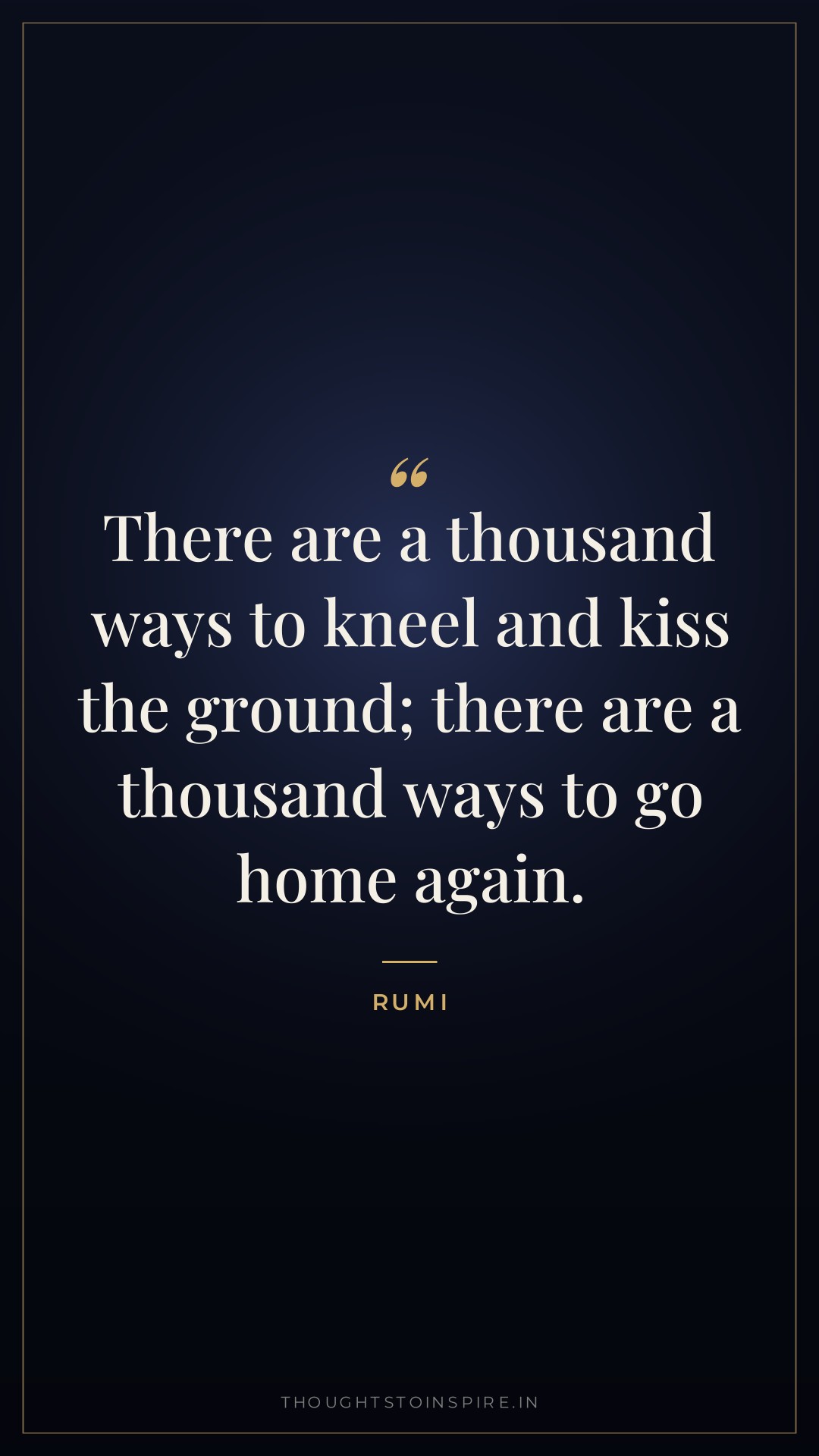
The grammar of the line is stricter than its reputation. What is plural in both halves is the way — the kneeling, the route. What stays singular is the ground and the home. So the structure being described is one destination approached by countless roads, which is a genuine claim about method, not a claim that the destinations are interchangeable. A thousand here works as the old idiom for uncountable rather than as a number.
That distinction matters because the line is routinely quoted to mean that all religions are saying the same thing, and it does not say that. It says something narrower and more defensible: nobody owns the manner of approach. The second half is the warmer half and also the more assertive one — calling it home assumes the destination is a place the traveller already belongs to, so the many roads are return routes, not competing proposals about where to go.
What it teaches you
If you use this line in an argument about faith, quote both halves, because the second one is what constrains the first — drop it and the sentence collapses into a slogan about everything being equally valid, which is not the shape of what is written. The thing to notice on rereading is what the line leaves standing: it removes the monopoly on how to kneel, and leaves the ground exactly where it was.
अर्थ और सीख
इस पंक्ति में बहुवचन ‘तरीक़ों’ का है, मंज़िल का नहीं — ज़मीन एक है, घर एक है, बस उन तक पहुँचने के रास्ते अनगिनत हैं। इसलिए इसका अर्थ यह नहीं कि सब मत एक ही बात कह रहे हैं, बल्कि यह कि झुकने के तरीक़े पर किसी का एकाधिकार नहीं। और ‘घर’ शब्द यह मान लेता है कि चलने वाला पहले से वहीं का है — ये रास्ते खोज के नहीं, वापसी के हैं।
Where it comes from
The line that made Rumi the patron poet of religious pluralism. A thousand ways to kneel means no monopoly on kneeling — and the second half is gentler still, because “home” implies everyone is already headed somewhere they belong.
One of the best-known modern English versions of Rumi. Rumi (1207–1273) wrote in Persian; almost every English line shared online is a modern rendering rather than a literal translation. Sourced passages from the Masnavi, with their selection titles, are collected under Rumi on Love.