— Pride and Prejudice (1813), Chapter 5
About this quote
हिन्दी में
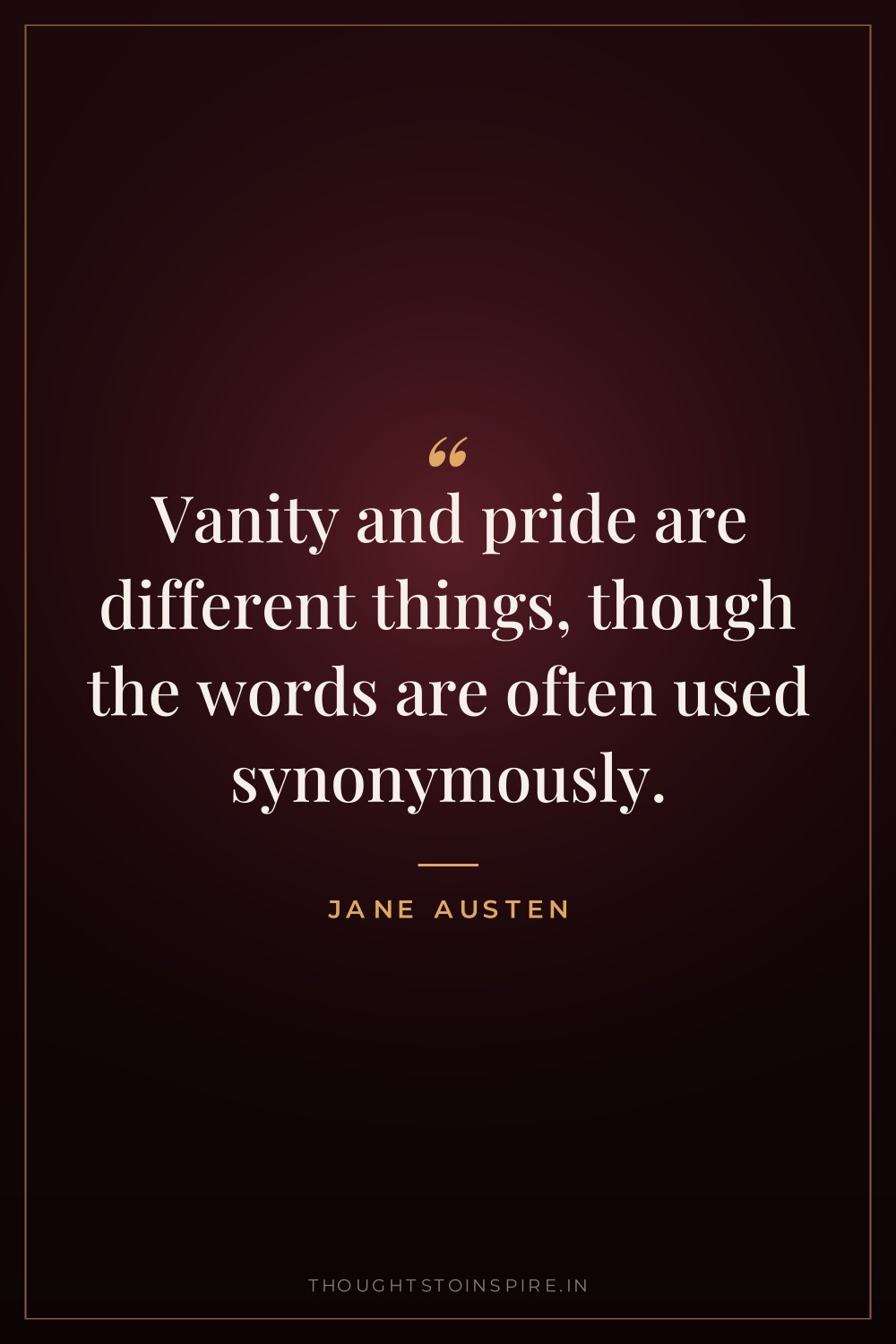
मिथ्याभिमान और अभिमान दो अलग चीज़ें हैं, हालाँकि दोनों शब्द अक्सर एक ही अर्थ में बरते जाते हैं।
What it means
Notice how little the sentence actually asserts. It does not yet tell you what the difference is — it only claims that one exists and that ordinary usage has worn it away. That is a statement about language before it is a statement about character, and it is the more useful half: when two words are swapped freely, one of them has usually stopped doing the job it was kept for.
It earns its place because the two failings need opposite handling. One of them is self-contained and largely indifferent to you; the other is a transaction that requires an audience and collapses without one. Collapse the words and you will keep applying the wrong remedy — flattering the person it bounces off, and starving the person it feeds.
What it teaches you
When someone strikes you as arrogant, ask a single question: would they behave this way in an empty room? If the behaviour needs a witness — the anecdote retold, the achievement worked into conversation, the offence taken at being overlooked — you are dealing with the audience-dependent variety, and withholding the reaction is the only lever that does anything. If it would continue unobserved, no amount of praise or snubbing will touch it, and you should stop spending energy there.
अर्थ और सीख
यह पंक्ति असल में यह नहीं बताती कि दोनों में फ़र्क़ क्या है — वह सिर्फ़ इतना कहती है कि फ़र्क़ है, और रोज़मर्रा की भाषा ने उसे मिटा दिया है। बात भाषा की है, पर काम की है: जब दो शब्द एक-दूसरे की जगह बेधड़क चलने लगें, तो उनमें से एक अपना असली काम करना बंद कर चुका होता है। सबक़ यह कि दोनों दोषों का इलाज उलटा है — एक को दर्शक चाहिए और दर्शक हटते ही वह ठंडा पड़ जाता है, दूसरा अकेले कमरे में भी वैसा ही रहता है; पहचान लें तो अपनी ऊर्जा सही जगह लगेगी।
Where it comes from
Mary Bennet, the bookish sister, making the one observation in the novel that nobody argues with. Pride, she says, concerns our opinion of ourselves; vanity concerns what we want others to think of us.
Austen gives this distinction to her least charming character on purpose. It is true, it is useful, and it is delivered by someone who has clearly rehearsed it — which is itself a small lesson about vanity.