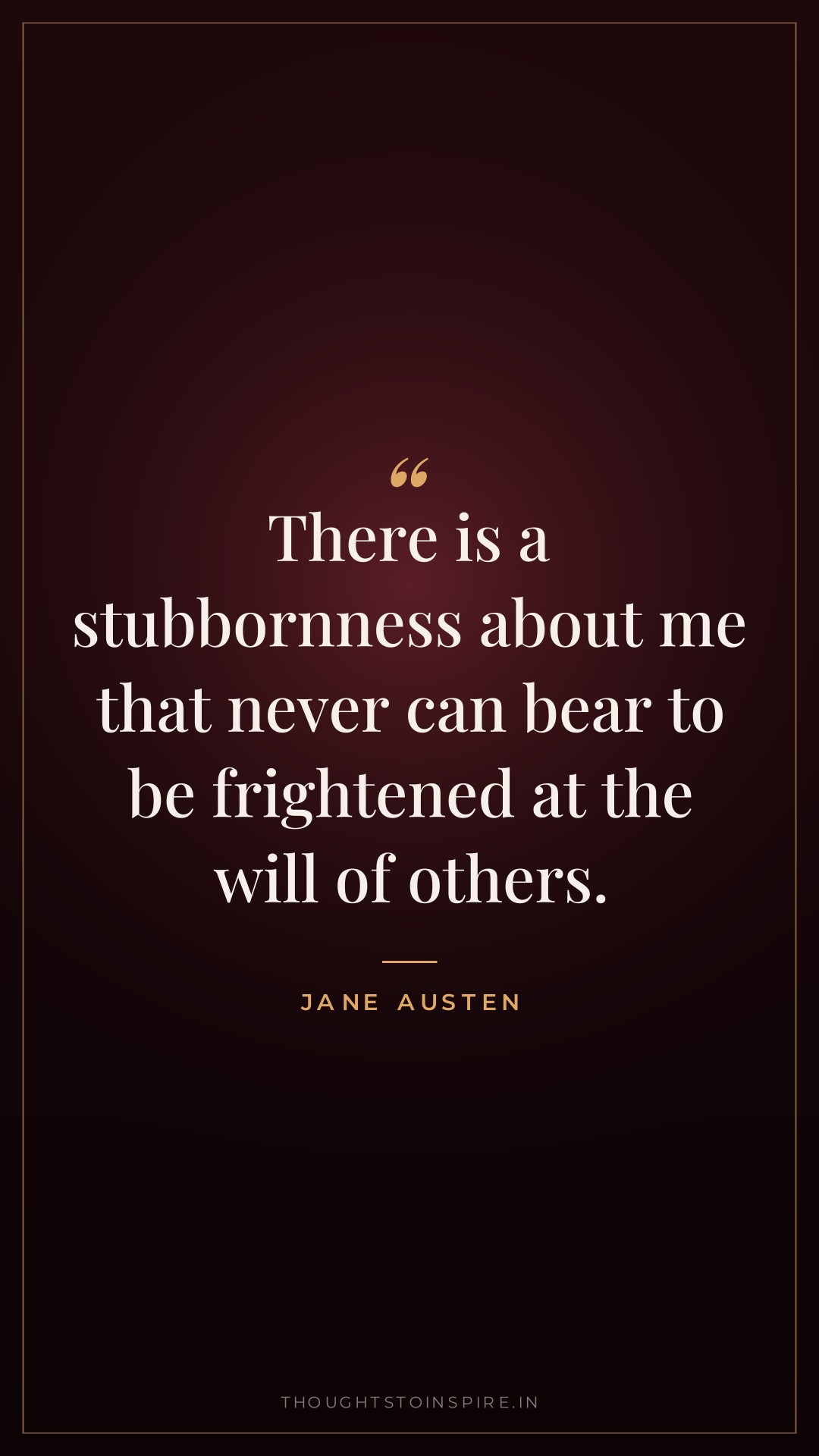
— Pride and Prejudice (1813), Chapter 31
About this quote
हिन्दी में
मुझमें एक ज़िद है जो दूसरों की मर्ज़ी पर डर जाना कभी बर्दाश्त नहीं कर पाती।
What it means
The precise charge is not fear but fear on demand — being frightened at the will of others, producing the reaction at the moment someone else requires it. She never claims to be fearless. She claims only that the supply is not available to whoever asks for it, which is a smaller and much more defensible position than courage.
And she calls the quality stubbornness, the least flattering word on offer, with never can bear attached to it: this is presented as a fixed mechanism rather than a virtue summoned for the occasion. It is worth keeping for that accuracy — she is not claiming something she would then have to live up to, only reporting how she happens to be built.
What it teaches you
Most intimidation needs a visible reaction to function; what is being asked for is the flinch, not your agreement. When pressure builds in a room, separate what you actually judge to be risky from what is merely being solicited, and notice that staying unremarkable — answering the question as asked, in the same tone — withholds the only thing anyone was after.
अर्थ और सीख
एलिज़ाबेथ यह नहीं कहती कि उसे डर लगता ही नहीं; वह कहती है कि दूसरों के कहने पर, उनकी मर्ज़ी से डर जाना उससे नहीं होता। वह अपने इस गुण को ‘ज़िद’ कहती है — सबसे कम सुंदर शब्द — यानी यह जुटाई हुई बहादुरी नहीं, उसका स्वभाव है। सीख यह है कि धमकाने वाले को अक्सर आपकी सहमति नहीं, आपकी घबराहट दिखनी चाहिए; उसी घबराहट को न देना पूरा जवाब बन जाता है।
Where it comes from
Elizabeth to Lady Catherine de Bourgh, refusing to be intimidated. The word ‘stubbornness’ is hers, chosen deliberately: she will not dress her refusal up as principle or modesty.
It reads today as a line about self-respect, and it is. It is also a piece of characterisation — Elizabeth knows her own temper well enough to name its least flattering version and stand on it anyway.