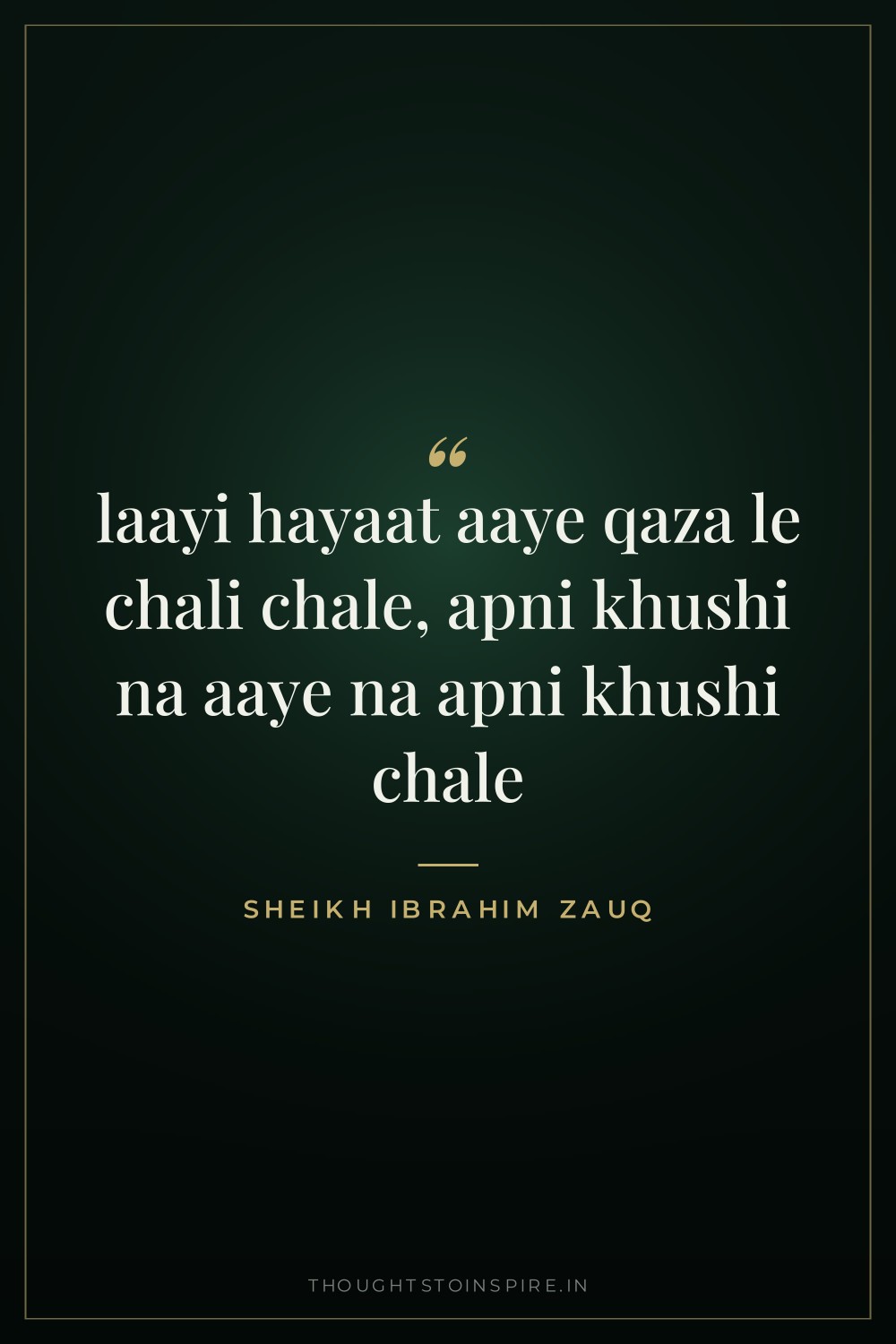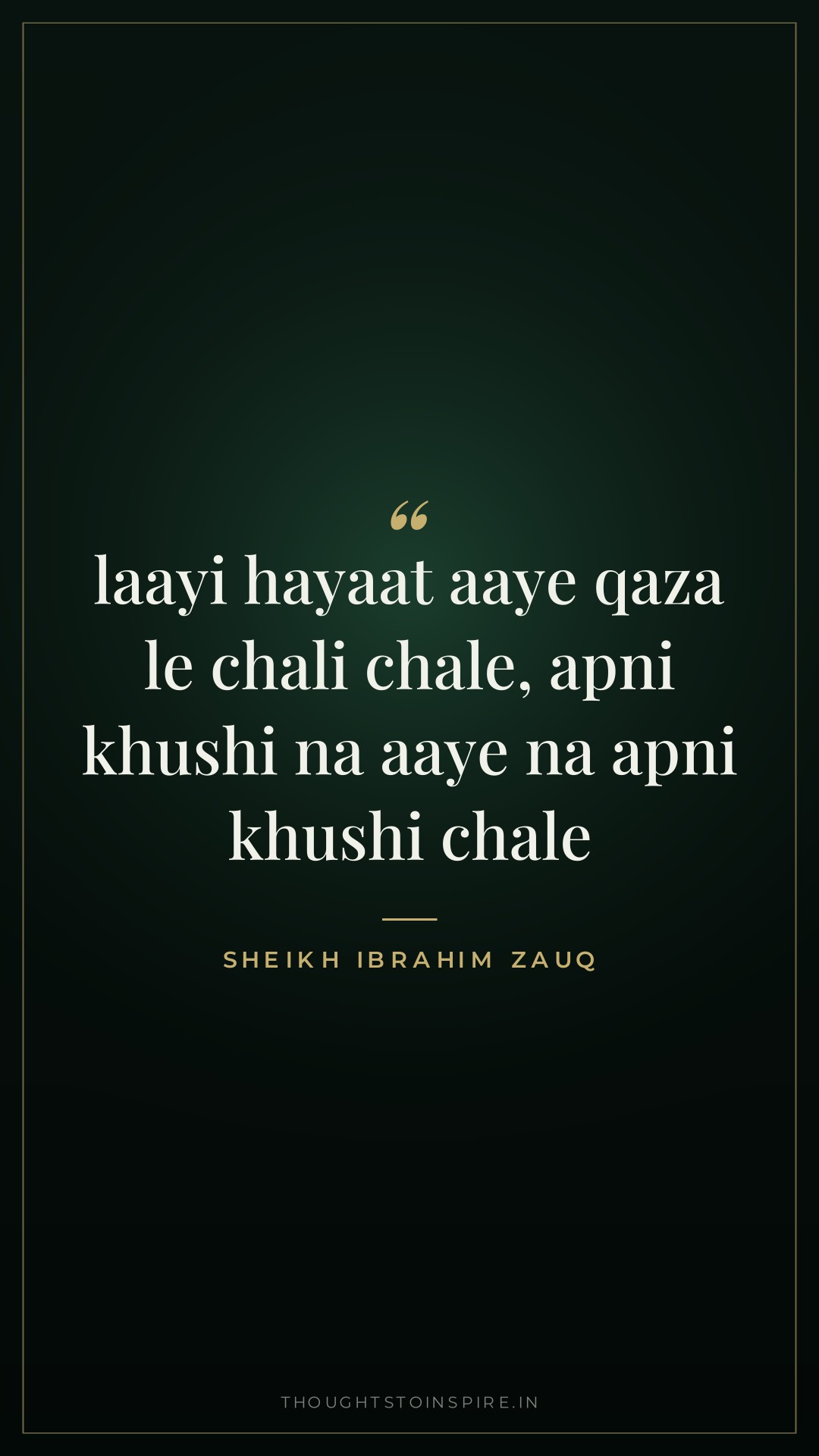
— from the ghazal beginning “laayi hayaat aaye qaza le chali chale”, Sheikh Ibrahim Zauq (1789–1854)
About this quote
देवनागरी
लाई हयात आए क़ज़ा ले चली चले
अपनी ख़ुशी न आए न अपनी ख़ुशी चले
اردو
لائی حیات آئے قضا لے چلی چلے
اپنی خوشی نہ آئے نہ اپنی خوشی چلے
English
Life brought me, so I came; death leads me away, so I go. I came by no wish of my own, and by none of my own do I leave.
What it means
Zauq was Bahadur Shah Zafar’s poetry tutor and Ghalib’s great rival at the Delhi court, and this is the couplet that outlived the rivalry. The grammar does the work: four verbs, no first-person agency anywhere. It is not resignation exactly — more an accurate statement of the terms nobody agreed to.
What it teaches you
Use this couplet as a sorting tool the next time you are berating yourself: separate the things you were handed from the things you actually chose. You did not pick your birth, your body, your family, your century, or the hour you will be taken — and yet most private self-reproach is aimed exactly there, at terms that were never open for negotiation. Notice how Zauq spends no words on protest and none on consolation either; he simply states who moved and who was moved. Adopt that accounting. Stop defending or regretting the unchosen, and spend the freed attention on the narrow band where your agency is real: not whether you came or go, but how you conduct yourself in between.
अर्थ और सीख
ज़िंदगी लाई तो आ गए, मौत ले चली तो चल दिए — न आना अपनी मर्ज़ी से था, न जाना। बेबसी का इससे साफ़ बयान उर्दू में कम ही मिलेगा।
जो आपको दिया गया — जन्म, शरीर, समय, मृत्यु की घड़ी — उस पर ख़ुद को दोष देना बंद कीजिए; उस पर आपका कभी बस नहीं था। ध्यान उस छोटे-से हिस्से पर लगाइए जो सचमुच आपके हाथ में है — आने और जाने के बीच आपका बरताव।
Where it comes from
Verified against the collected work of Sheikh Ibrahim Zauq (1789–1854) on Urdu Wikisource, in the poem beginning لائی حیات آئے قضا لے چلی چلے (source). Devanagari transliteration and English rendering are our own.