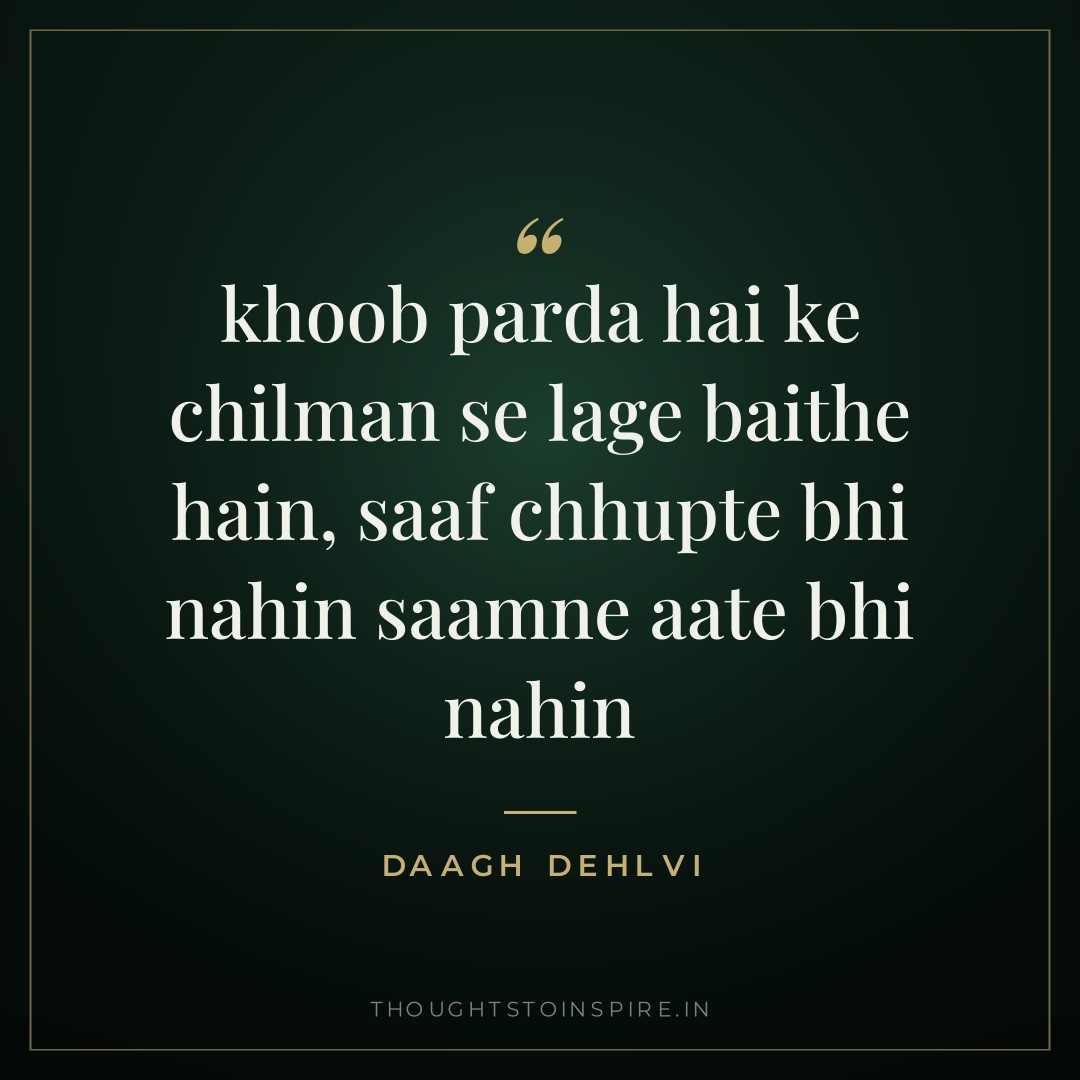
— from the ghazal beginning “uzr aane mein bhi hai aur bulaate bhi nahin”, Daagh Dehlvi (1831–1905)
About this quote
देवनागरी
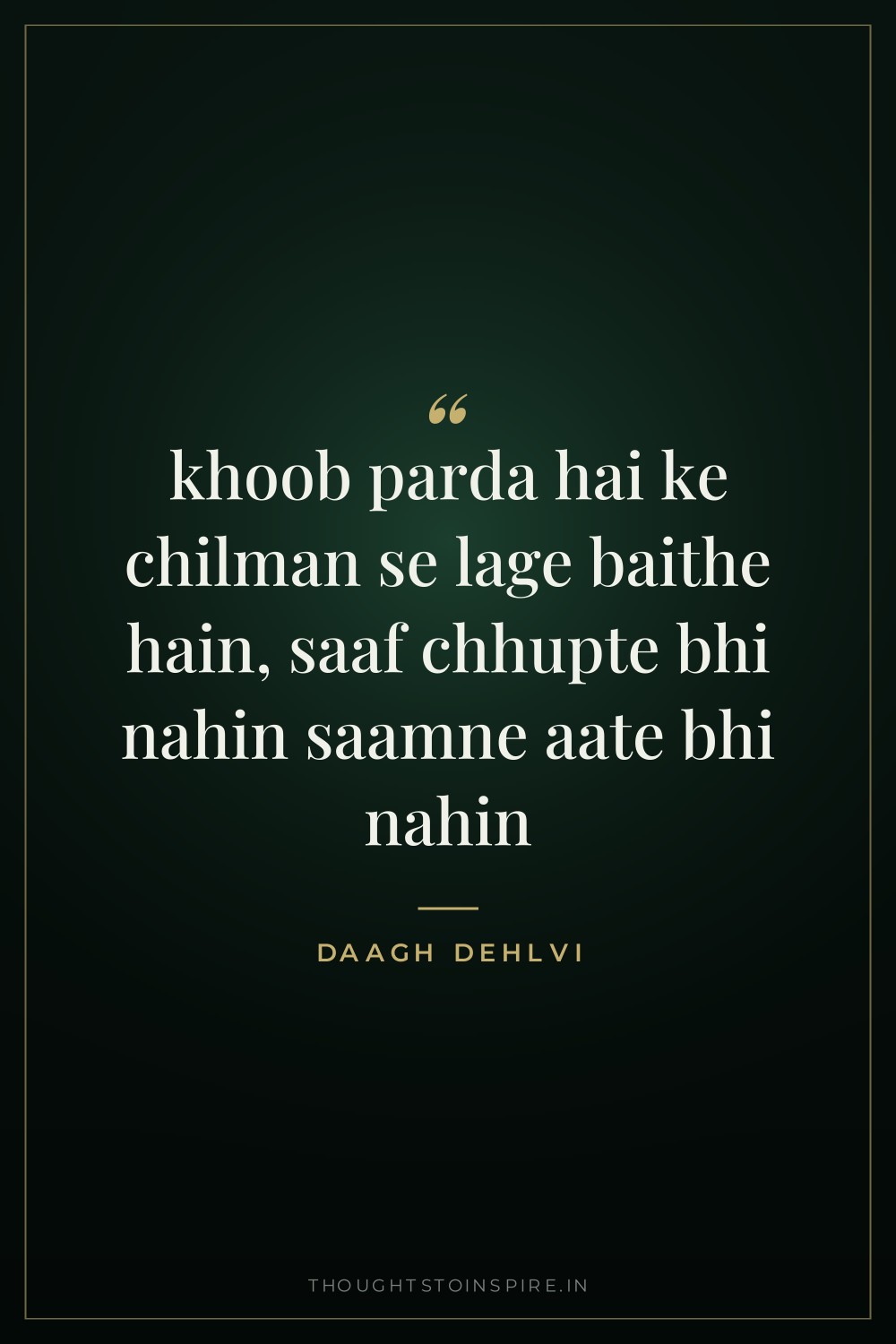
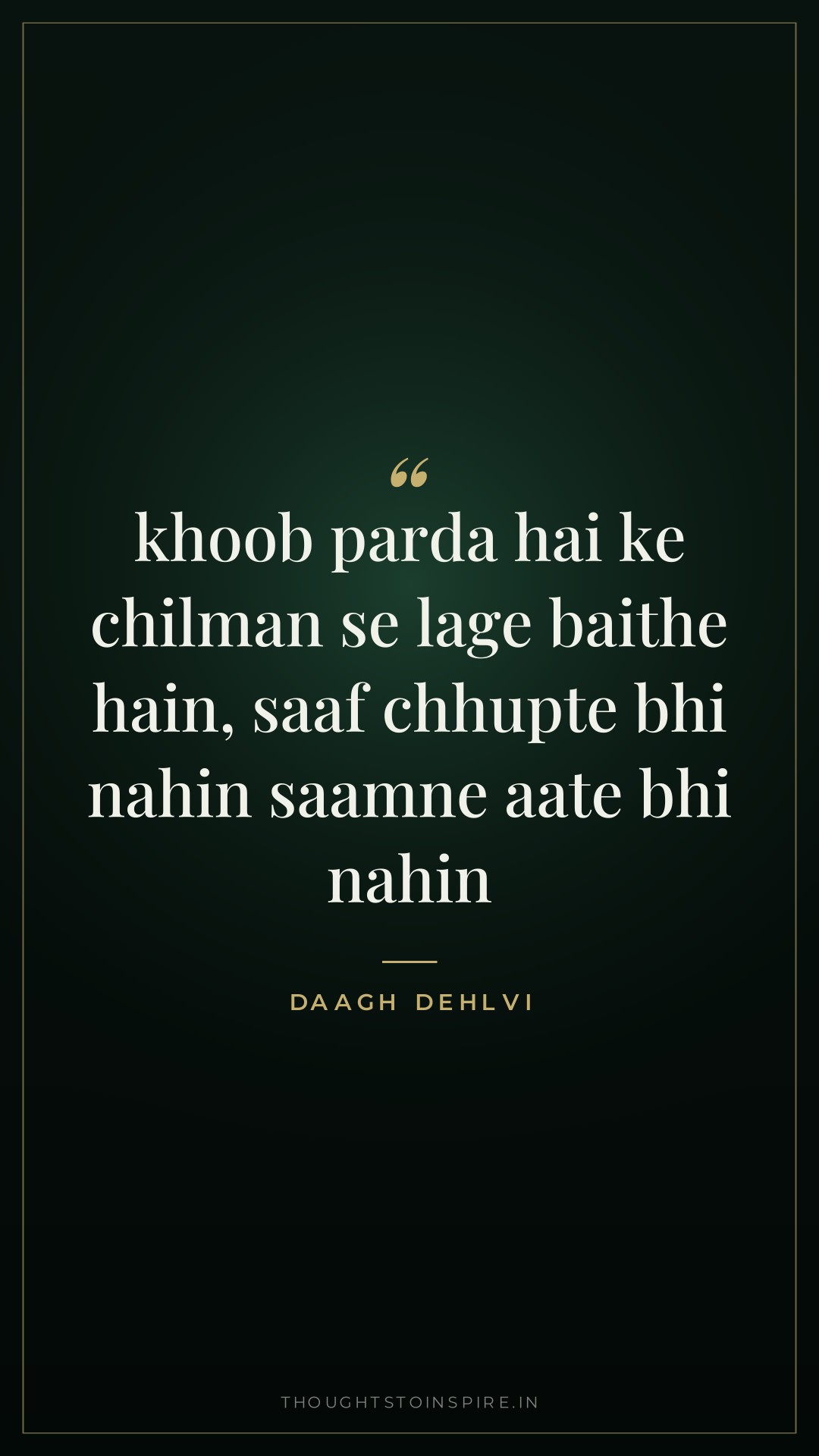
ख़ूब पर्दा है कि चिलमन से लगे बैठे हैं
साफ़ छुपते भी नहीं सामने आते भी नहीं
اردو
خوب پردہ ہے کہ چلمن سے لگے بیٹھے ہیں
صاف چھپتے بھی نہیں سامنے آتے بھی نہیں
English
What a veil this is — sitting pressed up against the screen: not properly hidden, and not willing to come out either.
What it means
Daagh’s speciality was wit rather than anguish, and this is his method in miniature: a real object — the chilman, the split-cane blind of a Delhi house — used to describe a way of behaving. The couplet has long since escaped romance and now fits any half-commitment.
What it teaches you
Use this one on yourself before you use it on anyone else. Go through the messages you have left on seen, the invitations you have neither accepted nor declined, the projects you keep near but will not join — that is the posture the couplet is describing, pressed against the blind. The sting is not in hiding and not in appearing; it is in occupying both positions so that the other person cannot act. Pick one: come out or go in, and let the other side plan accordingly.
अर्थ और सीख
चिलमन से लगे बैठे हैं — न ठीक से छुपे हैं, न सामने आते हैं। दाग़ का तंज़ महबूब पर है, मगर आज यह शेर हर अधूरे फ़ैसले पर फ़िट बैठता है।
यह शेर दूसरों पर लगाने से पहले खुद पर लगाइए — जिन संदेशों, न्योतों या रिश्तों में आप न हाँ कह रहे हैं न ना, वहीं आप चिलमन से लगे बैठे हैं। तकलीफ़ छुपने या सामने आने में नहीं, दोनों जगह एक साथ रहने में है; एक तरफ़ हो जाइए ताकि सामनेवाला भी तय कर सके।
Where it comes from
Verified against the collected work of Daagh Dehlvi (1831–1905) on Urdu Wikisource, in the poem beginning خوب پردہ ہے کہ چلمن سے لگے بیٹھے ہیں (source). Devanagari transliteration and English rendering are our own.