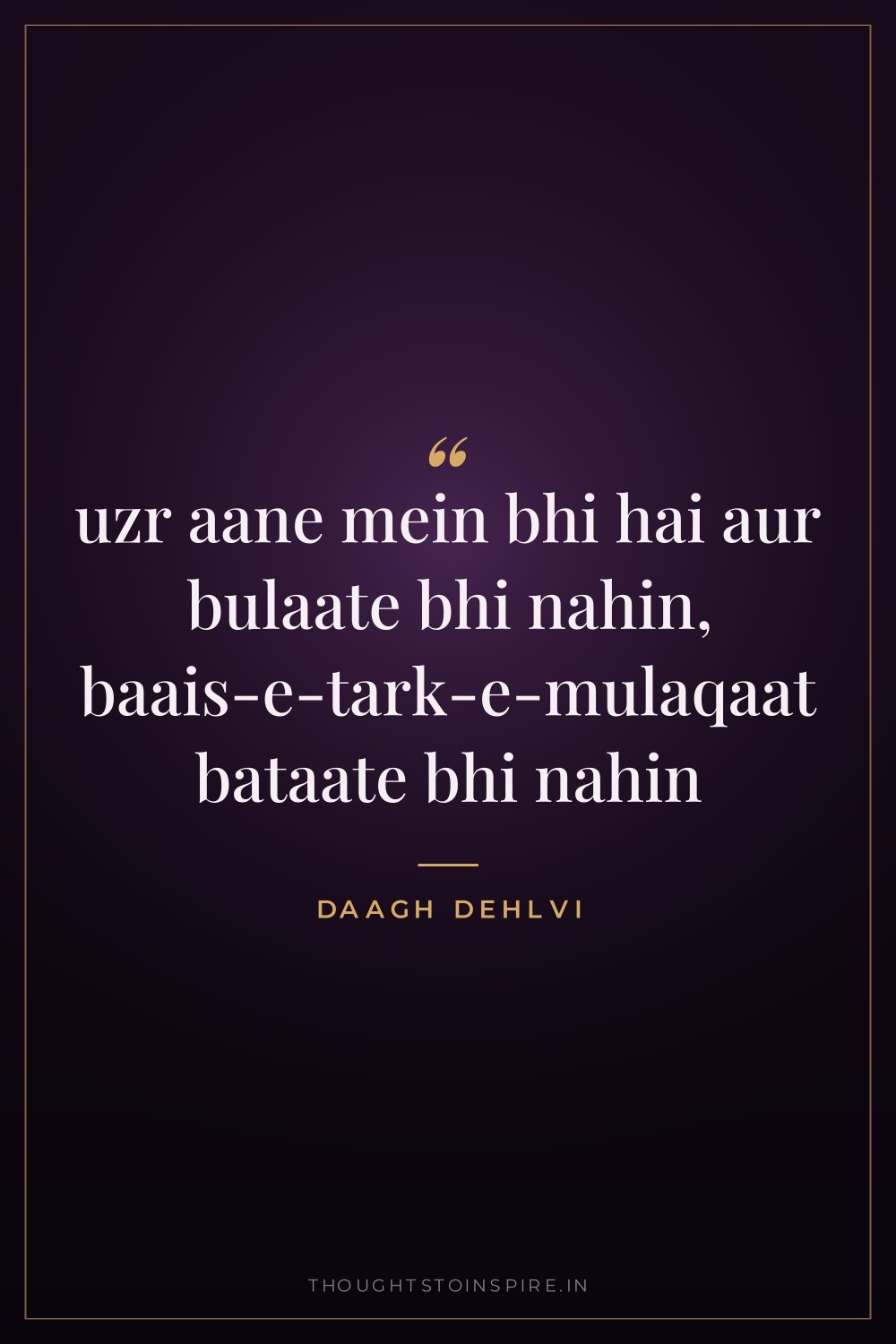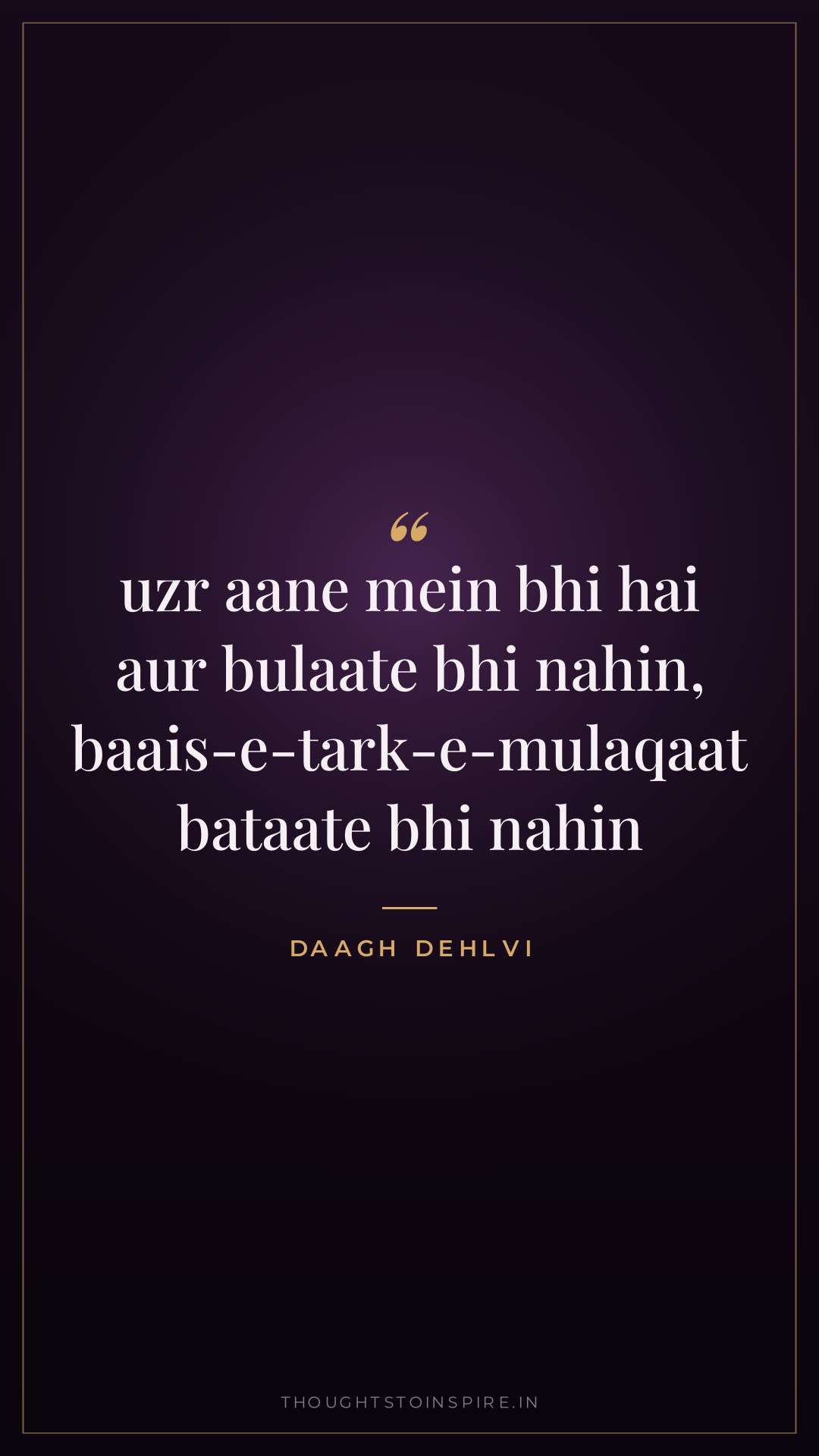
— from the ghazal beginning “uzr aane mein bhi hai aur bulaate bhi nahin”, Daagh Dehlvi (1831–1905)
About this quote
देवनागरी
उज़्र आने में भी है और बुलाते भी नहीं
बाइस-ए-तर्क-ए-मुलाक़ात बताते भी नहीं
اردو
عذر آنے میں بھی ہے اور بلاتے بھی نہیں
باعث ترک ملاقات بتاتے بھی نہیں
English
They have their excuses for not coming, and they will not invite me either — nor will they say what put an end to the meetings.
What it means
The opening couplet of the ghazal that also gives us the chilman line. Its subject is a specific modern misery with a nineteenth-century name: being dropped without being told. Baais-e-tark-e-mulaqaat — literally the cause of the abandonment of meeting.
What it teaches you
Read this as an instruction for the person doing the leaving. If you have decided to stop meeting someone, the decision is yours to make — but say the reason, because the couplet identifies the withheld cause, not the ending, as the injury. And if you are on the receiving side, let the couplet do the work it can do: it names the situation precisely, which is permission to stop re-reading old messages for a clue that was never put in them. You are owed an explanation, but you cannot extract one, and continuing to search for it inside the silence is the part you can stop.
अर्थ और सीख
आने का बहाना भी है, बुलाते भी नहीं, और मिलना क्यों छूटा — यह भी नहीं बताते। बिना कहे रिश्ता तोड़ देने की तकलीफ़ का पुराना, सटीक बयान।
अगर आप किसी से मिलना-जुलना बंद कर रहे हैं तो वजह कह दीजिए — शेर के मुताबिक़ चोट रिश्ता टूटने की नहीं, वजह छुपाने की है। और अगर आपके साथ ऐसा हुआ है तो पुराने संदेशों में इशारे ढूँढ़ना छोड़ दीजिए; जो कहा ही नहीं गया, वह वहाँ मिलेगा नहीं।
Where it comes from
Verified against the collected work of Daagh Dehlvi (1831–1905) on Urdu Wikisource, in the poem beginning عذر آنے میں بھی ہے اور بلاتے بھی نہیں (source). Devanagari transliteration and English rendering are our own.