— Paraphrase of Gandhi; his documented words appeared in Indian Opinion, 1913
About this quote
हिन्दी में
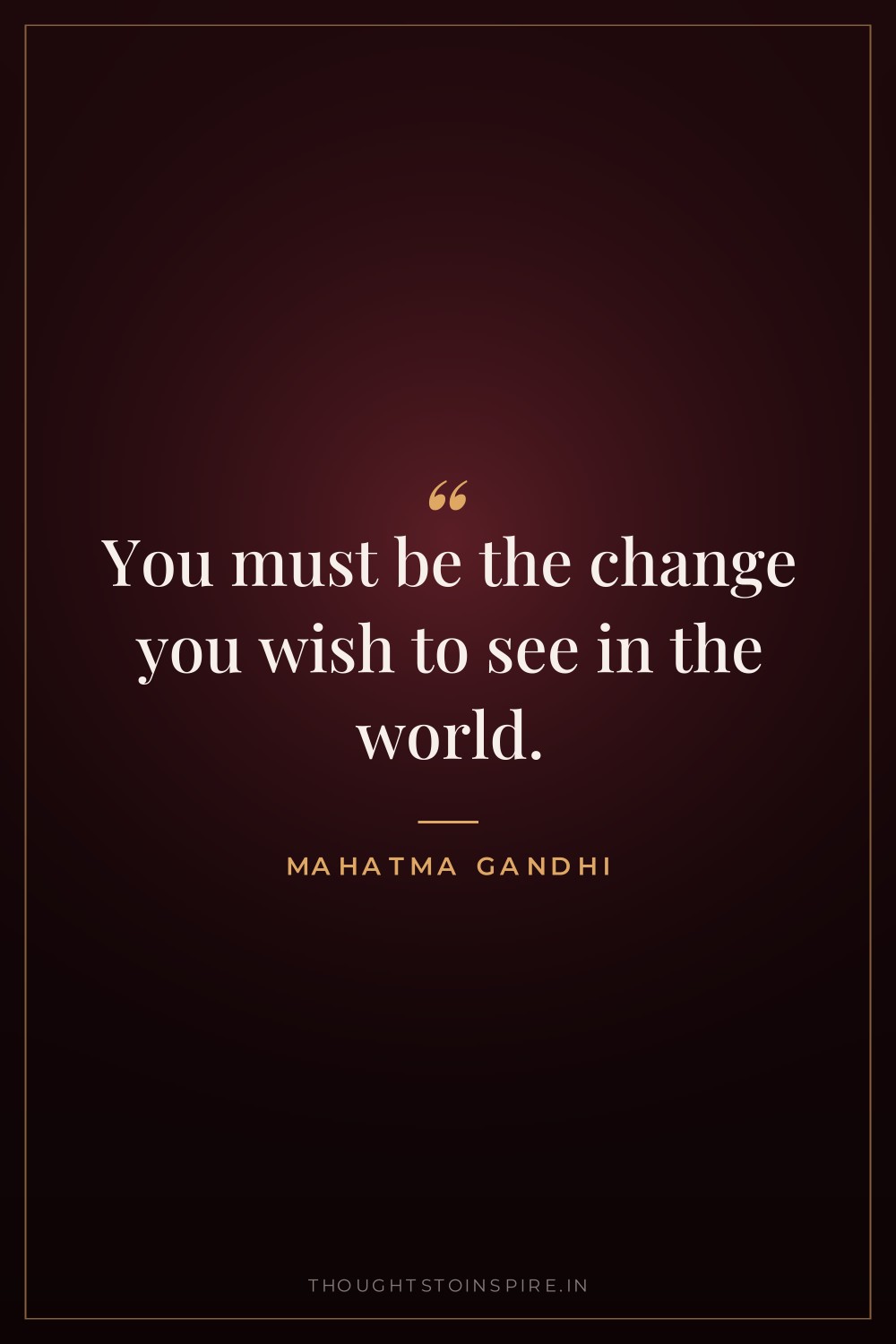
जो बदलाव तुम दुनिया में देखना चाहते हो, वही बदलाव पहले स्वयं बन जाओ।
What it means
Read strictly, the line is about method rather than virtue. Of all the things that would have to change for the world to change, exactly one is under your direct control, so that is where work can actually begin. This is why it survives as a rebuke to people who want reform from everybody except themselves.
Its weakness is that it promises a mechanism it never explains. Your becoming honest does not by itself make a dishonest office honest, and the compressed shape invites a stronger claim than it can carry — that private goodness is sufficient. In that stronger reading it gets quoted at people to keep them quiet about arrangements no amount of self-improvement will reach.
What it teaches you
Use it as a filter on your own complaints: take one thing you criticise regularly — bribery, caste habits, people who never reply — and name the small version of it you are still doing, because that is the part you can act on this week. Then notice that fixing it does not discharge the other half of the work, which is the arrangement itself; anyone quoting this line to stop you from that half is using it against its own logic.
अर्थ और सीख
पंक्ति कहती है कि दुनिया बदलने का पहला और अपने हाथ में रहने वाला काम स्वयं को बदलना है। पर यह मान लेना ठीक नहीं कि सिर्फ़ अपने भले होने से व्यवस्था सुधर जाएगी — इसी पाठ का इस्तेमाल अक्सर सवाल दबाने के लिए होता है। जिस बुराई की शिकायत आप करते हैं, पहले उसका अपना छोटा रूप ढूँढ़िए, और फिर भी बाहर का काम छोड़िए नहीं।
Where it comes from
The world’s favourite Gandhi quote — and a paraphrase. His documented words (1913, Indian Opinion) are longer and subtler: ‘If we could change ourselves, the tendencies in the world would also change… We need not wait to see what others do.’ The bumper-sticker version distils but was not written by him.