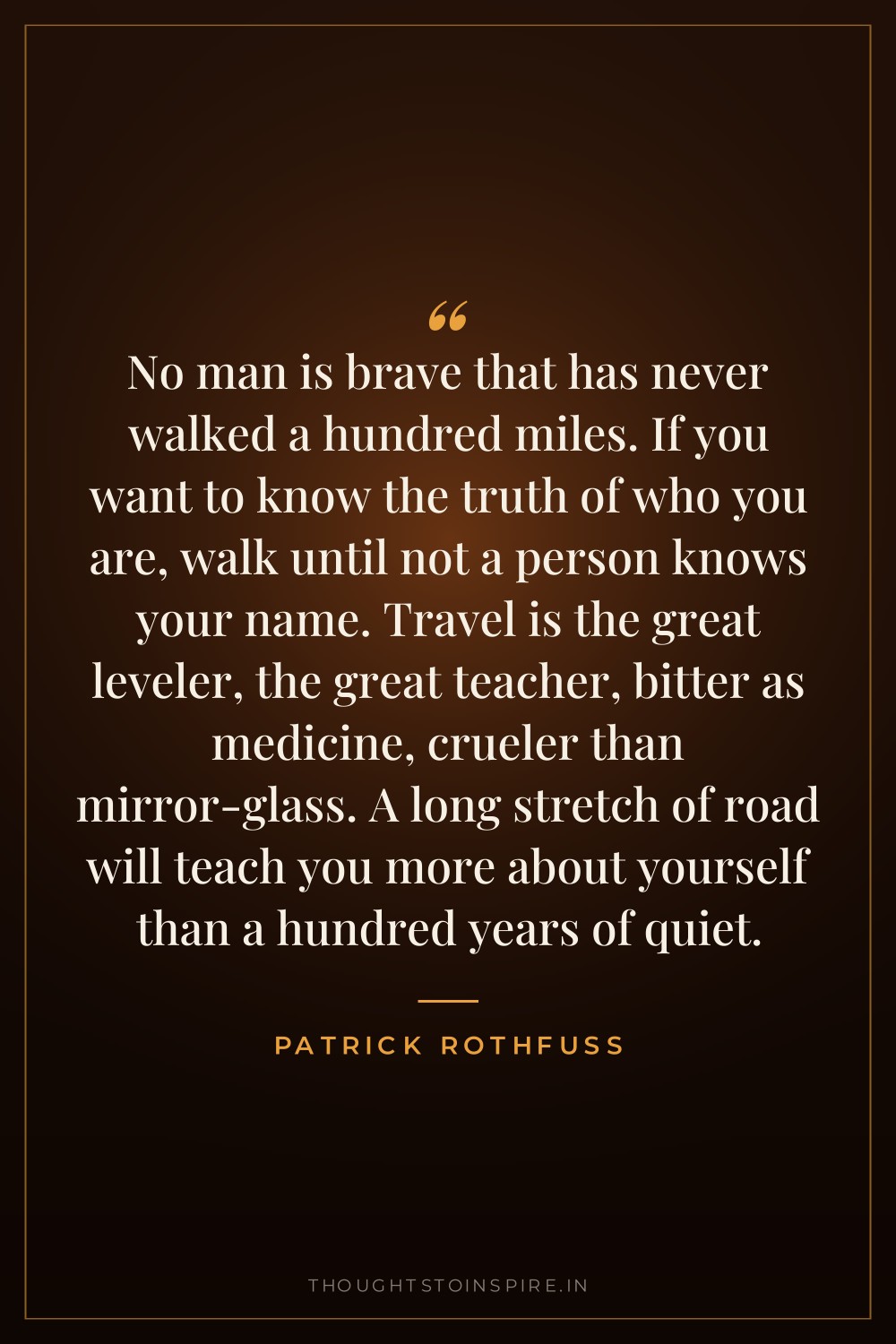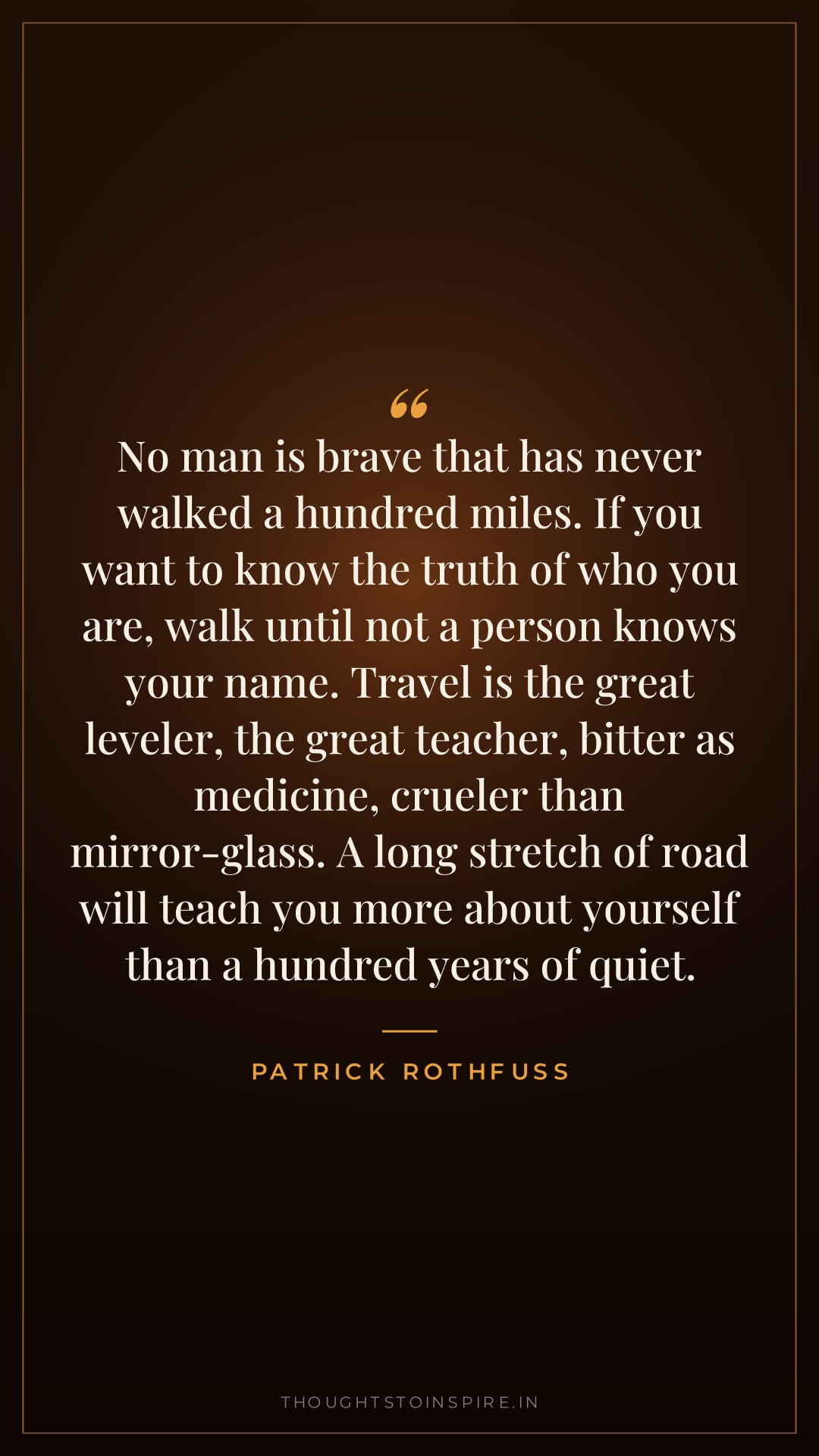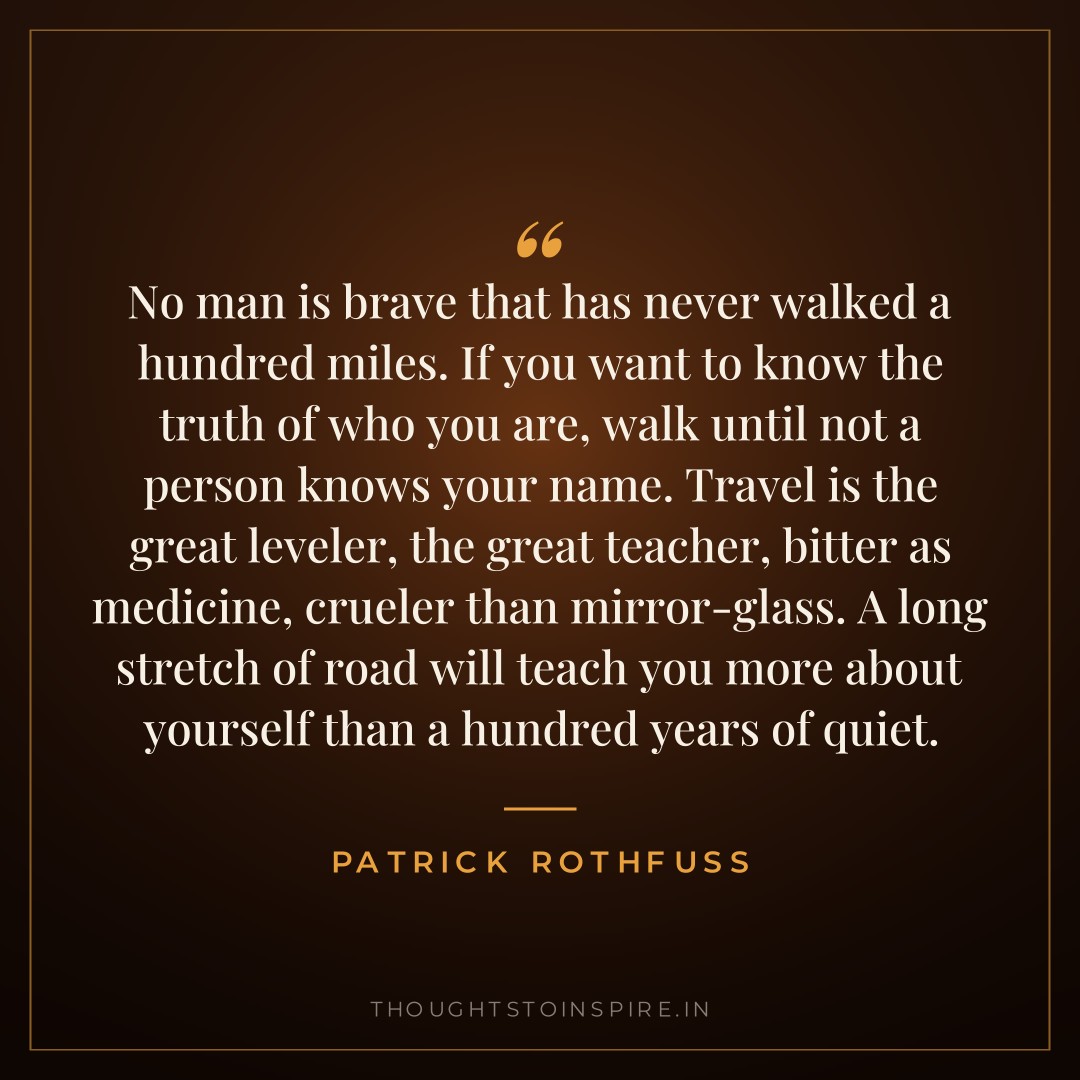
— The Wise Man's Fear, Patrick Rothfuss; reader submission, not checked against the text
About this quote
हिन्दी में
कोई आदमी बहादुर नहीं होता जब तक उसने सौ मील पैदल न चले हों। अगर सच में जानना है कि तुम कौन हो, तो वहाँ तक चलो जहाँ कोई तुम्हारा नाम न जानता हो। सफ़र सबको एक बराबर कर देता है, और सबसे बड़ा उस्ताद है — दवा जैसा कड़वा, आईने से भी ज़्यादा निर्दयी। एक लंबा रास्ता तुम्हें अपने बारे में उतना सिखा देगा, जितना सौ साल का सुकून नहीं सिखा पाएगा।
What it means
Three claims are stacked here, and the middle one carries the weight. First, that untested courage does not count as bravery. Second, that the test is not distance or hardship but anonymity — walk until not a person knows your name. Third, that the road grades you more harshly than a mirror, and the reason is precise: mirror-glass only reports your face, while a stretch of road reports how you behave once nobody is owed an explanation and no reputation is doing the work for you.
It gets shared as a wanderlust caption, and that reading loses the line. Nothing here is about seeing places; it is about being stripped of the audience that keeps you in character, which is why the same sentence calls travel a leveler — it removes rank rather than adding experiences. Bitter as medicine concedes the point outright: medicine is swallowed for a cure, not for pleasure. The closing comparison, a long road against a hundred years of quiet, is the most arguable part and worth keeping for that reason — a great deal of self-knowledge plainly does arrive while sitting still.
What it teaches you
Try separating the part of your self-assessment that survives without witnesses from the part that needs them. Most of what a person calls their character is propped up by people who already know their history and will supply the benefit of the doubt: colleagues who remember the good year, family who read the sulk as tiredness. The line’s test is what remains in a room where none of that context exists — a new city, a job where nobody knows your past work, a queue where you are nobody’s senior. Notice what you do in the first hour of not being deferred to; that reaction, not the walking, is the information the passage says you cannot get at home.
अर्थ और सीख
इस पंक्ति का कहना है कि जिस साहस की कभी परीक्षा नहीं हुई, वह साहस नहीं; और असली परीक्षा दूरी या तकलीफ़ नहीं, बल्कि गुमनामी है — वहाँ पहुँचना जहाँ कोई तुम्हारा नाम, ओहदा या पिछला रिकॉर्ड न जानता हो। आईना सिर्फ़ चेहरा दिखाता है, मगर रास्ता यह दिखाता है कि जब किसी के सामने सफ़ाई देने की ज़रूरत न हो, तब तुम्हारा बरताव कैसा होता है। सबक़ यह है कि अपने बारे में जो राय तुमने बनाई है, उसका कितना हिस्सा उन लोगों के सहारे टिका है जो तुम्हें पहले से जानते हैं — यह पहचानो; और ध्यान दो कि जहाँ कोई तुम्हें तवज्जो नहीं देता, वहाँ पहले ही घंटे में तुम्हारी प्रतिक्रिया क्या होती है।
Where it comes from
This quote was sent in by a reader through our submission form. They attribute it to Patrick Rothfuss, The Wise Man's Fear. Unlike the sourced quotations elsewhere on this site, we have not checked it against the book itself, so treat the wording and the attribution as unverified.
If you know where these words first appeared, or that they belong to someone else, please tell us and we will correct the page.