— The Upanishads (tr. Swami Paramananda, 1919)
About this quote
हिन्दी में
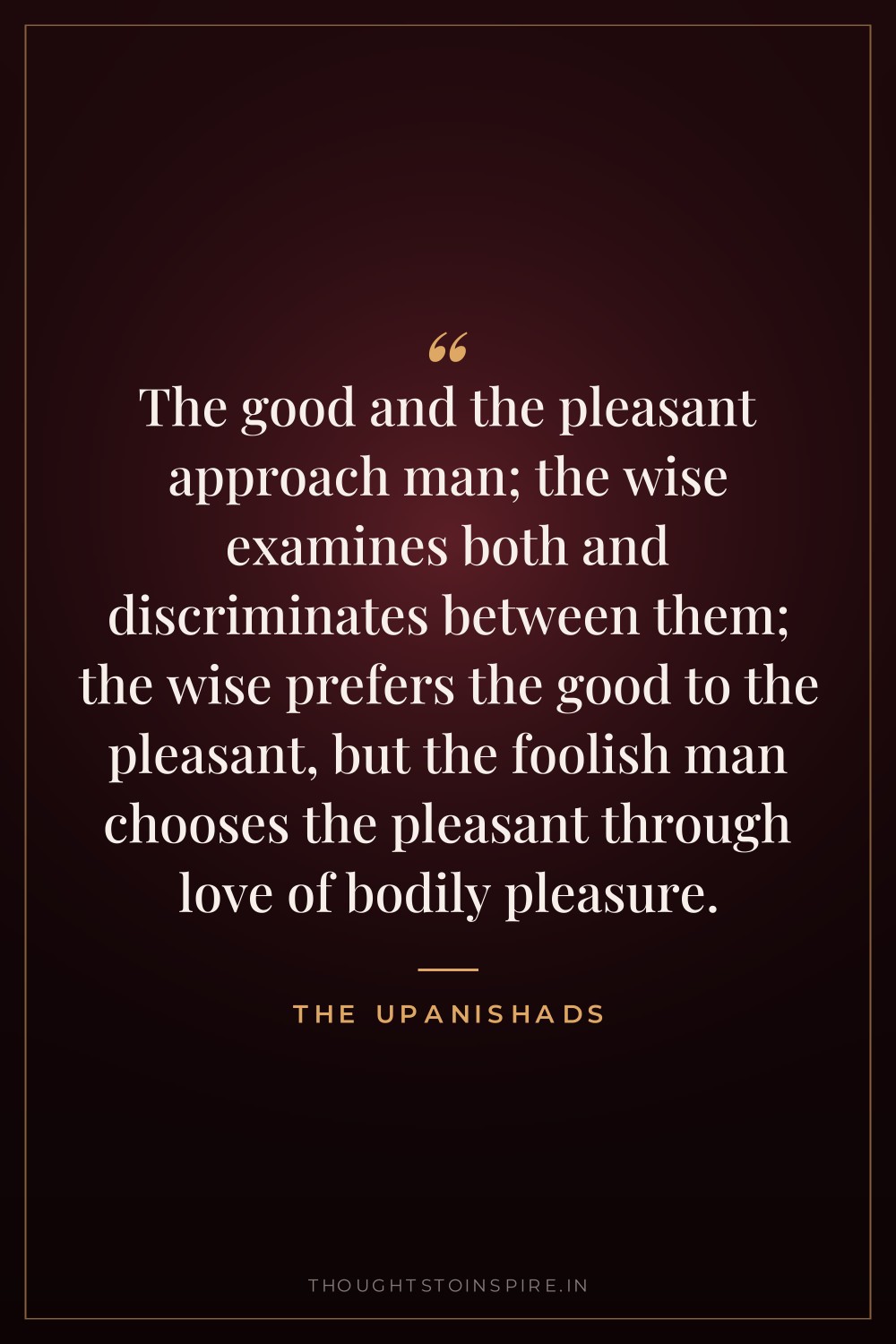
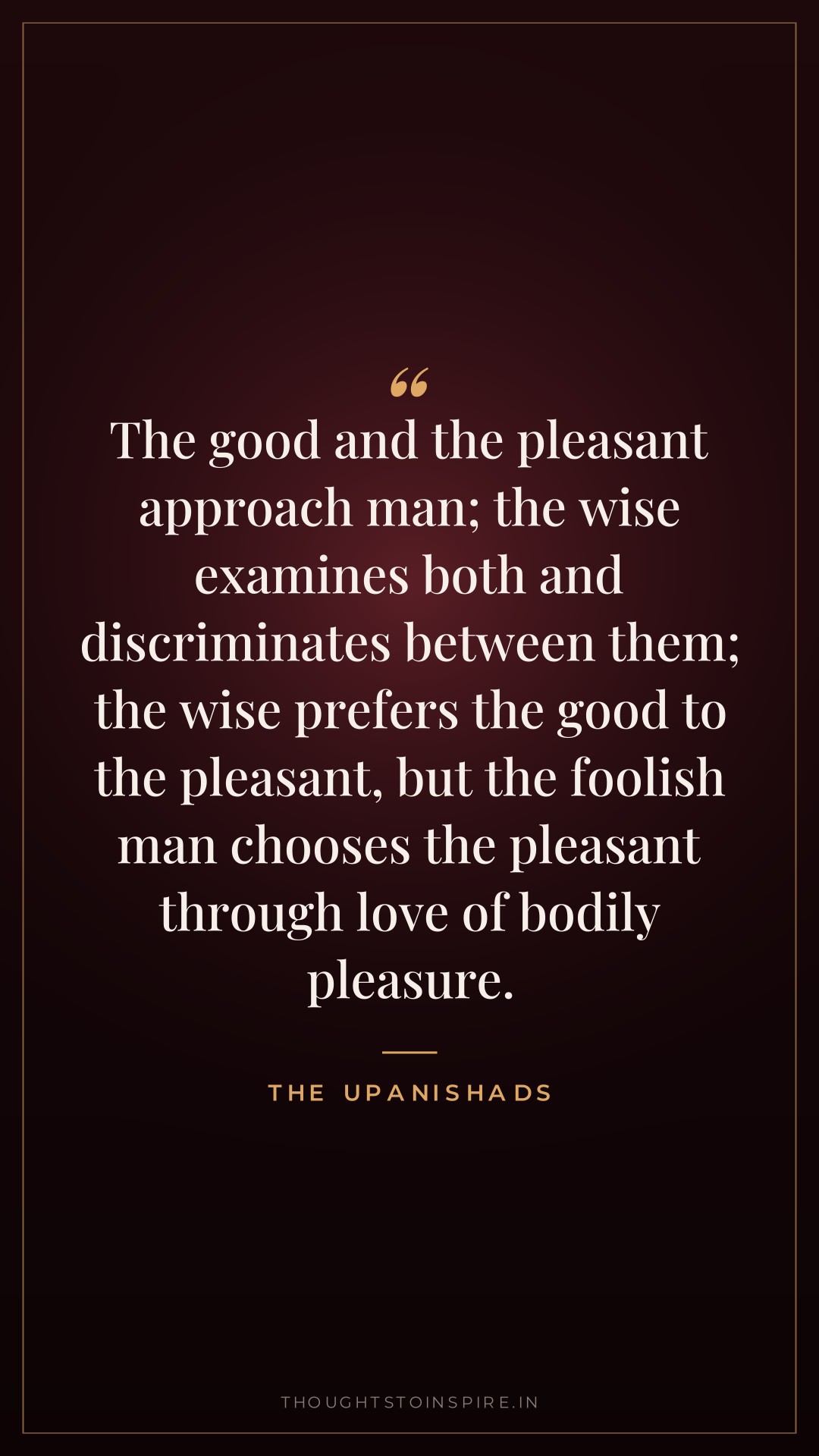
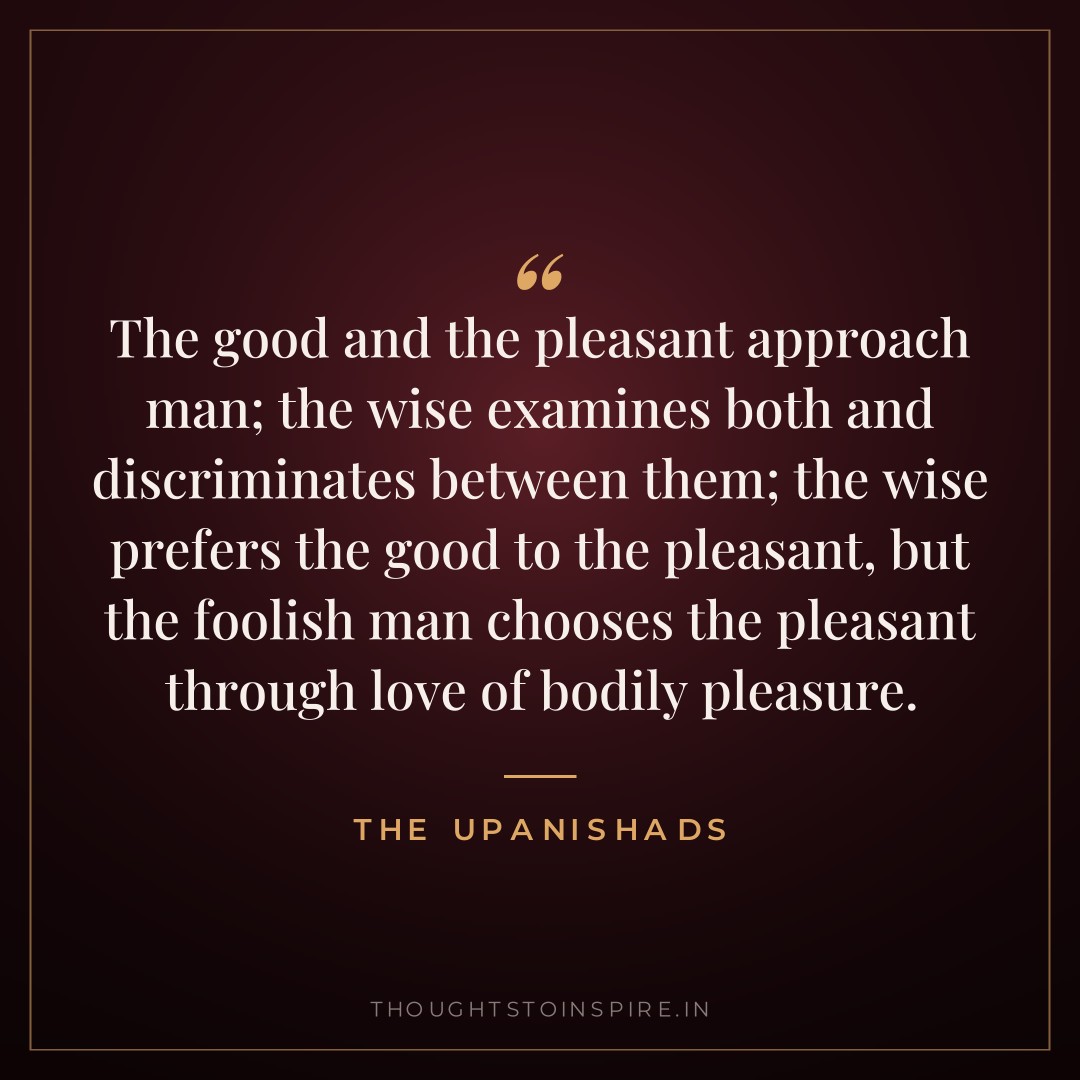
श्रेय और प्रेय — दोनों मनुष्य के पास आते हैं; बुद्धिमान दोनों को परखता है, उनमें भेद करता है और प्रेय के बजाय श्रेय को चुनता है; परंतु मूढ़ देह-सुख के मोह में प्रेय को चुन लेता है।
What it means
Both of them approach — they arrive unasked, side by side, and at the moment of arrival they look alike. That is why the line spells out three separate steps before any choice is made: examine both, tell them apart, then prefer. Most of the difficulty is in the middle step, and most people skip it, since the two feel like one thing wearing two labels.
It is commonly read as pleasure being sinful, but the line never says the pleasant is false, nor that the good must be unpleasant. Folly is located precisely: the foolish man lets bodily preference make the decision before judgment is consulted. Pleasure keeps its vote and loses the casting vote — and notice the fool is not described as weighing the two and choosing badly. He never weighed.
What it teaches you
Put a pause between the two arriving and your choosing, and use it to name which is which in plain words — this one is good for me, that one is agreeable to me — because once named they stop looking identical and the decision usually makes itself. The detectable symptom of the failure described here is speed: if you decided instantly, you did not discriminate, you were pulled. That also means the honest check happens before the choice, not after, since after the fact every option arrives with a reason attached.
अर्थ और सीख
श्रेय (जो हितकारी है) और प्रेय (जो प्रिय लगता है) — दोनों बिन बुलाए सामने आते हैं और पहली नज़र में एक जैसे दिखते हैं; इसीलिए पंक्ति पहले परखने और भेद करने की बात कहती है, और चुनाव बाद में। यहाँ सुख को पाप नहीं कहा गया; दोष इसमें है कि विवेक से पूछने से पहले देह की पसंद निर्णय कर लेती है। सीख यह है कि निर्णय से पहले ठहरकर दोनों को नाम दें — यह हितकारी है, यह प्रिय — और यदि चुनाव तुरंत हो गया, तो समझिए कि परखा नहीं, खिंच गए।
Where it comes from
The line draws a distinction most people blur: what is good and what is merely agreeable both present themselves, and they are not the same thing. The work it asks for is examination — holding the two side by side long enough to tell them apart — and it locates folly not in wanting pleasure but in letting bodily preference do the choosing before judgment gets a turn. Wisdom here is less a stock of knowledge than a habit of discriminating under temptation.
The text is from the Upanishads as translated into English by Swami Paramananda in 1919. The phrasing follows that translation closely, including its slightly formal repetition of “the wise” and “the pleasant”; the citation at hand records only title, translator and date, so the passage is identified no more precisely than that.