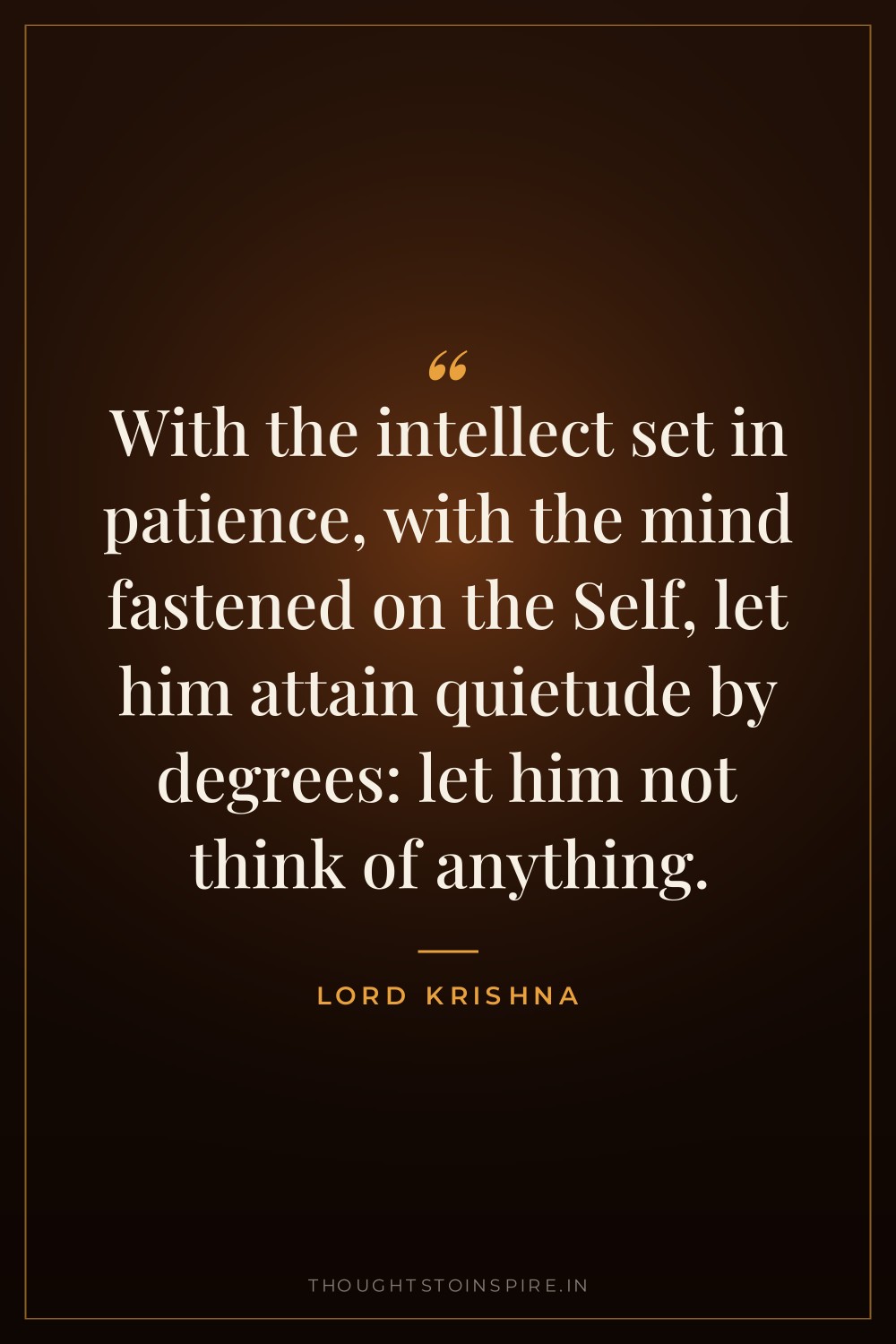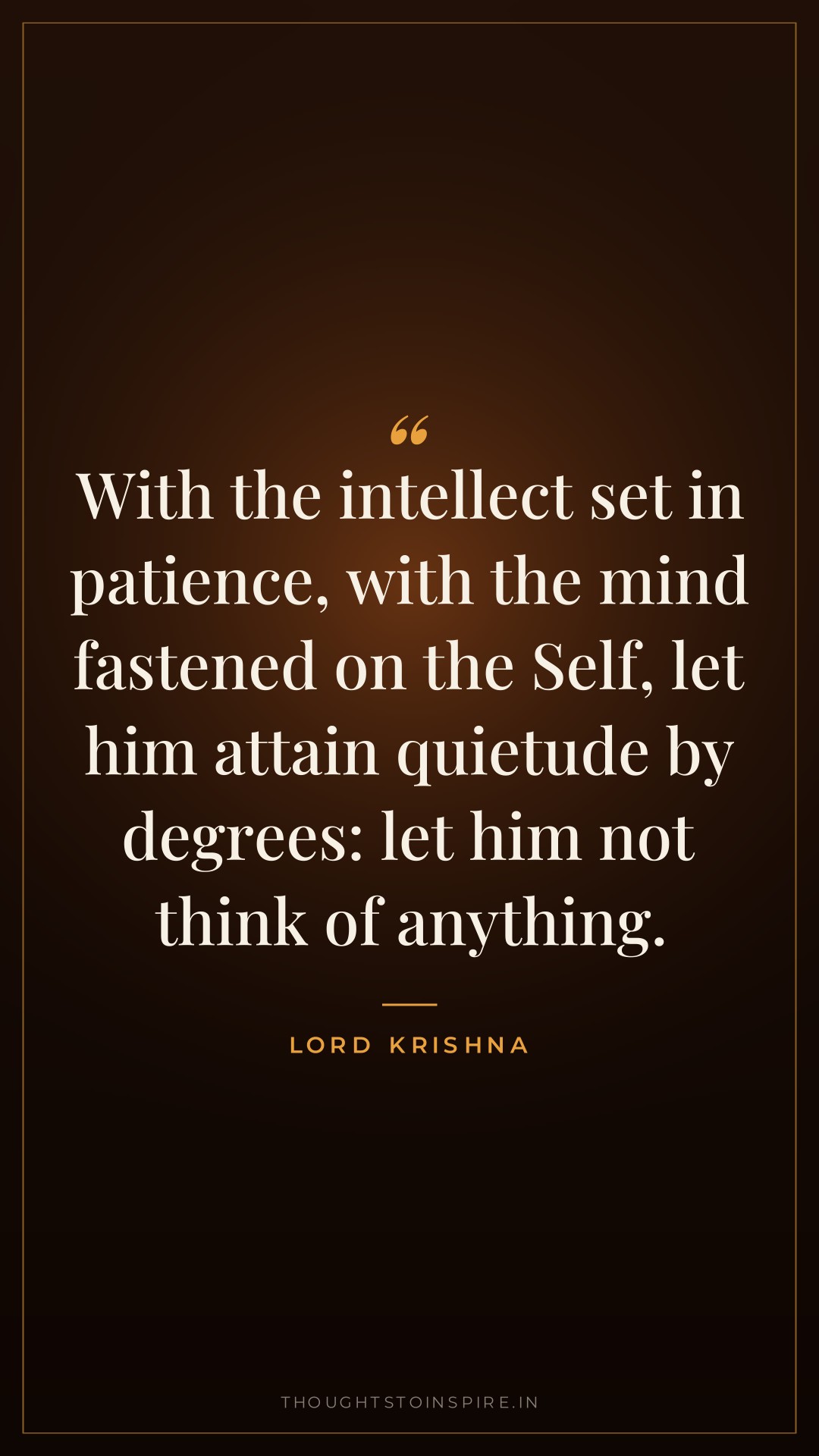
— Bhagavad Gita 6.25 (tr. Swami Swarupananda, 1909)
About this quote
हिन्दी में
धैर्य से युक्त बुद्धि के सहारे, मन को आत्मा में लगाकर धीरे-धीरे शांति प्राप्त करे — और किसी भी वस्तु का चिंतन न करे।
What it means
Read the order carefully. Patience is the faculty that holds the intellect steady; the mind is then fastened to one object, the Self; quietude is reached by degrees; and only at the very end does the instruction arrive to think of nothing at all.
Popular use takes that last clause as step one, which turns meditation into a wrestling match with thoughts. In the verse, not thinking of anything is the outcome of the sequence, not its entry point, and the phrase by degrees rules out getting there in a single sitting. The value of the line is that it is a procedure with a stated pace attached, not a demand issued all at once.
What it teaches you
Reverse the order you probably practise in. Do not open by trying to stop thoughts; open by giving the mind one object and letting patience, not force, keep the intellect there — the blankness belongs at the end of that sequence. And take ‘by degrees’ literally as a measurement instruction: judge the practice across months, not by whether this morning’s sitting happened to feel quiet.
अर्थ और सीख
यहाँ क्रम ही मुख्य बात है: पहले धैर्य से बुद्धि को थामिए, फिर मन को आत्मा में लगाइए, और शांति धीरे-धीरे आएगी — कुछ भी न सोचना इस क्रम का अंत है, आरंभ नहीं। लोग अक्सर उल्टा करते हैं और पहले ही विचारों से लड़ने लगते हैं। सीख यह कि ‘धीरे-धीरे’ को गंभीरता से लें और अभ्यास को महीनों के पैमाने पर आँकें, एक बैठक से नहीं।
Where it comes from
This verse comes from Chapter 6 of the Bhagavad Gita, Dhyana Yoga (The Yoga of Meditation) — the Gita’s manual of meditation: posture, moderation, the restless mind patiently reined in, and the vision of the Self in all beings.
The Bhagavad Gita — ‘the Song of the Lord’ — is the dialogue between Krishna and the warrior Arjuna set within the Mahabharata, and one of the most influential spiritual texts ever composed. English translation by Swami Swarupananda (1909), a public-domain rendering from the Sanskrit; the exact chapter and verse are cited with this quote.