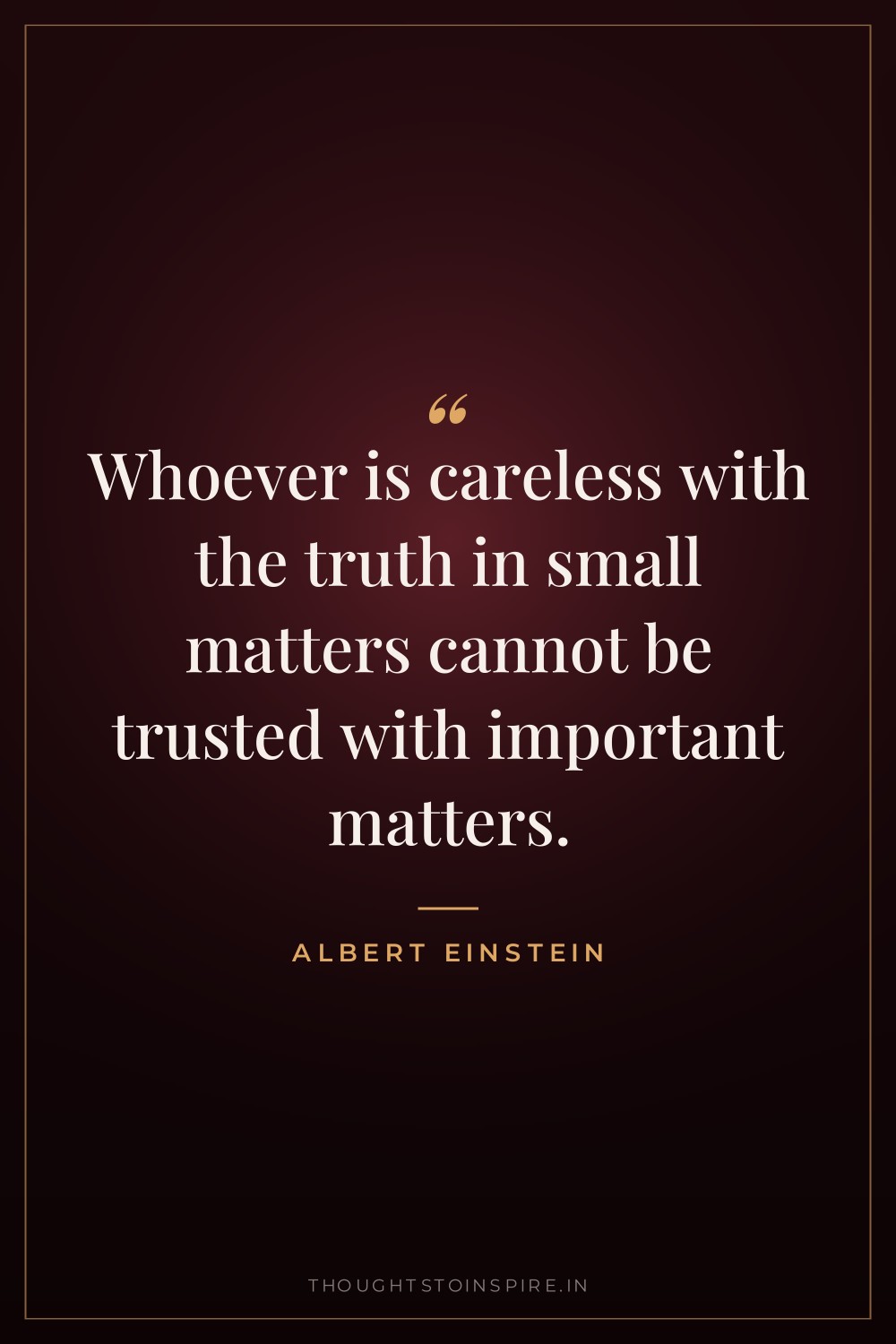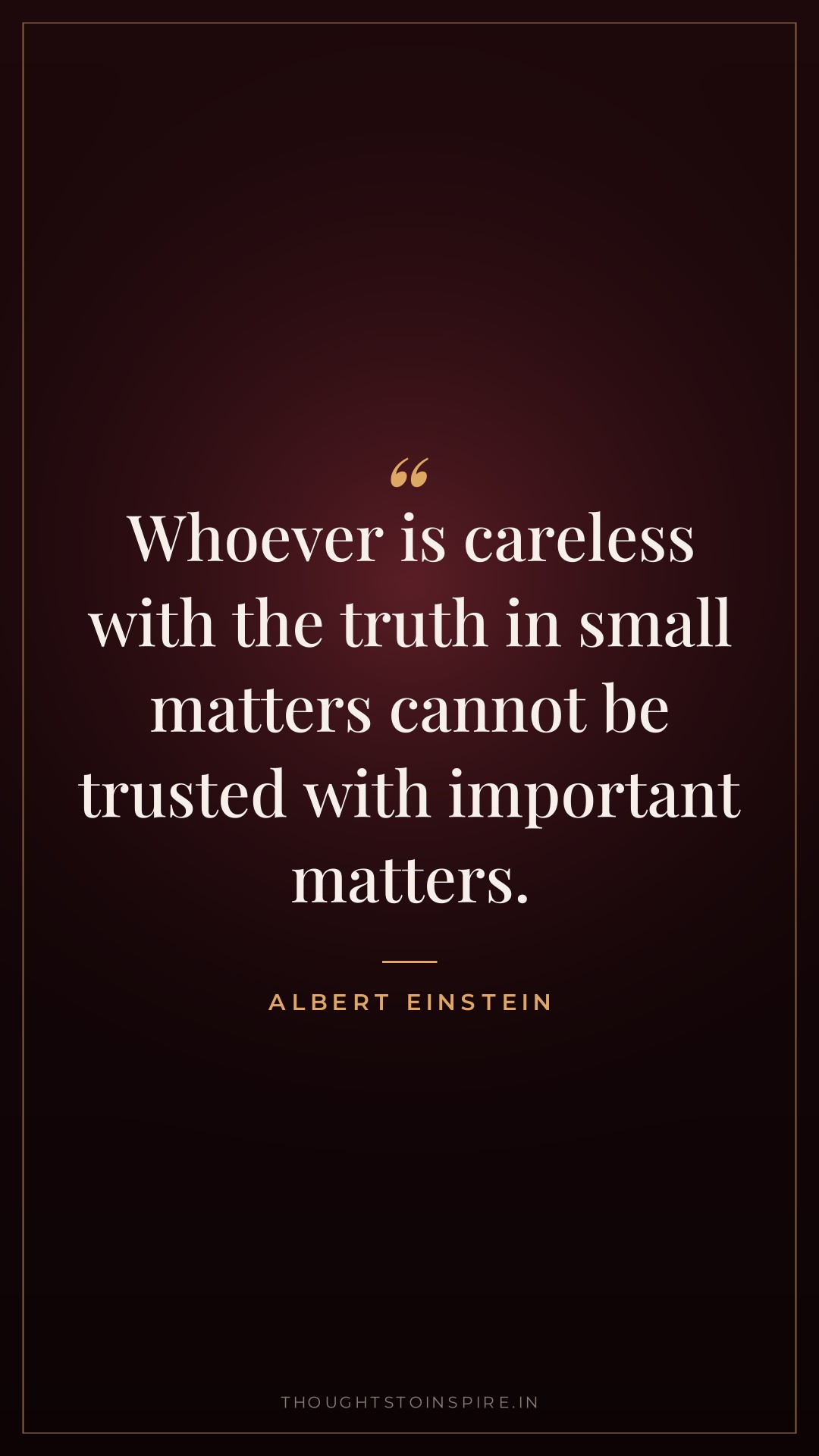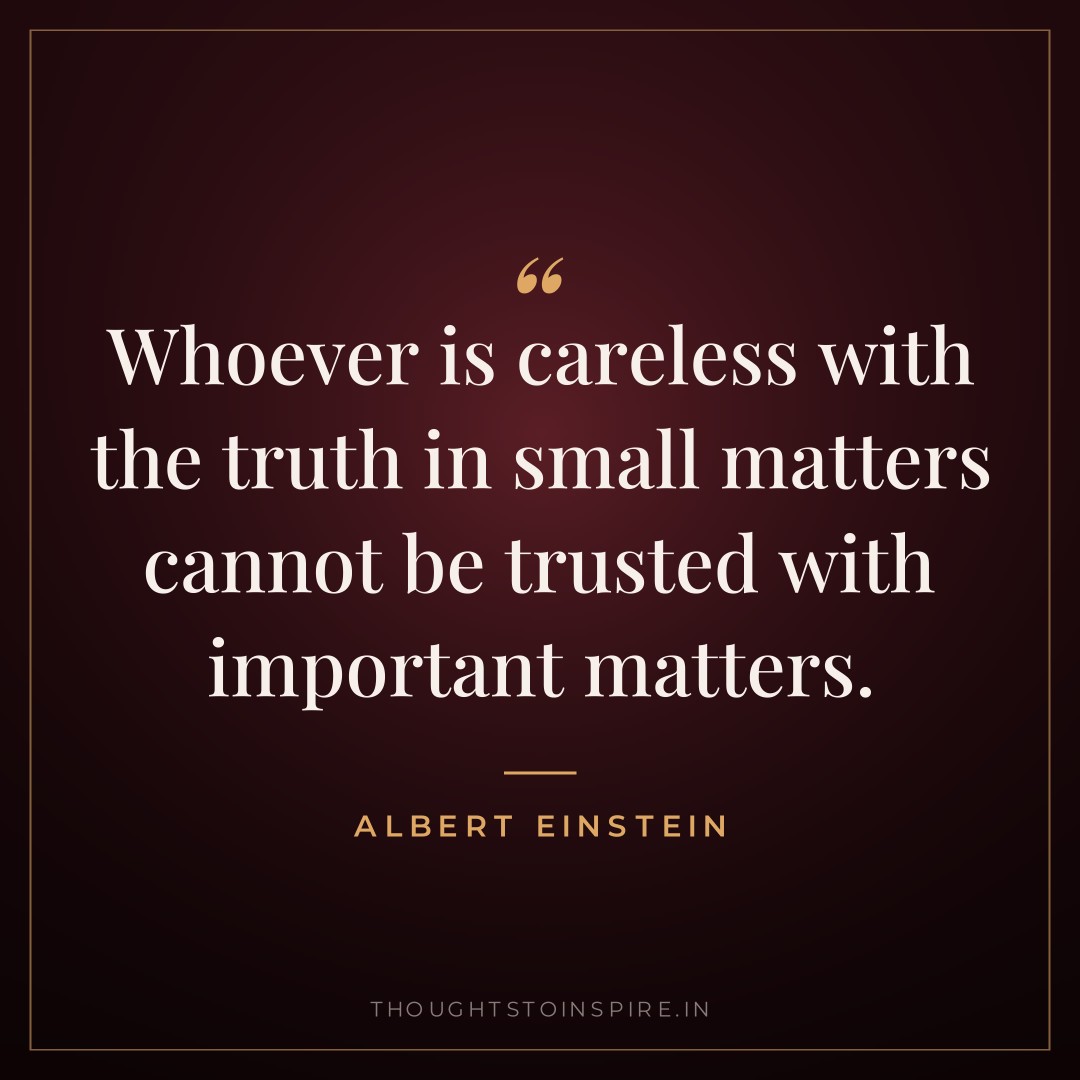
— Generally traced to Einstein’s unfinished Israel Independence Day statement, April 1955, translated from German
About this quote
हिन्दी में
जो छोटी-छोटी बातों में सच के प्रति लापरवाह है, उसे बड़े मामलों में भरोसे के लायक नहीं माना जा सकता।
What it means
The word carrying the weight is careless, not dishonest. This is not about liars. It is about the person who rounds a figure up, sharpens an anecdote for effect, or repeats a number they never checked — and it says that this habit is evidence, precisely because there was nothing at stake worth lying for.
It runs the inference from small to large, which is the useful direction: big claims are expensive to audit, small ones are cheap. And it says cannot be trusted, not is a bad person — it is a rule about what a listener is entitled to conclude, not a verdict on character.
What it teaches you
Check the small checkable thing: the date, the figure, the name of the study someone cites in passing. If it is wrong and they did not mind, you have just learned something about the parts of their account you cannot check. Apply it to your own drafts too — the throwaway statistic you did not look up is the one that costs you a reader.
अर्थ और सीख
यह पंक्ति झूठ बोलने वालों से ज़्यादा लापरवाही की बात करती है — जो छोटी बातों में सच को हल्के में लेता है, आँकड़े या तारीख बिना जाँचे दोहरा देता है। बात यह है कि छोटी बातें जाँची जा सकती हैं, बड़ी नहीं; इसलिए छोटी बात की लापरवाही बड़ी बात के बारे में सबूत बन जाती है। सीख: दूसरों की और अपनी भी वे छोटी बातें जाँचिए जिन्हें जाँचा जा सकता है।
Where it comes from
Generally traced to the statement Einstein was drafting for Israel’s Independence Day when he died in April 1955 — his last written words. The German thought translates: ‘Whoever is careless with the truth in small matters cannot be trusted in important affairs.’