— Discourses and the Enchiridion (tr. George Long)
About this quote
हिन्दी में
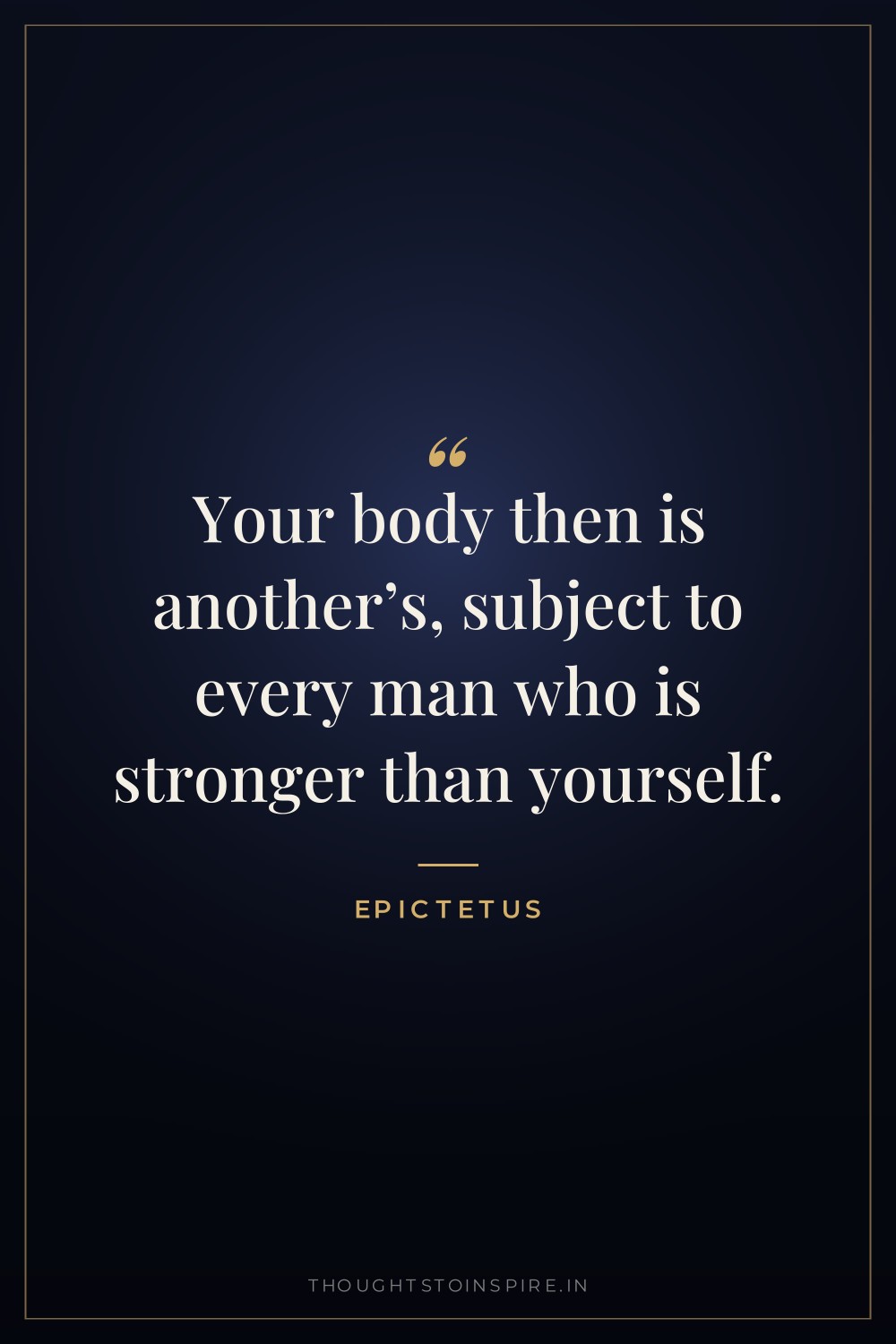
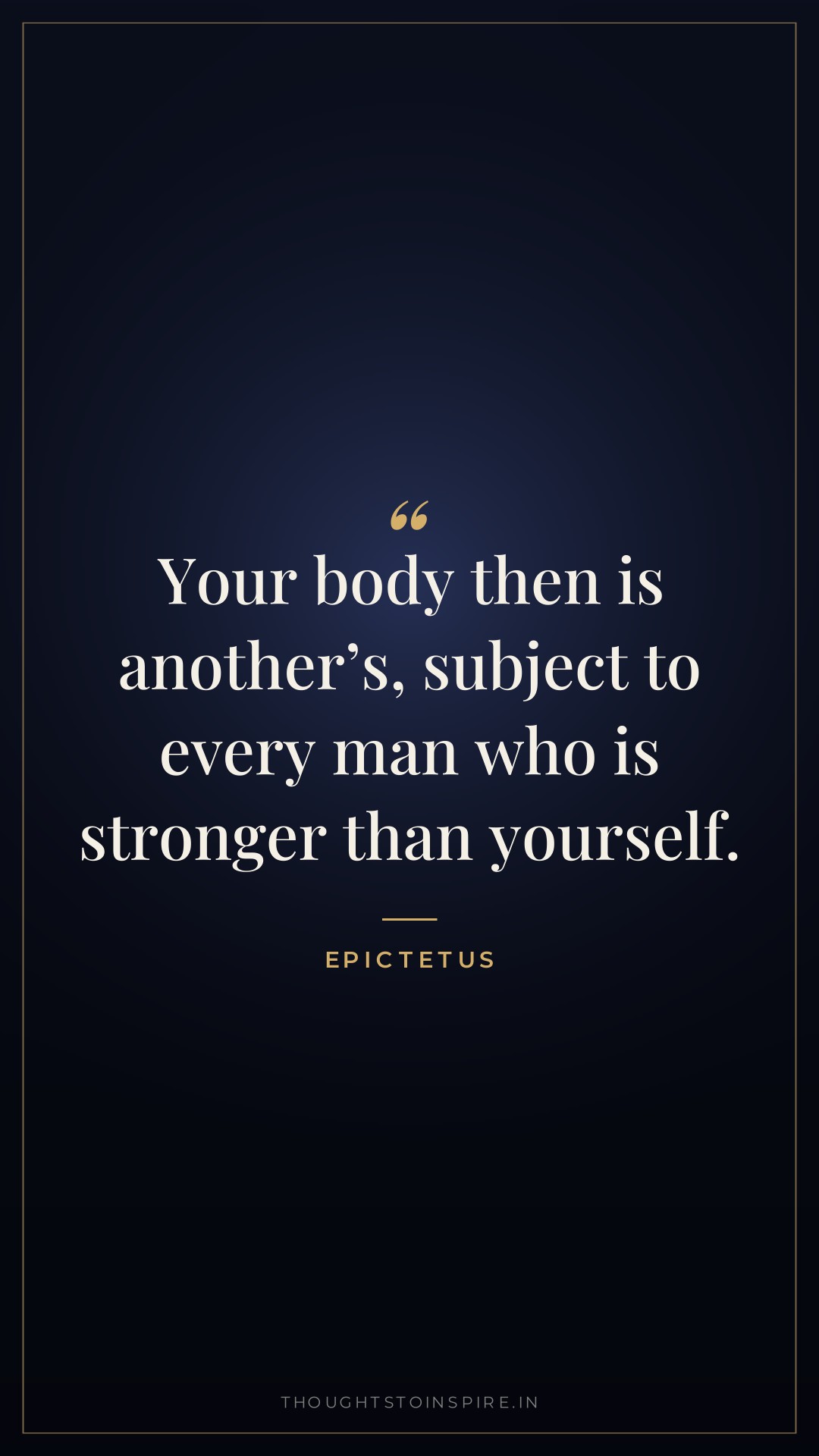
तुम्हारा शरीर तो दूसरे का है — हर उस व्यक्ति के अधीन, जो तुमसे अधिक बलवान है।
What it means
The claim is about ownership, not danger. Epictetus does not say the body is fragile or unimportant; he says it belongs to someone else, and the test of ownership is who can overrule you about it. Notice that the standard is comparative — stronger than yourself — so no amount of training, wealth or protection ever settles the question, because the class of people stronger than you never empties.
It is worth keeping because it blocks the usual escape route. The line is often read as contempt for the body, or as a recommendation of asceticism; it recommends nothing about the body at all and passes no verdict on its worth. It only reclassifies it, moving the body out of the column of things you own and into the column of things you hold while nobody with more force wants otherwise.
What it teaches you
Notice the phrase they cannot do that to me the next time you think it, and check whether you mean nobody is permitted to or nobody is able to. Where the answer is the first, you are relying on someone else’s restraint — a reasonable thing to rely on and a poor thing to call security — so keep your bodily precautions as precautions rather than guarantees, and put your plans and your sense of standing somewhere a stronger person’s decision cannot reach.
अर्थ और सीख
एपिक्टेटस कह रहे हैं कि शरीर तुम्हारी संपत्ति नहीं है, क्योंकि उस पर अंतिम ज़ोर उसी का है जो बल में तुमसे बढ़कर है — और तुमसे बलवान लोगों की सूची कभी ख़ाली नहीं होती। वे शरीर को तुच्छ नहीं कह रहे, बस उसे ‘मेरा’ वाली श्रेणी से हटा रहे हैं। सीख यह है कि अपनी सुरक्षा और अपना मान उस चीज़ में न गाड़ो जिसे कोई ताक़तवर छीन सकता है; सावधानी बरतो, पर उसे गारंटी मत समझो।
Where it comes from
Epictetus puts the body firmly outside the self that belongs to you. Anyone with greater strength can seize it, injure it, chain it, or kill it, which by his reckoning means it was never securely yours to begin with — it is on loan, and the loan can be called in by force. The claim sounds bleak but is meant as relief: what can be taken is not where a person should invest, which leaves judgment and choice as the only property no stronger man can reach.
From the Discourses together with the Enchiridion, in George Long’s English translation. Epictetus had himself been enslaved, and the collection returns often to the question of what remains one’s own when the body plainly is not; the possessive phrasing here, another’s, is the translator’s older English.