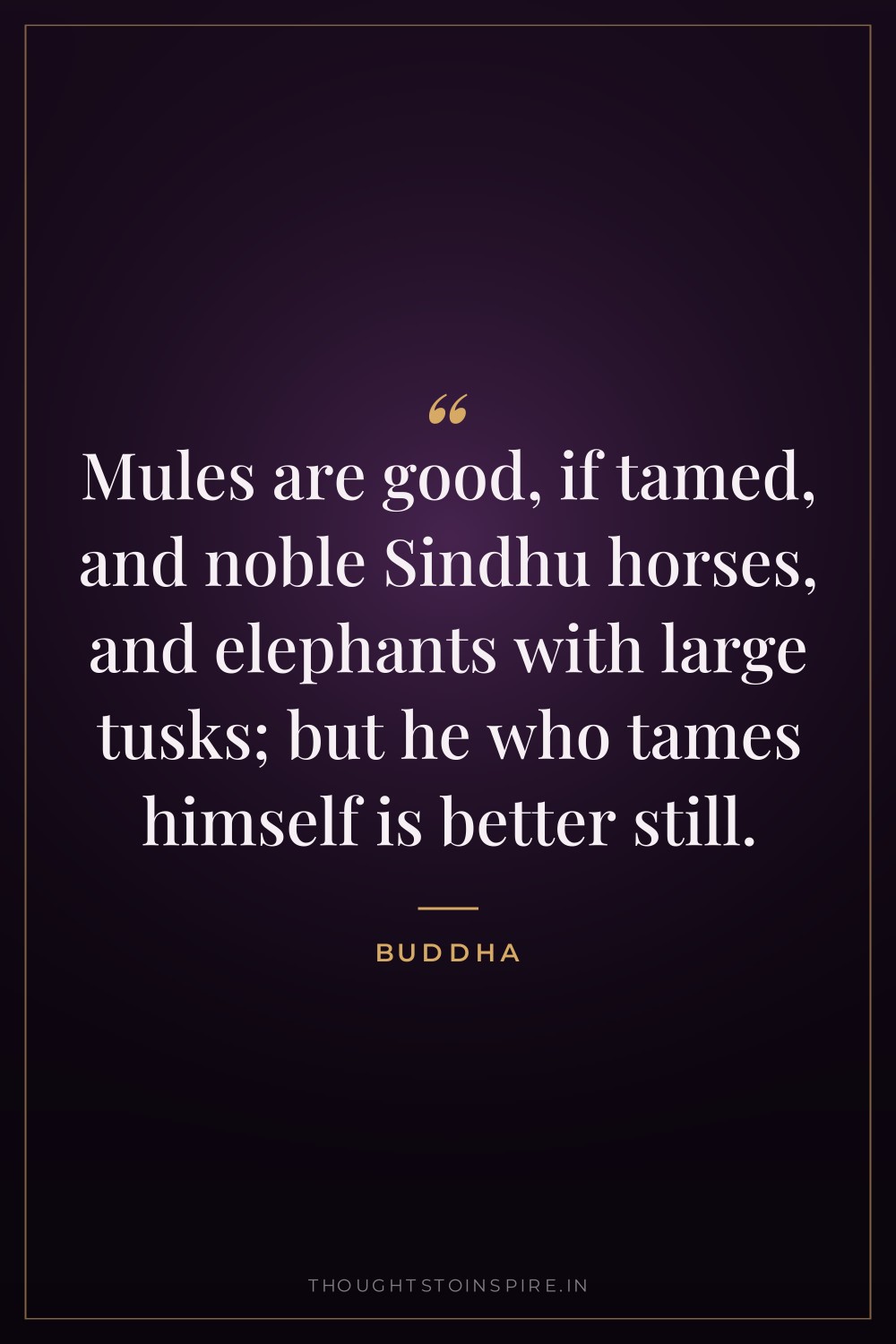
— The Dhammapada, verse 322 (tr. F. Max Müller, 1881)
About this quote
हिन्दी में
सधे हुए खच्चर अच्छे होते हैं, और सिंधु देश के उत्तम घोड़े, और बड़े दाँतों वाले हाथी भी; पर जो स्वयं को साध ले, वह इन सबसे श्रेष्ठ है।
What it means
The line is a ranking, and the things ranked are not chosen at random: mules, Sindhu-bred horses, tusked elephants — the working capital and prestige assets of the age, roughly the equivalent of naming a truck fleet and a pair of imported cars. The verse concedes their worth completely. Its only move is to add one more item at the top of that same list.
The conditional is what carries it. Each animal is good if tamed — an untrained war elephant is a liability, not an asset — and the identical standard is then turned on the listener. A person, like the animals, is not valuable as raw material; the value arrives with the training. What makes it worth keeping is that it argues about worth rather than scolding about vanity, which is how it is usually pressed into service.
What it teaches you
Every item on that list can be handed to a trainer; the last one cannot. The next time you try to settle a difficulty by acquiring something — the course, the tool, the better system — check whether the problem sits in the thing or in how you behave around it, because only one of those is available for purchase.
अर्थ और सीख
यह पद कहता है कि सधे हुए खच्चर, सिंधु देश के उत्तम घोड़े और बड़े दाँतों वाले हाथी — उस युग की सबसे बहुमूल्य संपत्ति — सचमुच मूल्यवान हैं, पर केवल तभी जब वे सधे हुए हों। फिर वही कसौटी मनुष्य पर रख दी जाती है: कच्चा मनुष्य नहीं, सधा हुआ मनुष्य श्रेष्ठ है। सीख यह है कि पशु को साधने के लिए कोई और रखा जा सकता है, पर स्वयं को साधने का काम किसी और को नहीं सौंपा जा सकता।
Where it comes from
This is verse 322 of the Dhammapada, from the chapter called The Elephant — the elephant similes: enduring abuse silently, taming oneself as the best of victories.
The Dhammapada is a collection of 423 verses in Pali, among the oldest and most widely read records of the Buddha’s teaching. This English translation is by F. Max Müller (1881), the pioneering Oxford scholar of Indian texts; the verse number is cited with this quote.