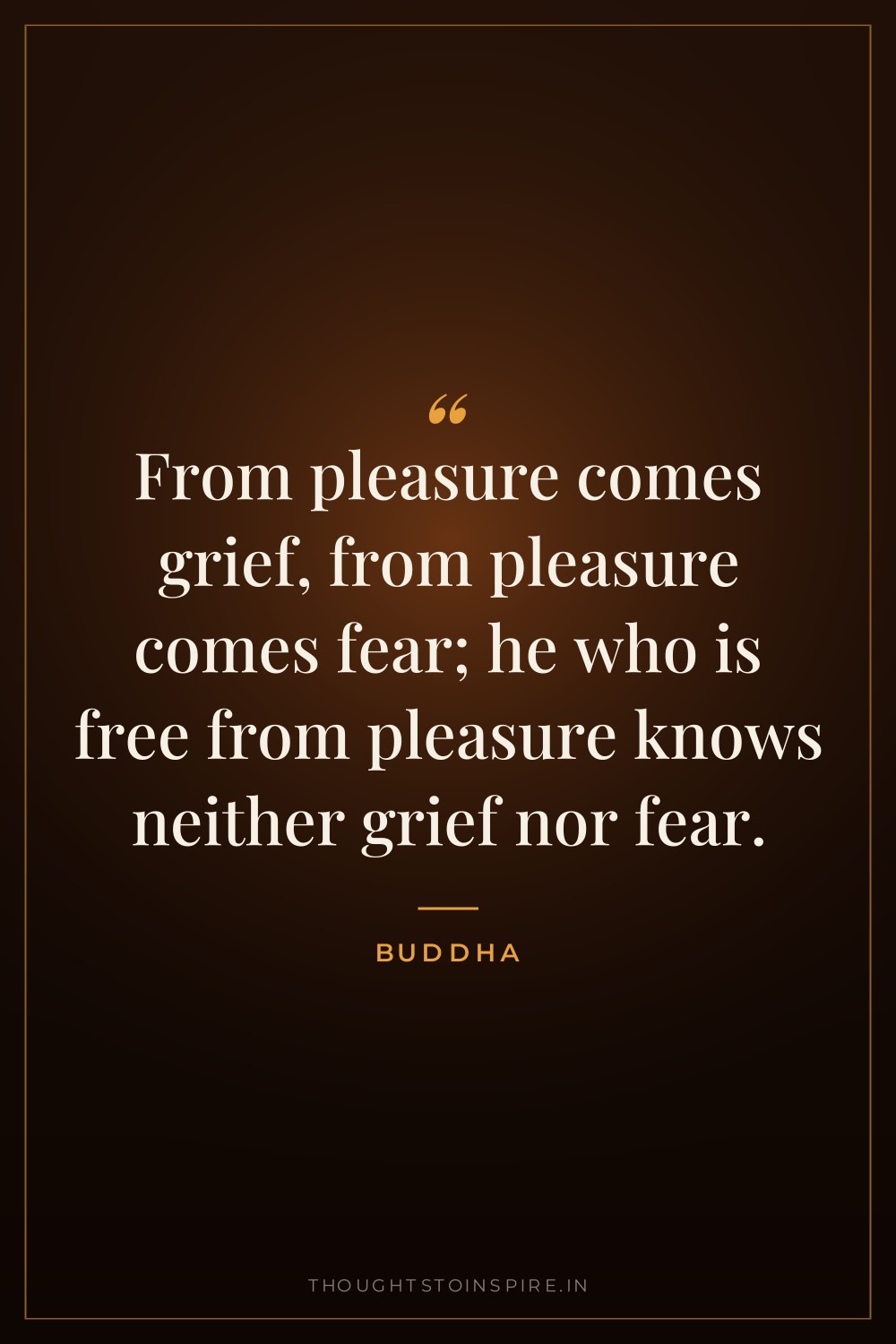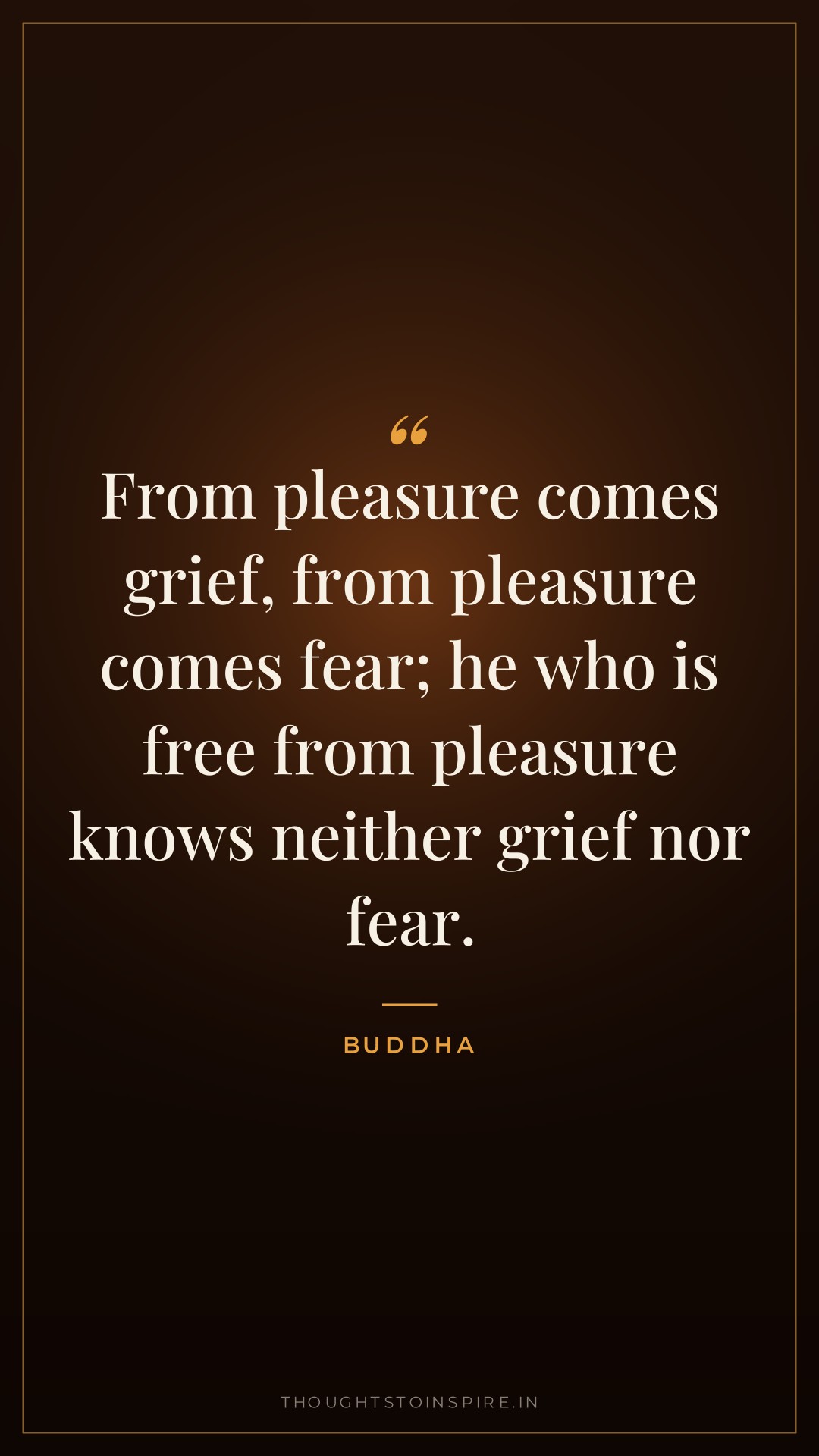
— The Dhammapada, verse 212 (tr. F. Max Müller, 1881)
About this quote
हिन्दी में
सुख से शोक उपजता है, सुख से ही भय; जो सुख की पकड़ से मुक्त है, उसे न शोक है, न भय।
What it means
The claim is causal, and it runs in the order people usually reverse: grief and fear are not produced by loss, they are produced by the holding. The instant something becomes dear, the fear of losing it already exists, fully formed, before anything has happened. Grief is only that fear arriving on schedule. Müller’s pleasure renders a Pali word closer to what is dear, which is why the verse reads as being about attachment rather than about enjoyment.
It is worth keeping because it names a price and says when the price is paid — at acquisition, not at loss. Note what it does not say: it does not call the pleasant thing bad, and it does not ask you to destroy it. It states an exchange rate, and leaves the transaction to you.
What it teaches you
When you notice yourself anxious about keeping something, treat the anxiety as a measurement rather than a malfunction — it is reporting how much you have staked, not that anything has gone wrong. The verse points at the one window in which that reading is still useful: before the loss, while what you do about the investment is still a choice.
अर्थ और सीख
यह पंक्ति कहती है कि शोक और भय बाहर से नहीं आते — वे उसी क्षण जन्म ले लेते हैं जब कोई चीज़ हमें प्रिय हो जाती है। डर नुकसान के बाद नहीं, लगाव के साथ ही पैदा हो जाता है। सीख यह नहीं कि सुख त्याग दो, बल्कि यह पहचानो कि जिसे जितना कसकर पकड़ा है, भय भी उतना ही बड़ा है।
Where it comes from
This is verse 212 of the Dhammapada, from the chapter called Pleasure — how grief and fear grow from clinging, and cease when clinging ceases.
The Dhammapada is a collection of 423 verses in Pali, among the oldest and most widely read records of the Buddha’s teaching. This English translation is by F. Max Müller (1881), the pioneering Oxford scholar of Indian texts; the verse number is cited with this quote.