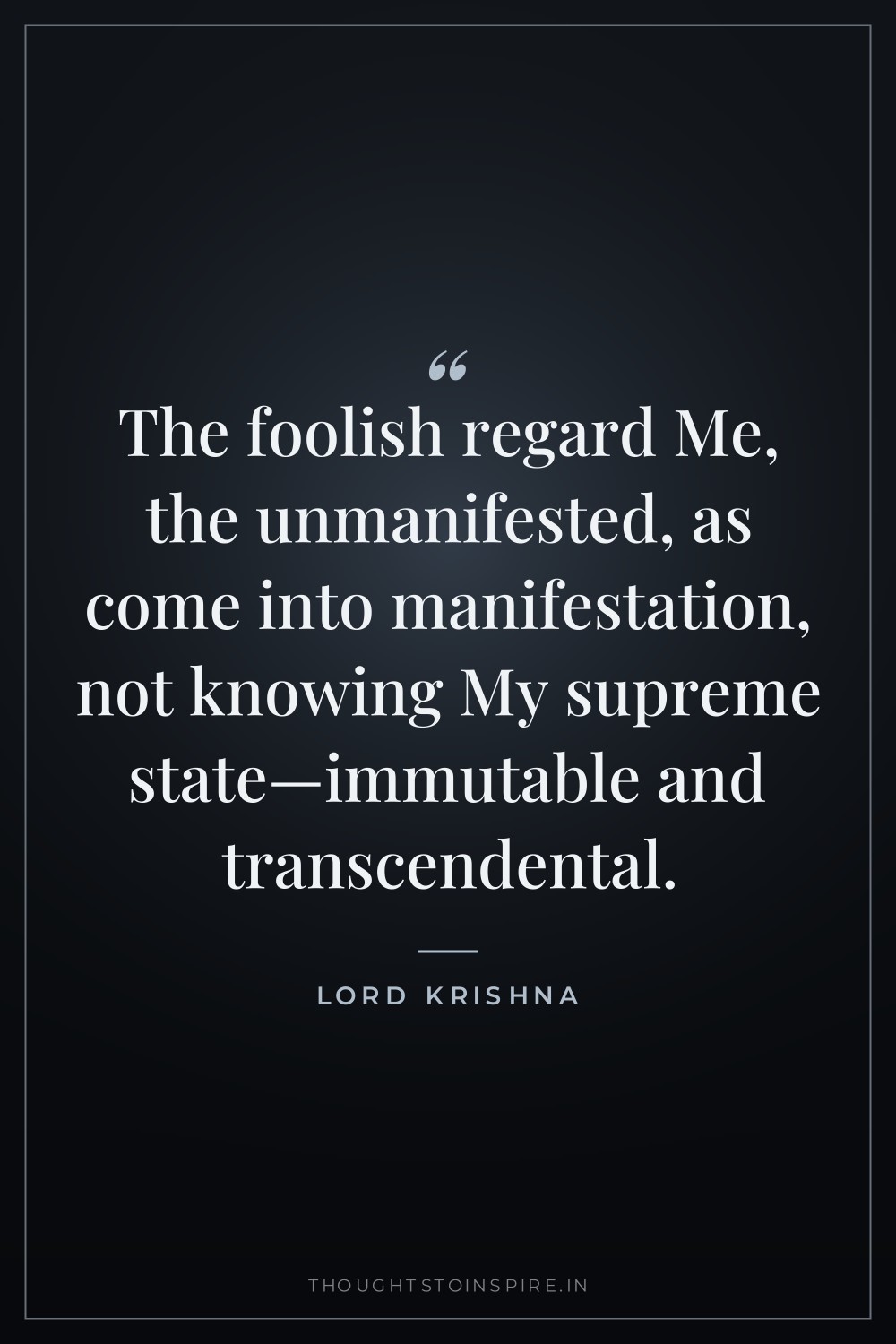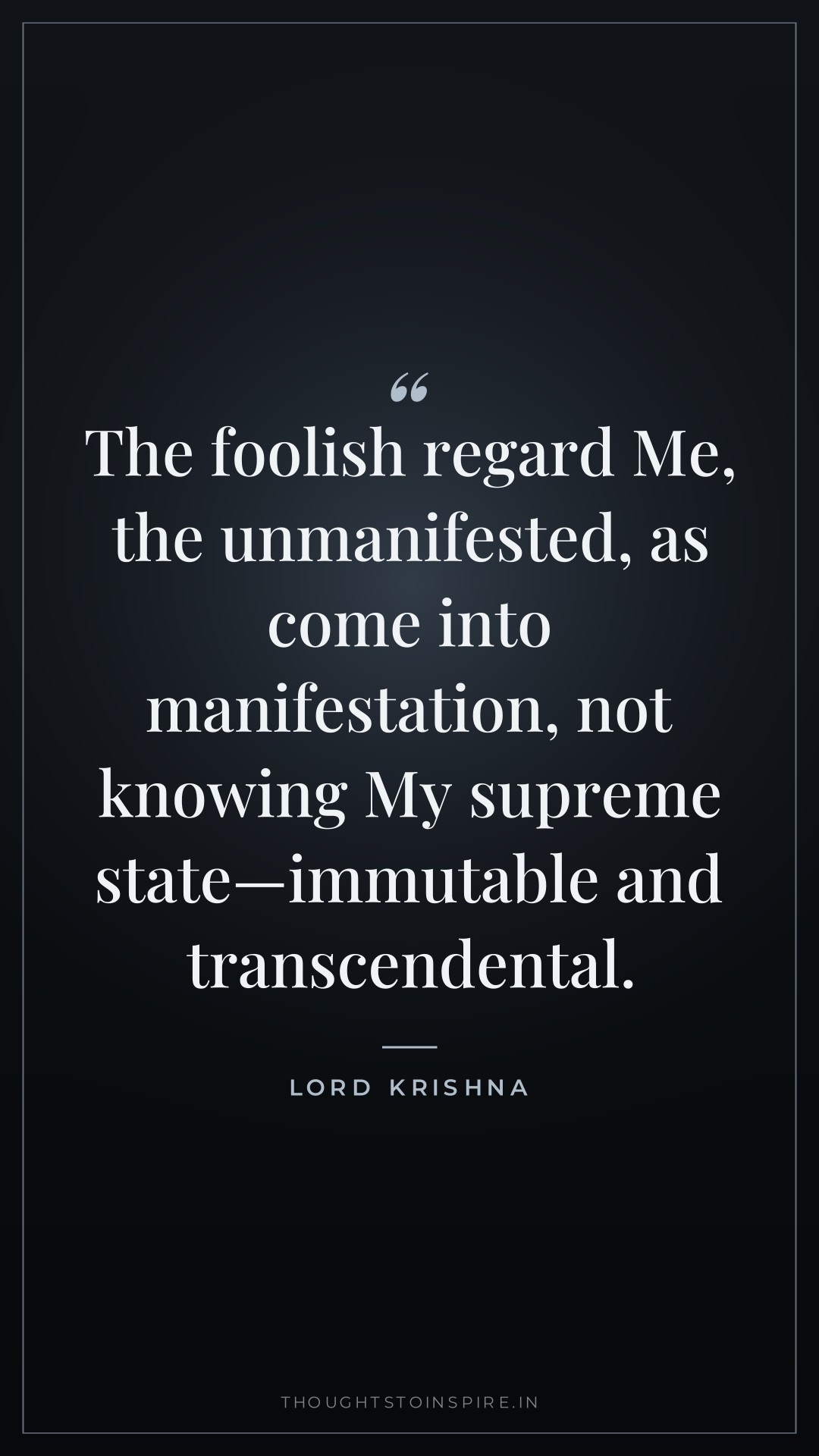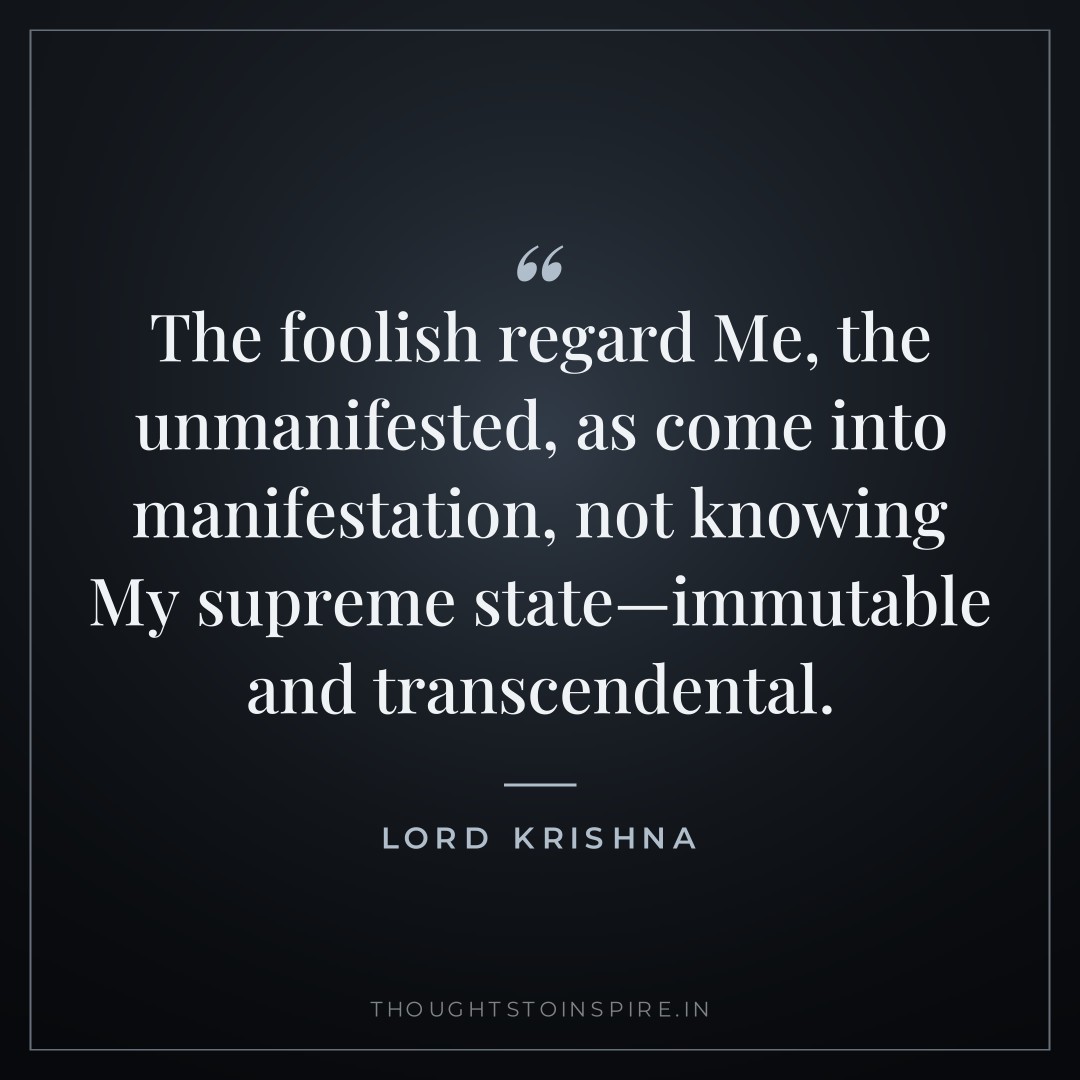
— Bhagavad Gita 7.24 (tr. Swami Swarupananda, 1909)
About this quote
हिन्दी में
मूर्ख लोग मुझ अव्यक्त को व्यक्त में आया हुआ मान बैठते हैं, क्योंकि वे मेरे उस परम स्वरूप को नहीं जानते — जो अविनाशी है और सबसे परे।
What it means
The error named here is a category mistake, not a lack of devotion. Someone sees a form, concludes that the formless has been converted into it, and treats the visible thing as the extent of what there is. The verse’s correction is that the supreme state is immutable — it was not altered by appearing, so the appearance cannot be its measure.
This is often read as a rebuke to worshipping images, which is more than the line says. The object of criticism is not the form but the inference: mistaking a form for the whole. What is called foolish is the confidence, not the looking.
What it teaches you
Watch the moment where a working picture of something quietly becomes the thing itself — the version of a person you formed in the first year of knowing them, the account of a subject you learned once and now defend. The verse’s discipline is to hold the difference between what has shown itself to you and what is there, which in practice means noticing when you say you know someone or something and checking whether you mean you know how they have appeared to you so far.
अर्थ और सीख
यहाँ जिसे मूर्खता कहा गया है वह पूजा या श्रद्धा की कमी नहीं, बल्कि एक समझ की भूल है — जो रूप दिखाई दिया, उसी को पूरा सच मान लेना। श्लोक कहता है कि परम स्वरूप अविनाशी और अपरिवर्तनीय है; वह किसी रूप में प्रकट होकर उस रूप जितना छोटा नहीं हो जाता। रोज़मर्रा में इसका अर्थ यह है कि किसी व्यक्ति या विषय के बारे में जो छवि आपके पास है, उसे ही उसकी पूरी हक़ीक़त मान लेना सबसे आम ग़लती है।
Where it comes from
This verse comes from Chapter 7 of the Bhagavad Gita, Jnana Vijnana Yoga (The Yoga of Knowledge and Realisation) — Krishna as the essence within all things — the taste in water, the light in sun and moon — and the rarity of those who truly seek.
The Bhagavad Gita — ‘the Song of the Lord’ — is the dialogue between Krishna and the warrior Arjuna set within the Mahabharata, and one of the most influential spiritual texts ever composed. English translation by Swami Swarupananda (1909), a public-domain rendering from the Sanskrit; the exact chapter and verse are cited with this quote.