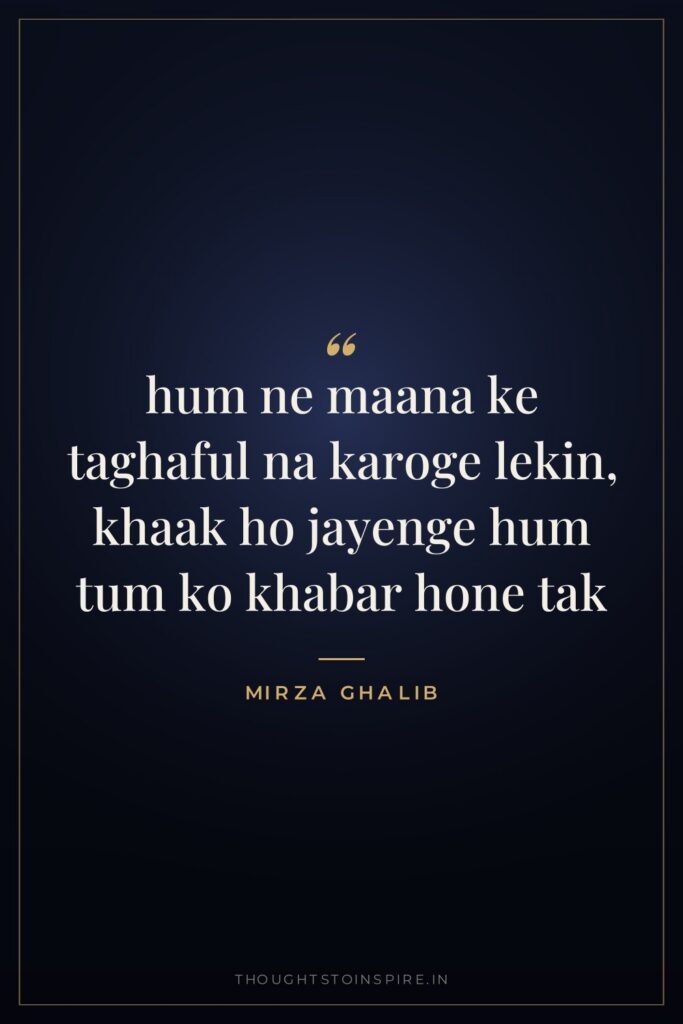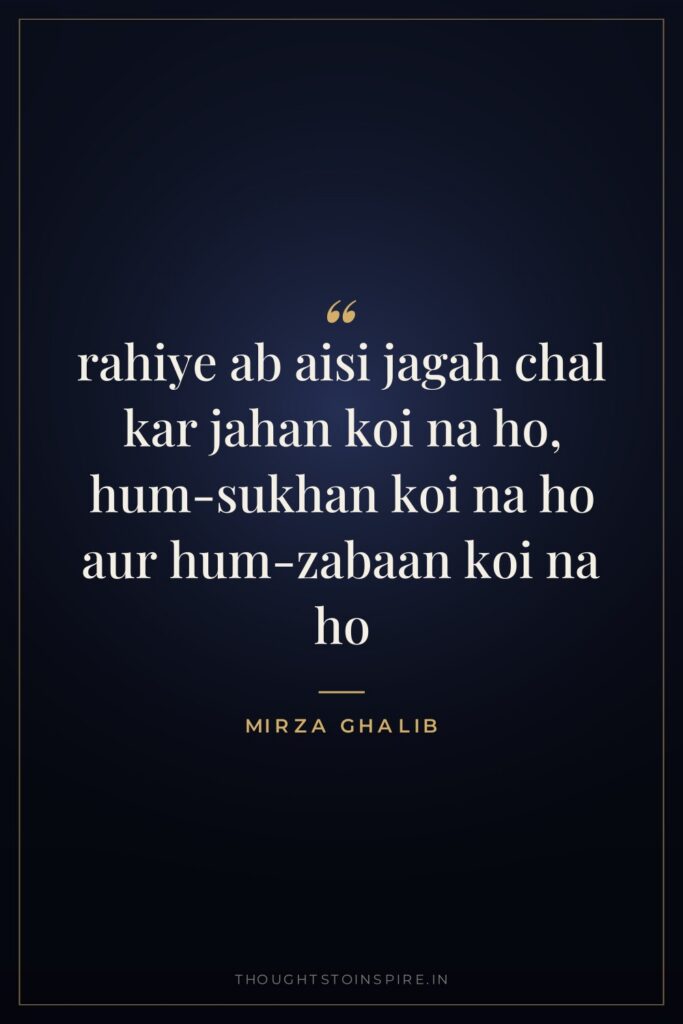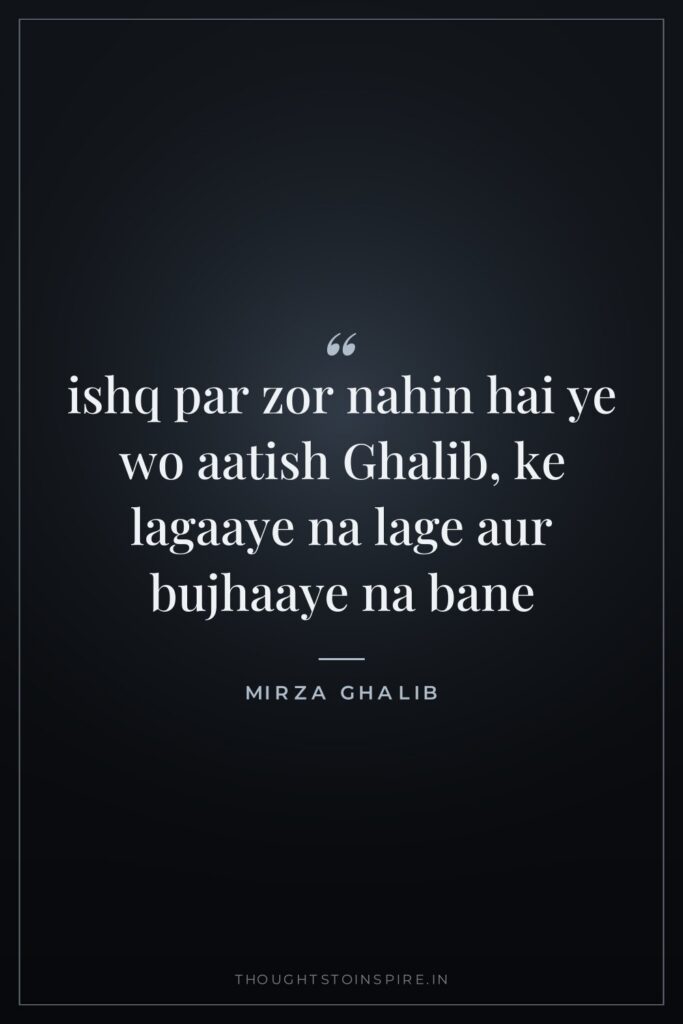
— Divan-e-Ghalib, from the ghazal "dard minnat-kash-e-dawa na hua"
About this quote
देवनागरी
दर्द मिन्नत-कश-ए-दवा न हुआ
मैं न अच्छा हुआ बुरा न हुआ
English
My pain never stooped to beg the medicine — I did not recover, and that is not a bad thing.
What it means
Ghalib refuses to owe his healing to a cure: better to keep the pain with dignity than lose it as a debtor. A couplet about the strange pride we take in our own wounds.
The pride is placed in the pain, not in the poet: minnat-kash means one who carries the weight of an obligation, and it is the dard that refuses to carry it. The speaker only reports the refusal, like a bystander to his own stubbornness. Then the second line settles the account with two negatives — not recovered, not worse off — so the ledger closes exactly even, and that flat arithmetic is the wit. It is often quoted as contempt for medicine or as a taste for suffering; the real subject is narrower and stranger, the cost of being indebted for one’s own relief.
What it teaches you
The next time you turn down help, separate the two things you may be refusing: the help, or the debt. Say it out loud — ‘I don’t need this’ versus ‘I don’t want to owe you’ — because only the first is a judgement about the problem. People stay in pain for years on the strength of the second while believing they are exercising the first.
अर्थ और सीख
दर्द ने दवा का एहसान नहीं लिया — मैं ठीक नहीं हुआ, और यही अच्छा हुआ। अपने ज़ख़्मों से भी स्वाभिमान — यही ग़ालिब हैं।
अगली बार किसी की मदद से इनकार करते वक़्त ख़ुद से पूछिए — मदद से इनकार है, या एहसान से? दर्द के साथ जीते रहने का फ़ैसला अक्सर इलाज के बारे में नहीं, क़र्ज़ से बचने के बारे में होता है।
Where it comes from
An authentic couplet from the Divan-e-Ghalib, the collected Urdu ghazals of Mirza Asadullah Khan Ghalib (1797–1869), from the ghazal beginning “dard minnat-kash-e-dawa na hua”. Transliteration and English rendering are our own.