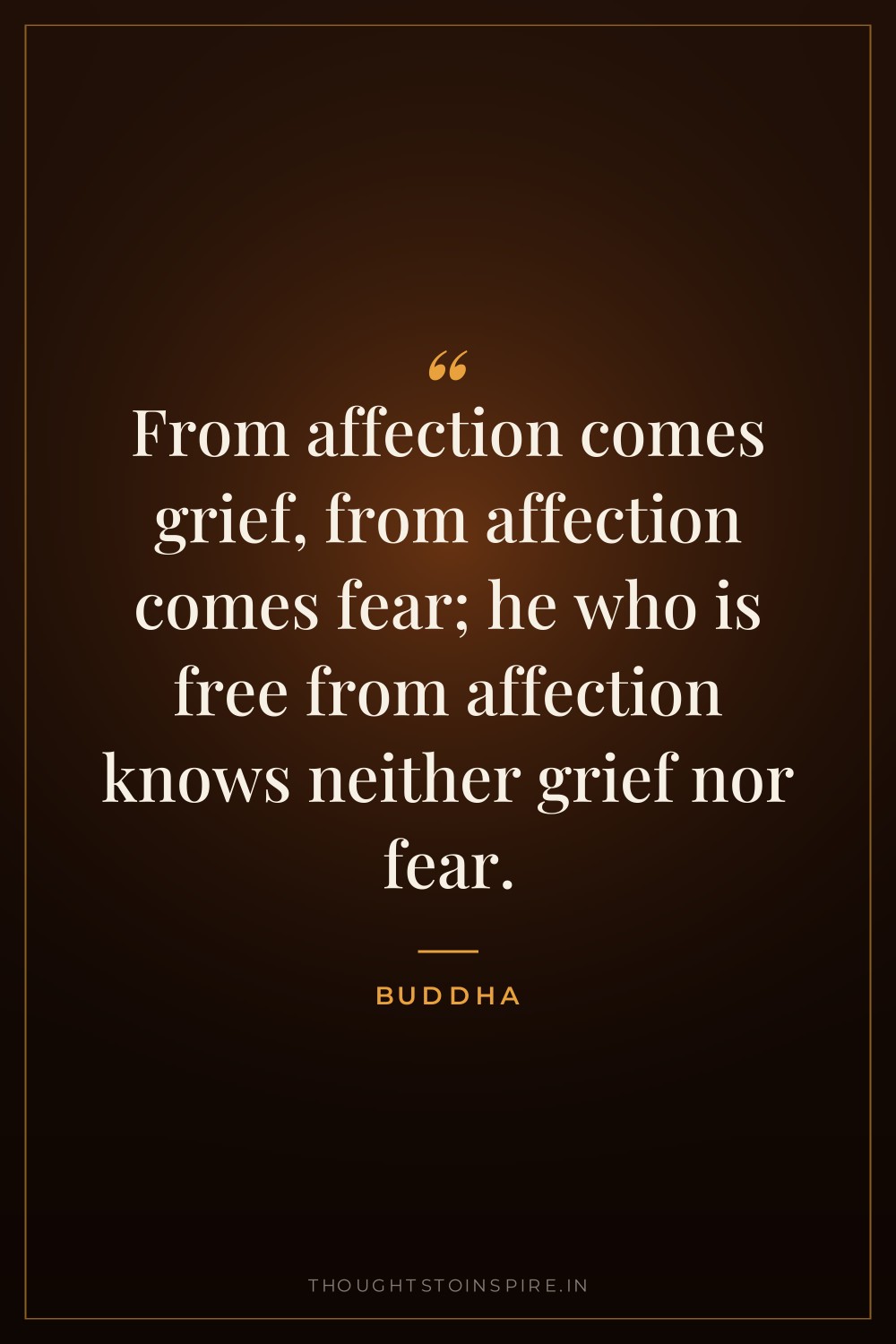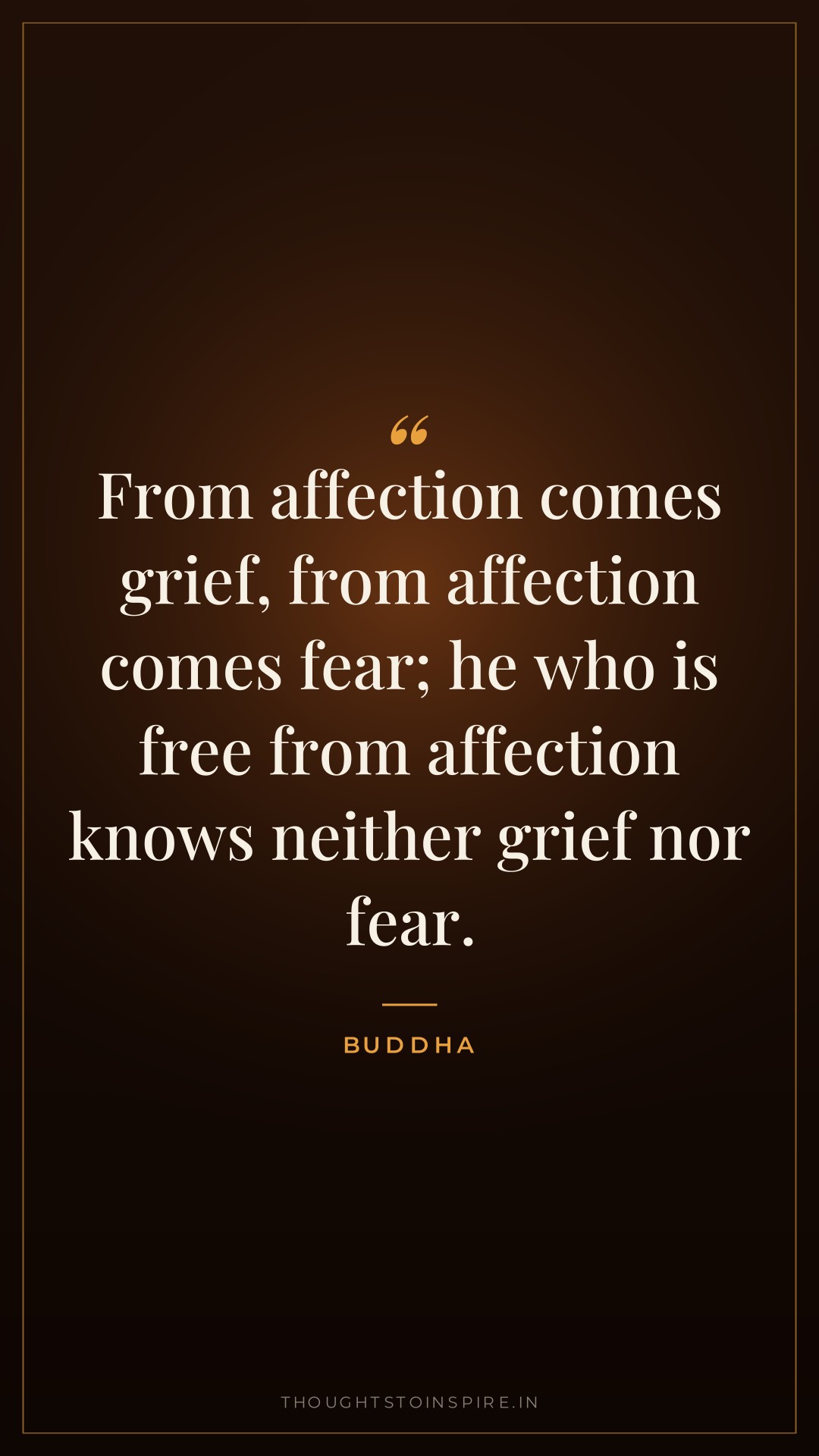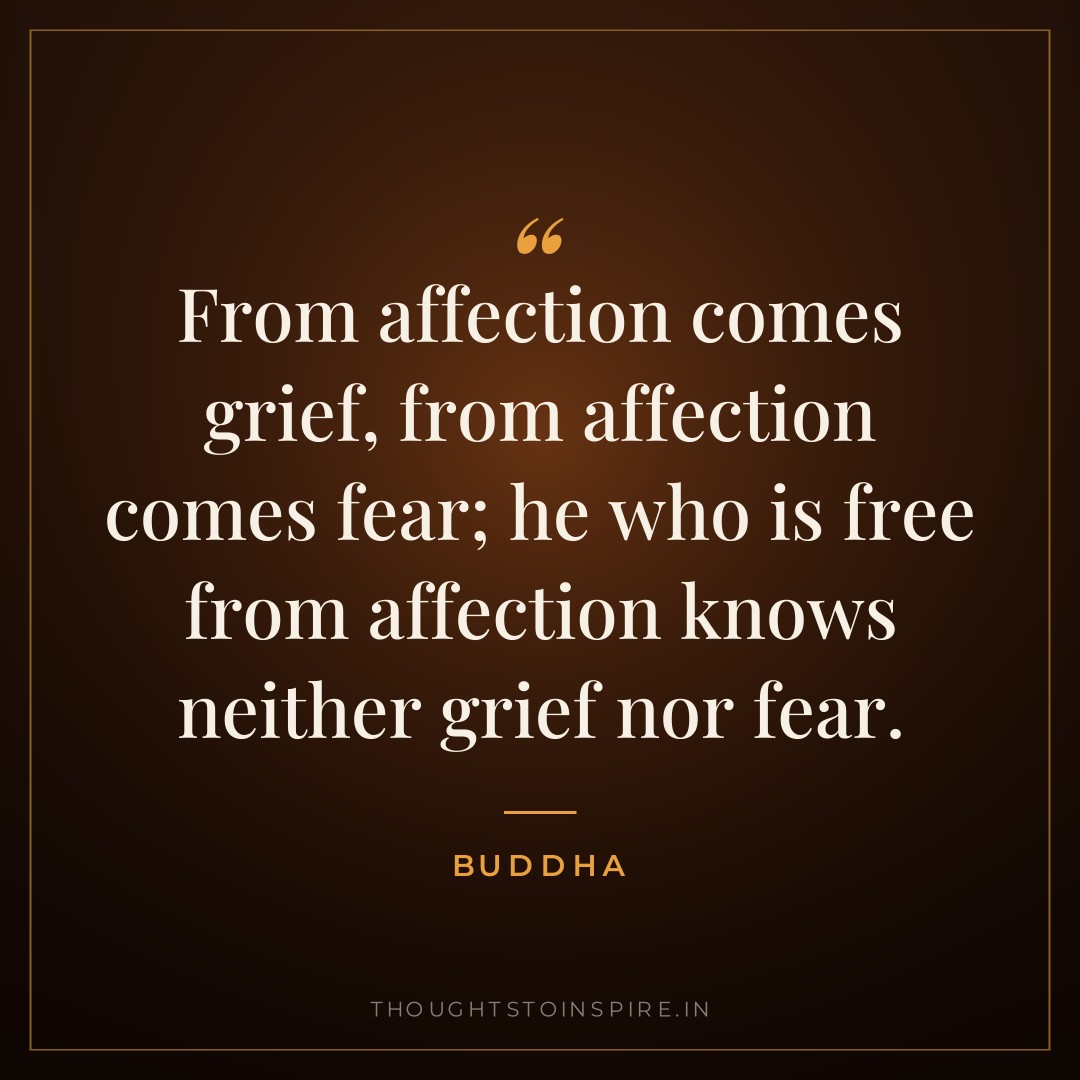
— The Dhammapada, verse 213 (tr. F. Max Müller, 1881)
About this quote
हिन्दी में
स्नेह से शोक जन्मता है, स्नेह से भय; जो स्नेह से मुक्त है, उसे न शोक होता है, न भय।
What it means
This is the hardest line in the set and it should not be softened: it places affection for people in the same causal chain as fear. But the claim is arithmetic rather than advice — grief is presented as the measure of affection, its exact size showing up later. Nothing here says affection is wrong, or that a person who loves is failing at something.
What honestly follows is a price, not a prohibition. You can love and pay in grief and fear knowingly, or you can not love. Most readers will choose the first, and the line is still useful to them, because it removes the surprise. The one option it rules out is the popular one: keeping the affection while treating the fear that comes with it as a fixable defect.
What it teaches you
When dread or grief about someone arrives, stop handling it as a malfunction and read it as the size of the affection becoming visible. The gauge runs the other way too — the anxiety you quietly carry about a particular person is a fairly accurate measure of how attached you are, usually more honest than anything you would say about it out loud.
अर्थ और सीख
यह पंक्ति कठोर है और इसे नरम नहीं करना चाहिए: यह स्नेह को ही शोक और भय का स्रोत बताती है। पर यह गणित है, आदेश नहीं — शोक स्नेह का माप है, इसलिए प्रेम को गलत नहीं कहा गया, उसकी कीमत बताई गई है। सीख: किसी अपने को लेकर उठने वाली बेचैनी को खराबी न मानें — वह आपके लगाव का नाप है, और अक्सर आपके कहे हुए शब्दों से ज़्यादा सच्चा नाप है।
Where it comes from
This is verse 213 of the Dhammapada, from the chapter called Pleasure — how grief and fear grow from clinging, and cease when clinging ceases.
The Dhammapada is a collection of 423 verses in Pali, among the oldest and most widely read records of the Buddha’s teaching. This English translation is by F. Max Müller (1881), the pioneering Oxford scholar of Indian texts; the verse number is cited with this quote.