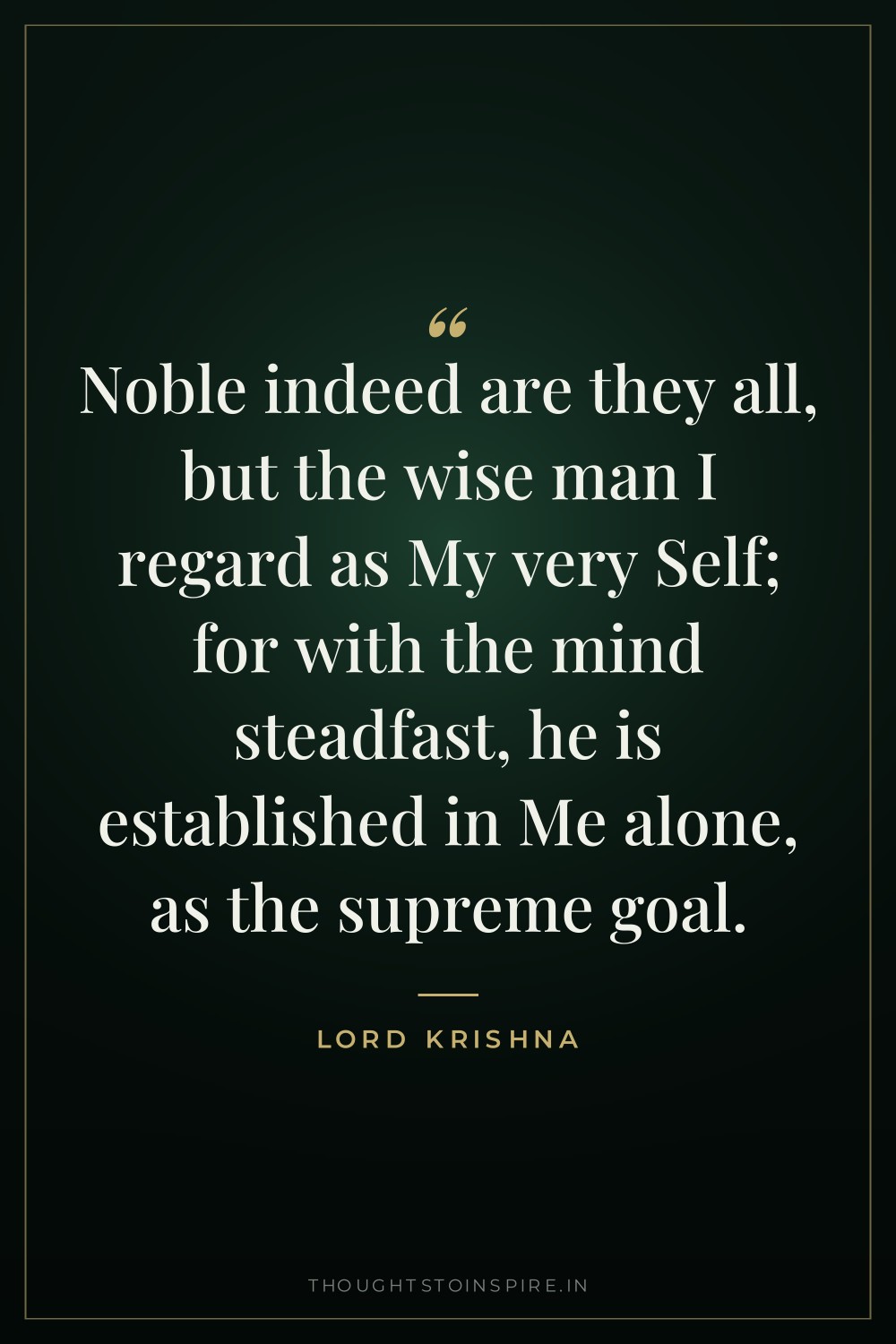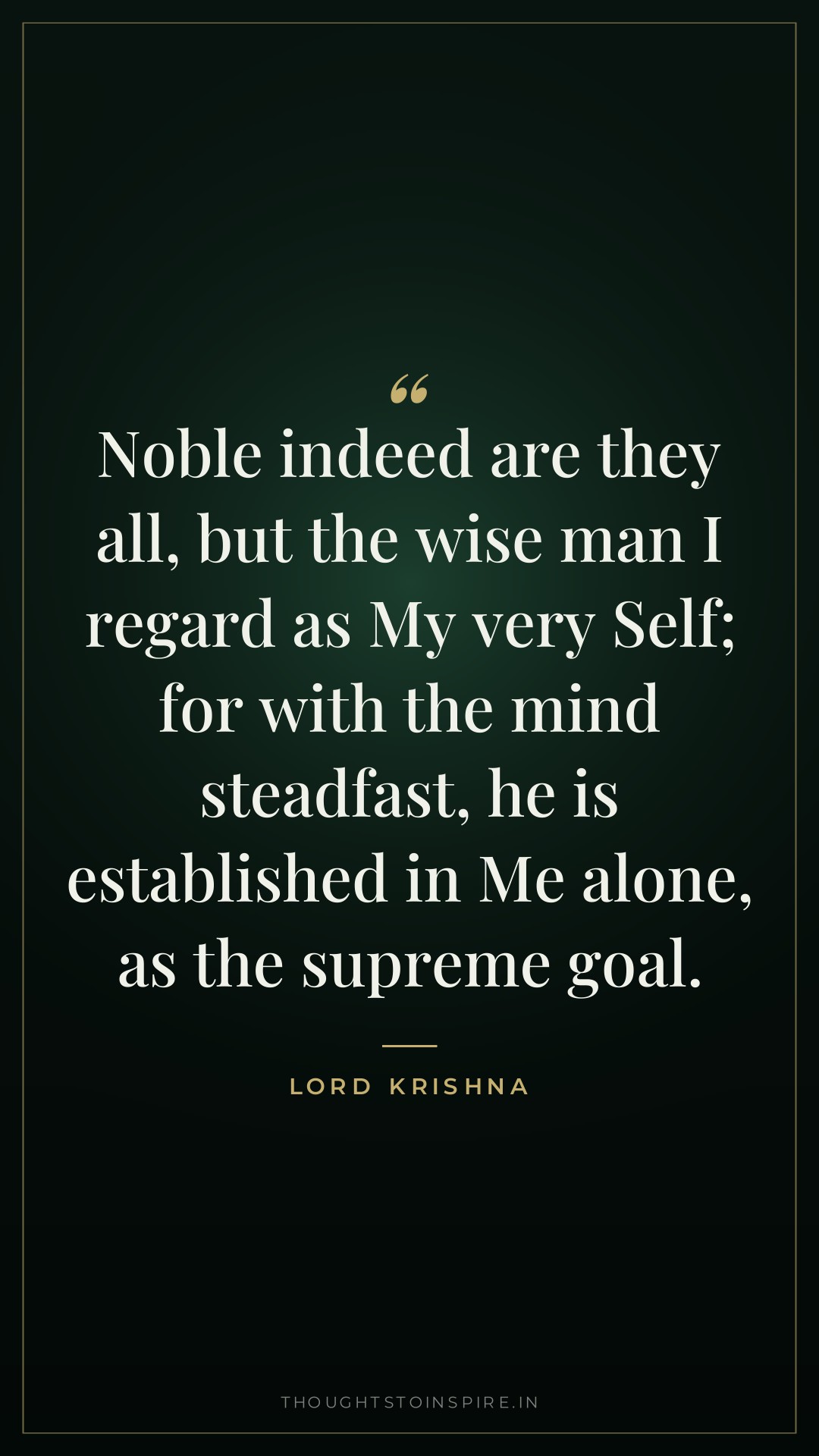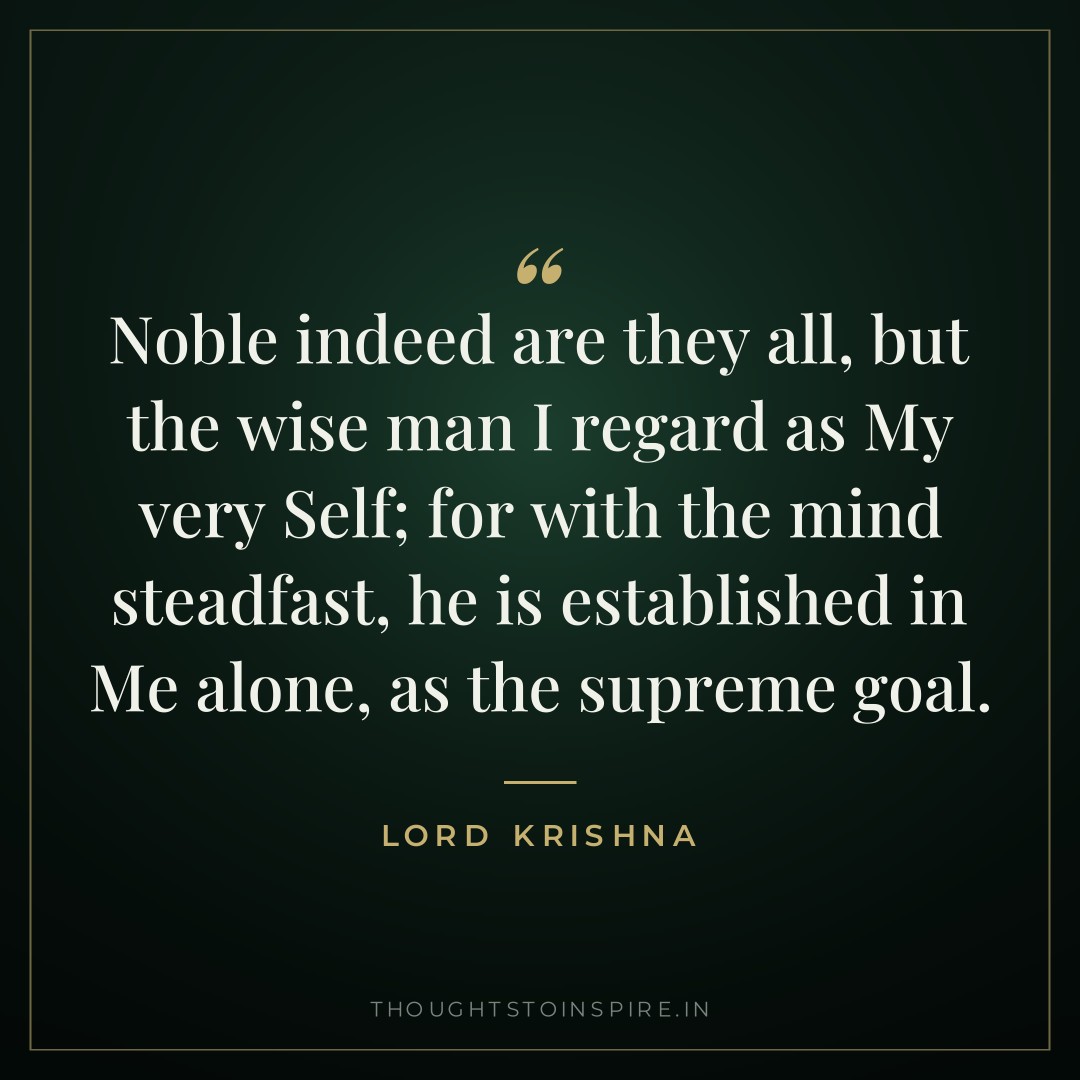
— Bhagavad Gita 7.18 (tr. Swami Swarupananda, 1909)
About this quote
हिन्दी में
ये सब के सब उदार हैं, किन्तु ज्ञानी को मैं अपना ही स्वरूप मानता हूँ; क्योंकि स्थिर मन वाला वह मुझ में ही, परम लक्ष्य के रूप में, टिका हुआ है।
What it means
Krishna has been sorting the people who turn to him, and this line is the moment he refuses to let sorting become contempt: Noble indeed are they all. Whoever comes, comes well. Only after granting that does he say the wise man is his very Self.
The reason offered for the ranking is worth reading slowly, because it is not intelligence. It is with the mind steadfast, he is established in Me alone, as the supreme goal — the difference is that the wise man is not asking for a second thing. The others arrive with an errand attached; he arrives with nothing to collect, and the verse names that absence of a further want, not learning, as what makes him indistinguishable from the divine. Read as praise of scholarship, the line says something it never claims.
What it teaches you
The next time you sit down to practice, prayer or work, check whether there is a request riding on it — and whether the request, not the practice, is the real object. The verse does not tell you to drop the request; it locates steadiness in having one goal rather than a goal with another goal behind it, which is something you can actually inspect.
अर्थ और सीख
कृष्ण पहले साफ़ कहते हैं कि उनकी ओर आने वाले सभी भक्त उदार हैं — किसी का तिरस्कार नहीं। फिर वे ज्ञानी को अपना ही स्वरूप कहते हैं, और कारण बुद्धि नहीं, मन की स्थिरता है: वह कोई और माँग लेकर नहीं आता, उसके लिए भगवान ही अंतिम लक्ष्य हैं। सीख यह कि गहराई ज़्यादा जानने से नहीं, माँग के हट जाने से आती है।
Where it comes from
This verse comes from Chapter 7 of the Bhagavad Gita, Jnana Vijnana Yoga (The Yoga of Knowledge and Realisation) — Krishna as the essence within all things — the taste in water, the light in sun and moon — and the rarity of those who truly seek.
The Bhagavad Gita — ‘the Song of the Lord’ — is the dialogue between Krishna and the warrior Arjuna set within the Mahabharata, and one of the most influential spiritual texts ever composed. English translation by Swami Swarupananda (1909), a public-domain rendering from the Sanskrit; the exact chapter and verse are cited with this quote.