— The Persian Mystics: Jalalu'd-din Rumi (tr. F. Hadland Davis, 1907), "The Silence of Love"
About this quote
हिन्दी में
प्रेम ही वह अस्तुर्लाब है जिससे ईश्वर के भेद पढ़े जाते हैं।
What it means
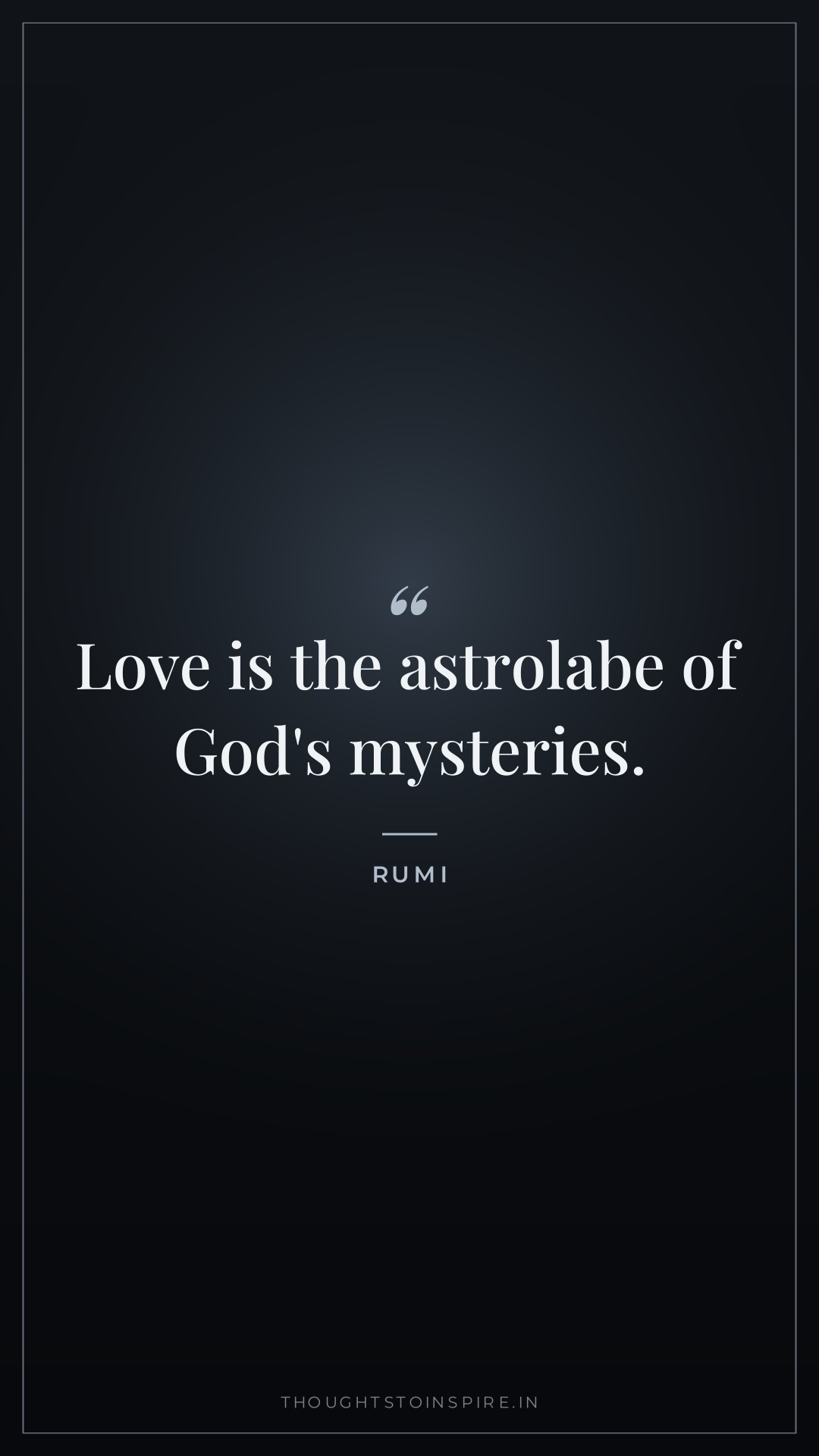
The claim is narrower and more demanding than the way this line gets quoted. An instrument does not produce what it reads and does not replace it; it also does nothing in untrained hands. Rumi is saying love yields knowledge — a reading, a position, something you did not have before — not that love is a warm feeling sufficient unto itself.
The popular use treats the line as love is the answer. What it actually says is closer to love is how you take the measurement, which leaves the mysteries fully intact and independent of you. That is a sober sentence dressed in a beautiful image, and the sobriety is the part usually dropped.
What it teaches you
Apply the instrument test to your own affections: ask what you have come to know through loving someone that you could not have reasoned your way to. If nothing comes — if the love has produced feeling but no new sight of the other person, no correction of what you assumed about them — then by this line’s standard the instrument is being held but not read. That is a fixable thing, and it starts with attention to the other rather than to the loving.
अर्थ और सीख
रूमी का दावा उतना नरम नहीं जितना इसे उद्धृत करते समय मान लिया जाता है — यंत्र जो पढ़ता है, उसे बनाता नहीं, और बिना अभ्यास के यंत्र बेकार है। यानी प्रेम से ज्ञान मिलता है, केवल भावना नहीं; रहस्य अपनी जगह क़ायम रहते हैं। सीख यह है कि ख़ुद से पूछिए — जिसे आप प्रेम करते हैं, उसके बारे में प्रेम ने आपको ऐसा क्या दिखाया जो सोच-विचार से न मिलता? अगर उत्तर न मिले, तो यंत्र हाथ में है, पर पढ़ा नहीं जा रहा।
Where it comes from
From Book I of Rumi’s Masnavi (in The Persian Mystics, 1907). The astrolabe was the medieval instrument for reading the heavens; love, says Rumi, is the instrument by which the invisible is measured. The same passage ends with one of his most quoted judgments: ‘Love unexplained is better.’