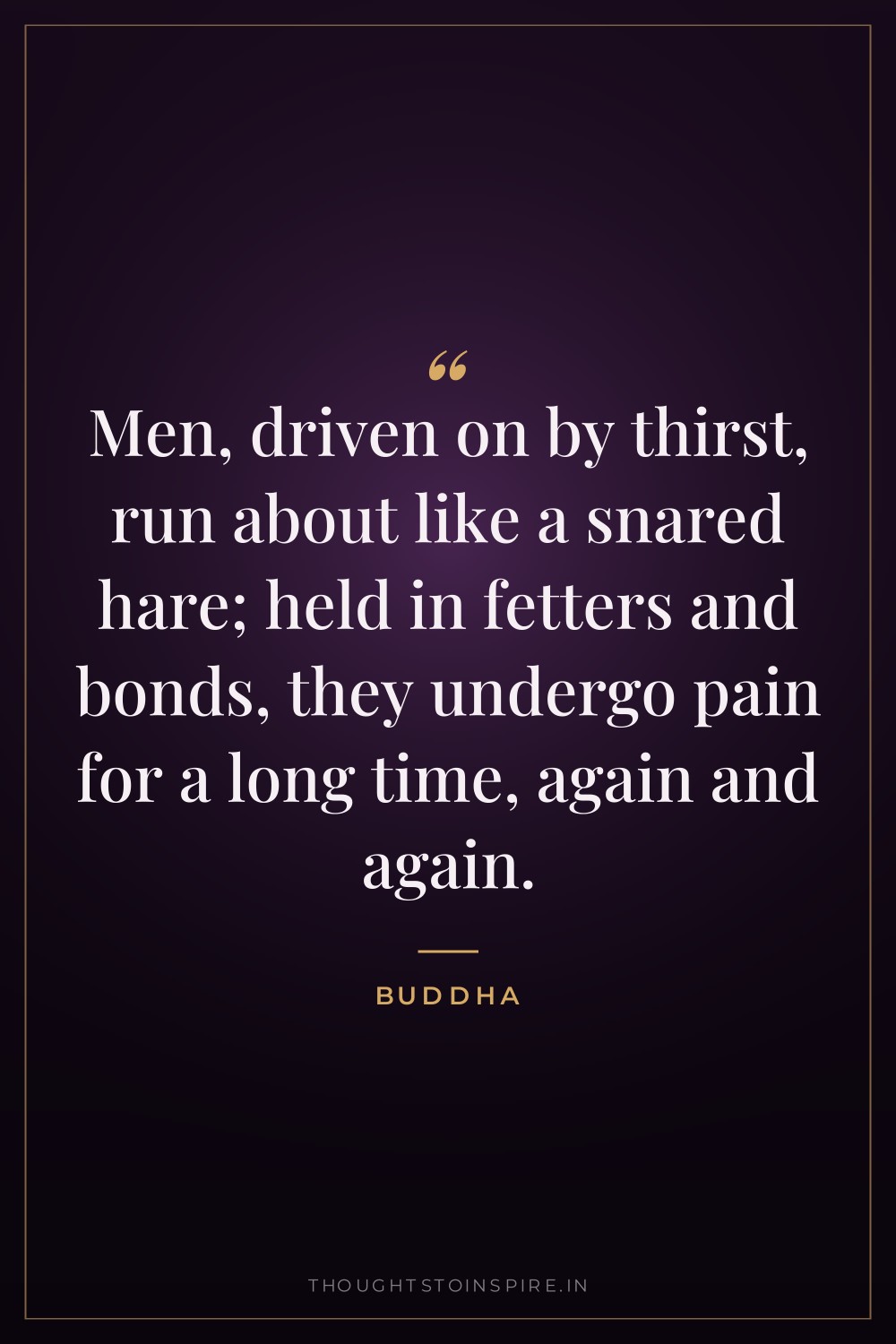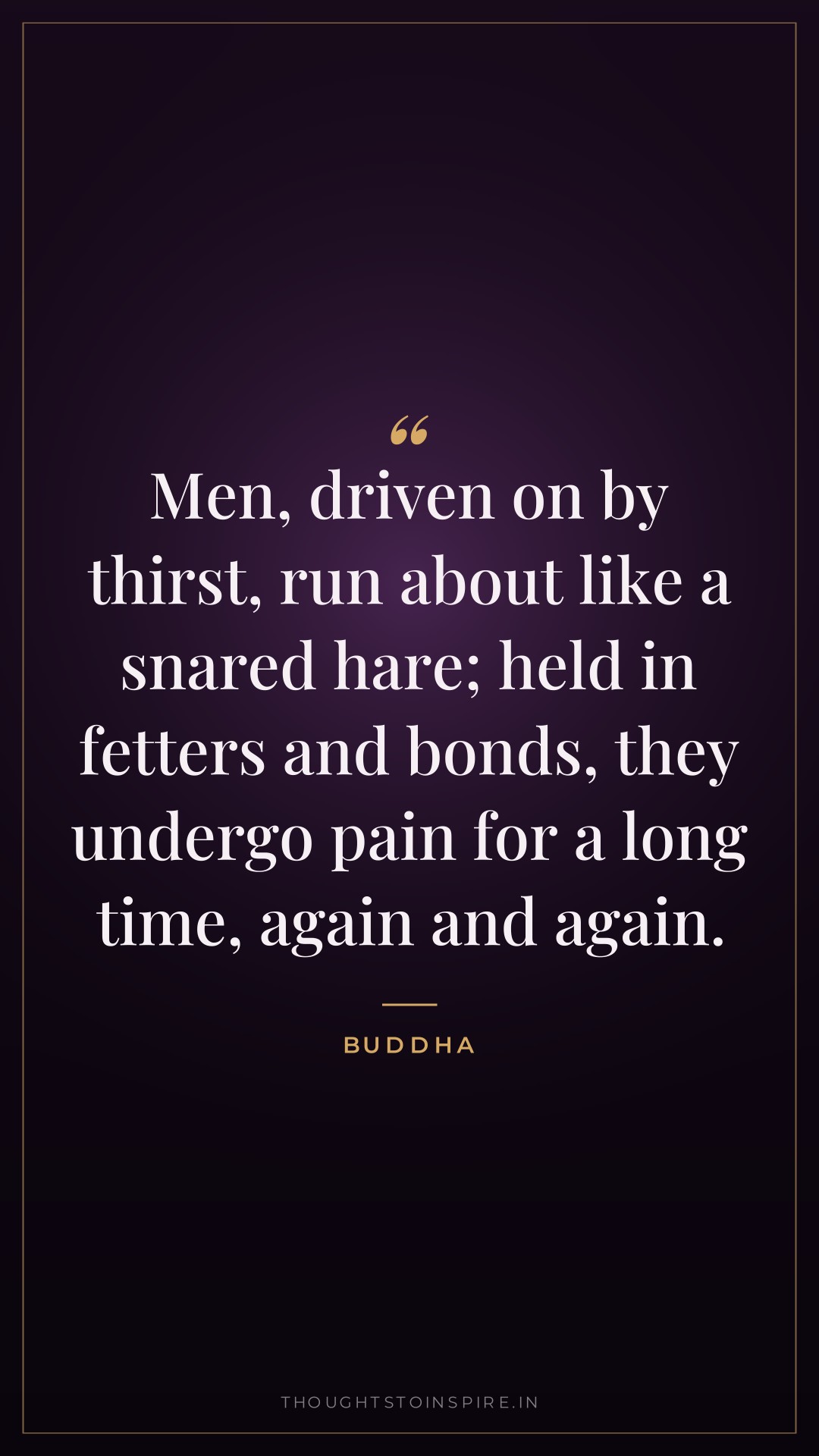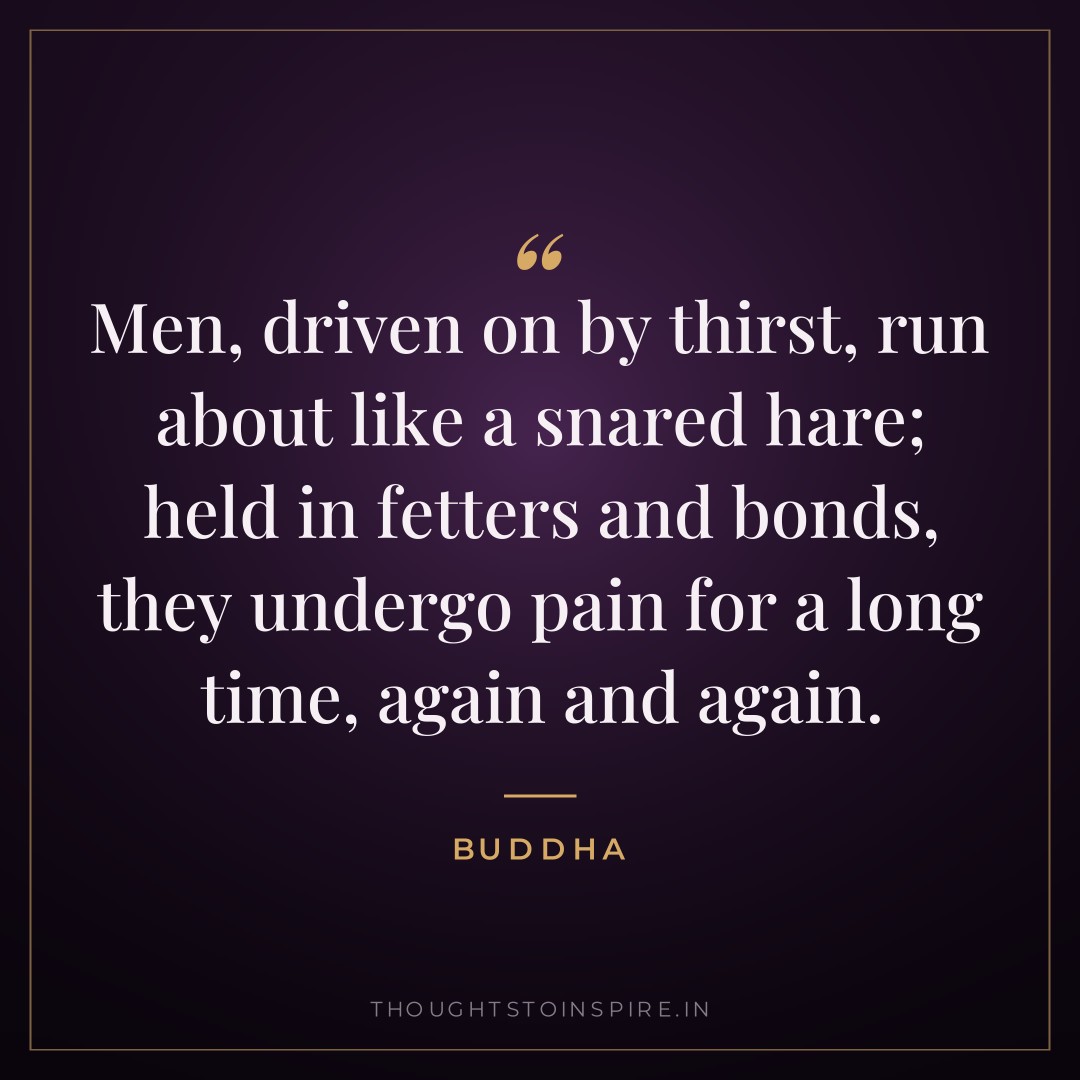
— The Dhammapada, verse 342 (tr. F. Max Müller, 1881)
About this quote
हिन्दी में
तृष्णा से घिरा मनुष्य जाल में फँसे खरगोश की तरह भागता-फिरता है; बंधनों में जकड़ा वह बहुत समय तक, बार-बार दुःख भोगता है।
What it means
The image is precise. A hare in a snare is not lying still in it — it is running, and the running is exactly what keeps the noose tight. Thirst here is not a want that can be finished off by satisfying it; it is the motion of wanting, which supplies its own next object.
The verse’s real claim sits in again and again and for a long time. It is not describing one catastrophe but a loop that repeats until it is noticed. The popular compression, desire causes suffering, loses that: the line says the frantic activity of desire is what holds a person, and the fetters get recognised only after long wear.
What it teaches you
Separate the wants that can actually be completed from the ones that regenerate the moment they are met. For a recurring urge, ask a factual question: the last three times I got this, how long did the relief last? If the honest answer is hours, you are watching the hare run. Because such an urge supplies no stopping point of its own, set the stopping point before you begin rather than during.
अर्थ और सीख
यहाँ तृष्णा की तुलना जाल में फँसे खरगोश से की गई है — जितना वह छटपटाता है, फंदा उतना ही कसता जाता है। पंक्ति का ज़ोर तीव्रता पर नहीं, दोहराव पर है: वही चक्र बार-बार, बहुत लंबे समय तक। सीख यह कि जो इच्छा पूरी होकर भी लौट आती है, उसे पहचानें और उसकी सीमा शुरू करने से पहले तय करें।
Where it comes from
This is verse 342 of the Dhammapada, from the chapter called Thirst — tanha, craving — the creeping vine whose root must be cut by knowledge.
The Dhammapada is a collection of 423 verses in Pali, among the oldest and most widely read records of the Buddha’s teaching. This English translation is by F. Max Müller (1881), the pioneering Oxford scholar of Indian texts; the verse number is cited with this quote.