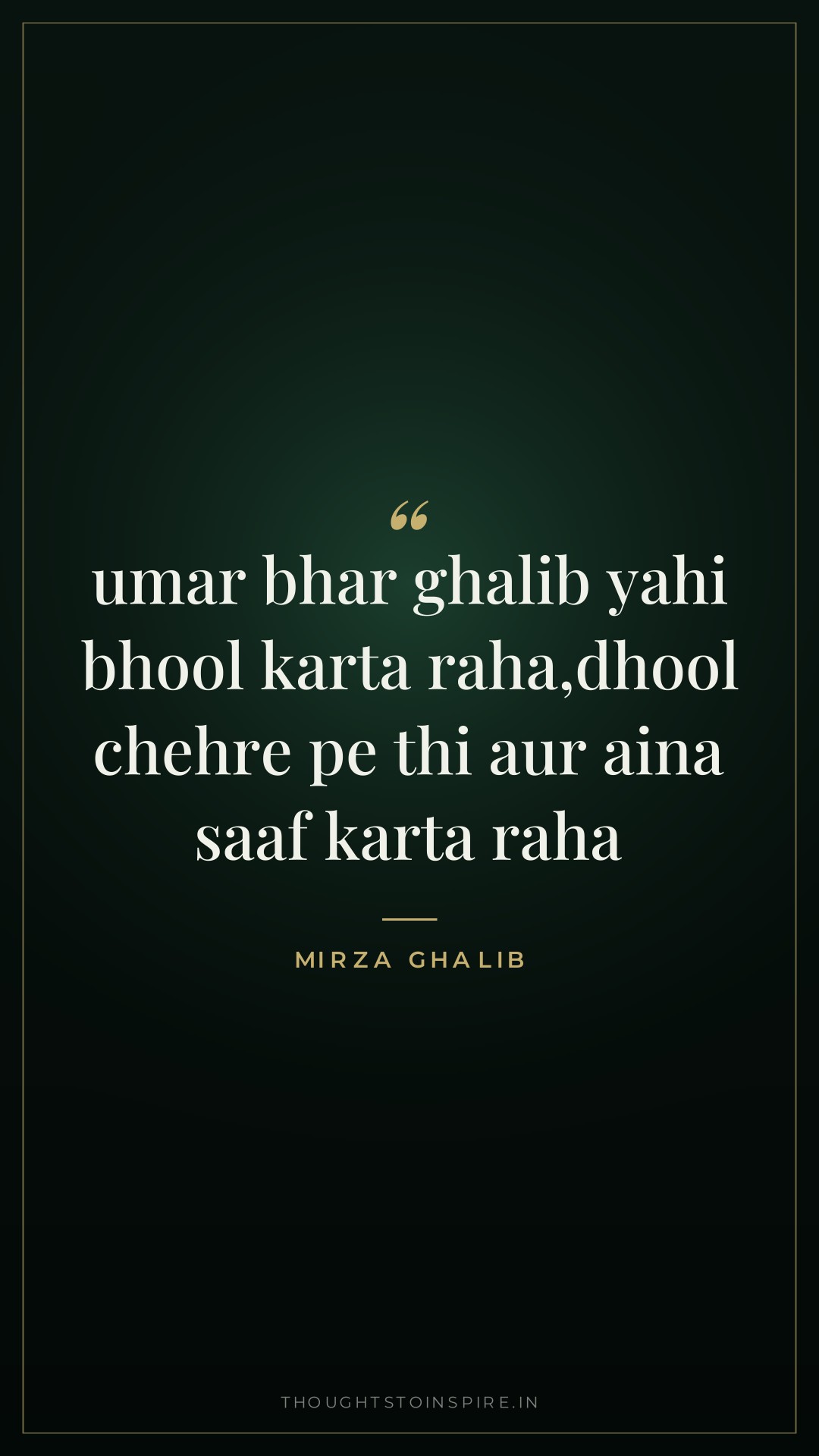
— Popularly attributed to Mirza Ghalib
देवनागरी
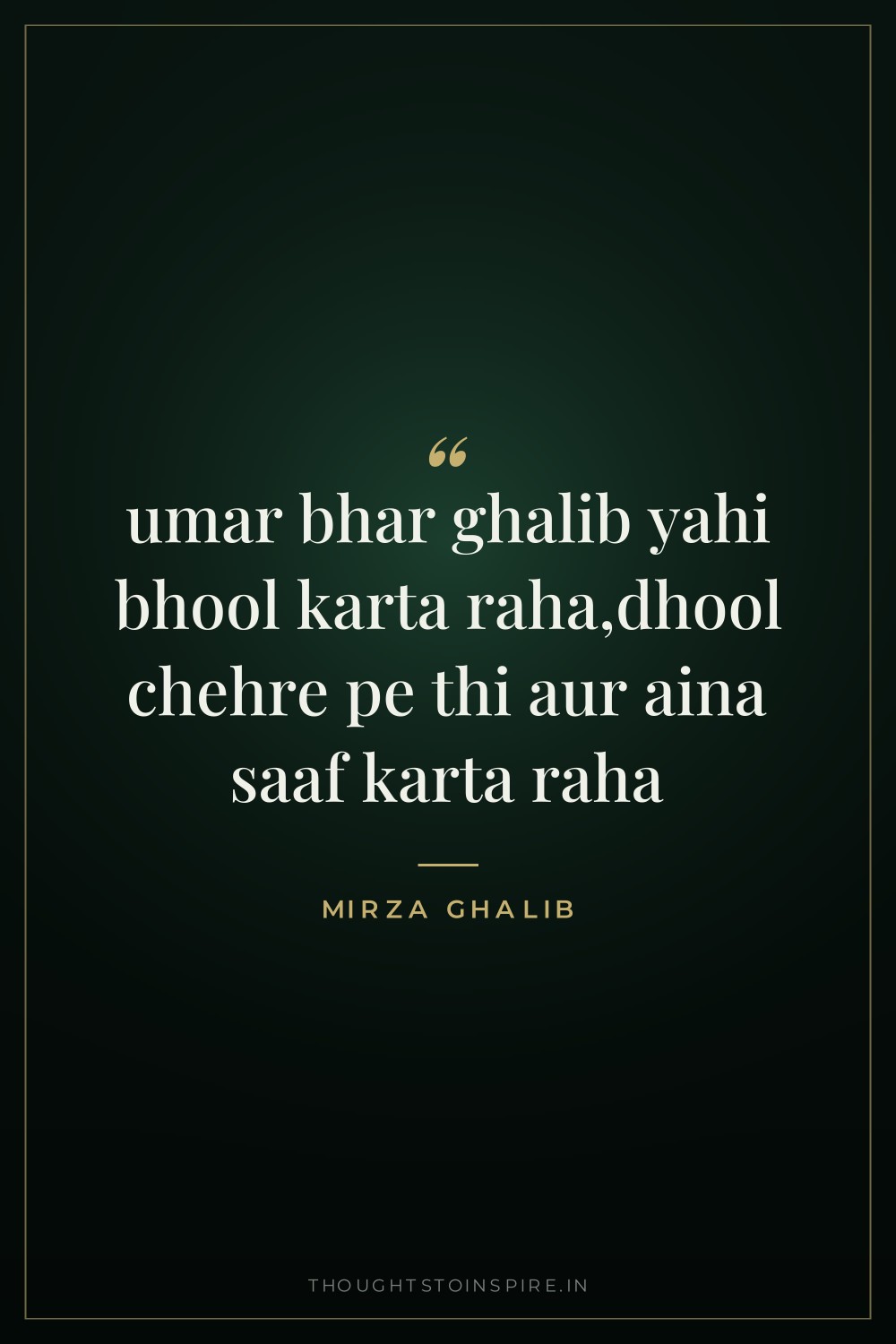
उम्र भर ग़ालिब यही भूल करता रहा
धूल चेहरे पे थी और आईना साफ़ करता रहा
English translation
“All my life, Ghalib, I kept making the same mistake — the dust was on my face, and I kept wiping the mirror clean.”
Meaning of “umar bhar Ghalib yahi bhool karta raha”
The couplet is a two-line lesson in self-awareness. When our reflection looks wrong, our first instinct is to blame the mirror — the world, other people, our circumstances — and to keep “cleaning” everything except ourselves. The dust, all along, is on our own face: our own habits, ego, and assumptions. We spend years correcting the world when one honest look at ourselves would have solved it.
It is the same wisdom Rumi put as “Yesterday I was clever, so I wanted to change the world. Today I am wise, so I am changing myself” — the fault we keep finding outside usually lives inside.
अर्थ
यह शेर आत्म-निरीक्षण की सीख है। जब आईने में चेहरा साफ़ न दिखे, तो हम आईना साफ़ करने लगते हैं — यानी दुनिया को, दूसरों को, हालात को दोष देते हैं। जबकि धूल हमारे अपने चेहरे पर होती है — हमारी अपनी आदतें, अहंकार और सोच। ज़िंदगी भर दूसरों को सुधारने के बजाय एक बार ख़ुद को देख लेना ही काफ़ी है।
What it teaches you
Try this for seven days. Each evening, write the one sentence you repeated most that day about something going wrong — the traffic, your manager, your family, the client who never replies. Then rewrite that sentence with yourself as the subject and a verb you actually control: not he never replies but I sent one message and then waited nine days. If the rewrite is easy to write and uncomfortable to read, the dust is on your face. If you honestly cannot find a single action of your own in it, that complaint really is about the mirror, and working on it is fair. At the end of the week, count the two piles. The count is the test, not how sincere you felt while writing.
सात दिन तक हर शाम उस दिन की सबसे ज़्यादा दोहराई गई शिकायत लिखिए, और फिर उसी बात को इस तरह लिखिए कि वाक्य का कर्ता आप हों और क्रिया वही हो जो आपके हाथ में थी। जहाँ यह दूसरा वाक्य आसानी से बन जाए, वहाँ धूल आपके चेहरे पर है; और जहाँ अपना कोई काम सच में न मिले, वही शिकायत आईने की है।
Is this couplet really by Ghalib?
Honest answer: probably not. This couplet is quoted everywhere under Mirza Ghalib’s name, but it is not found in the authenticated Divan-e-Ghalib, and scholars of Ghalib’s work consider it a modern couplet travelling under his name — a fate common to famous poets, whom popular memory credits with every good line. Whoever wrote it, the thought is worthy of him; the attribution, as far as the record shows, is not his.
Mirza Asadullah Khan Ghalib (1797–1869) was the greatest poet of the Urdu ghazal, writing in the final decades of Mughal Delhi. For couplets that are verifiably his — each with the original Devanagari, translation, and meaning — see our Mirza Ghalib collection, which includes classics like hazaaron khwahishen aisi, dil-e-nadaan tujhe hua kya hai, and ishq ne Ghalib nikamma kar diya.