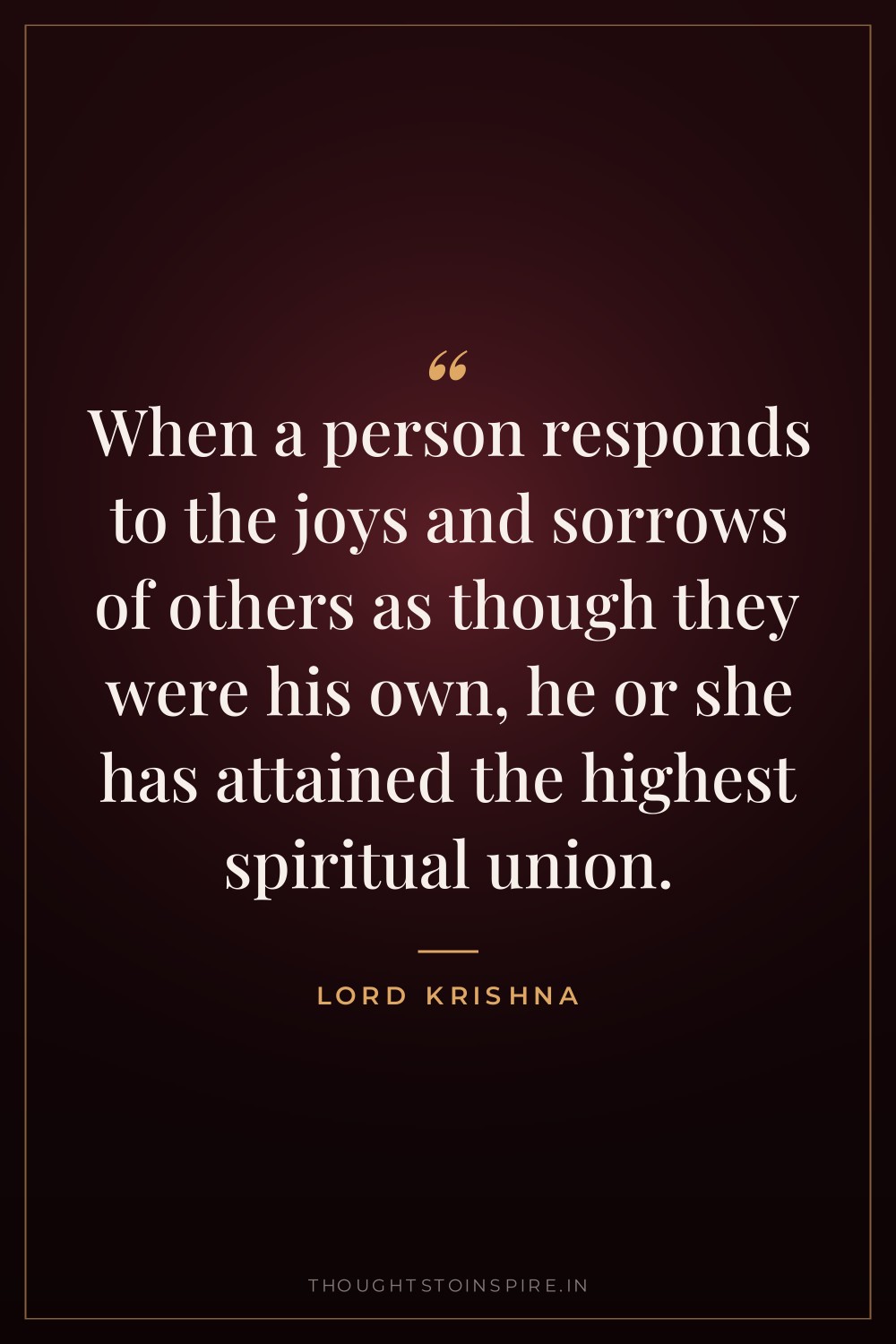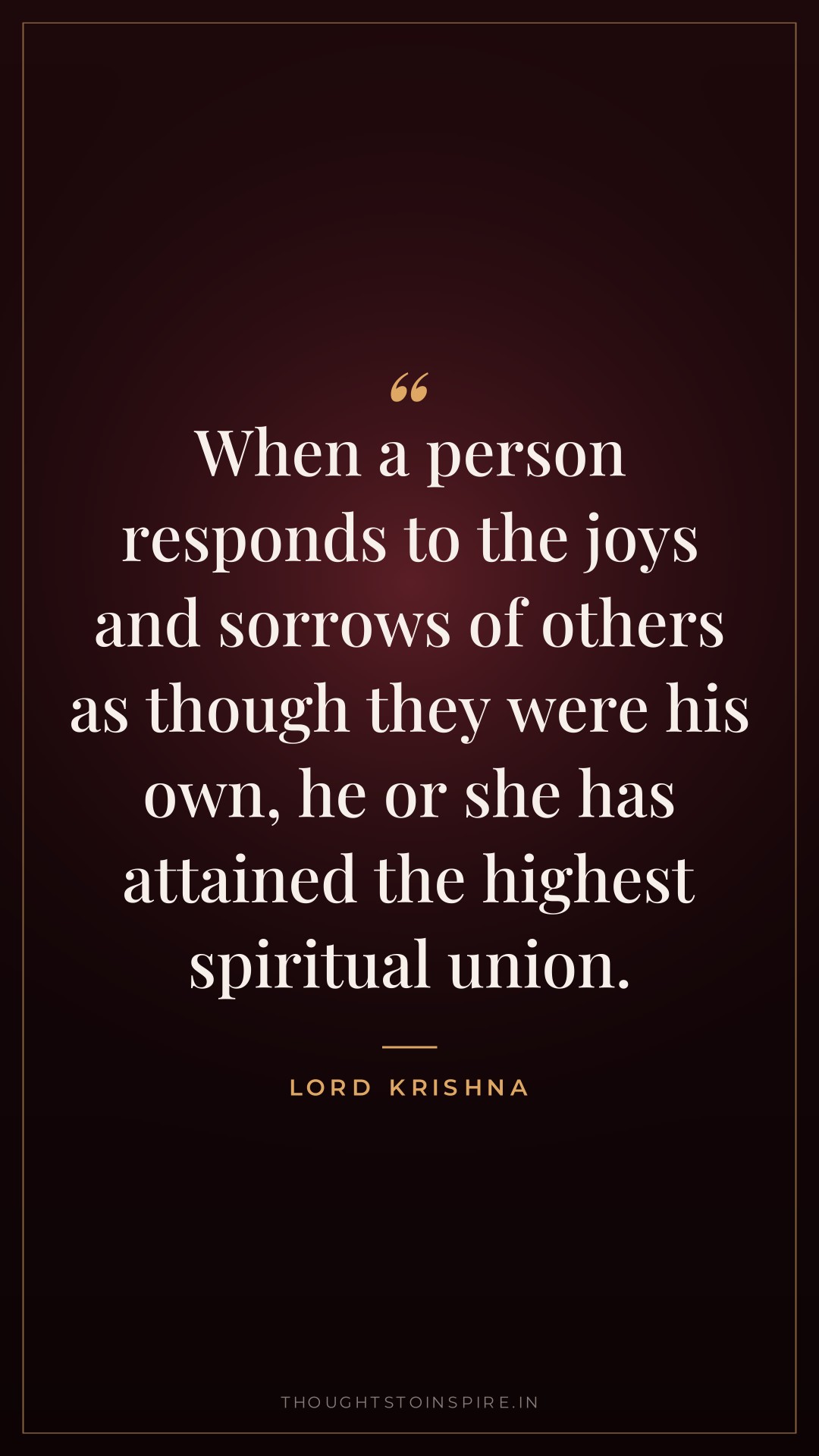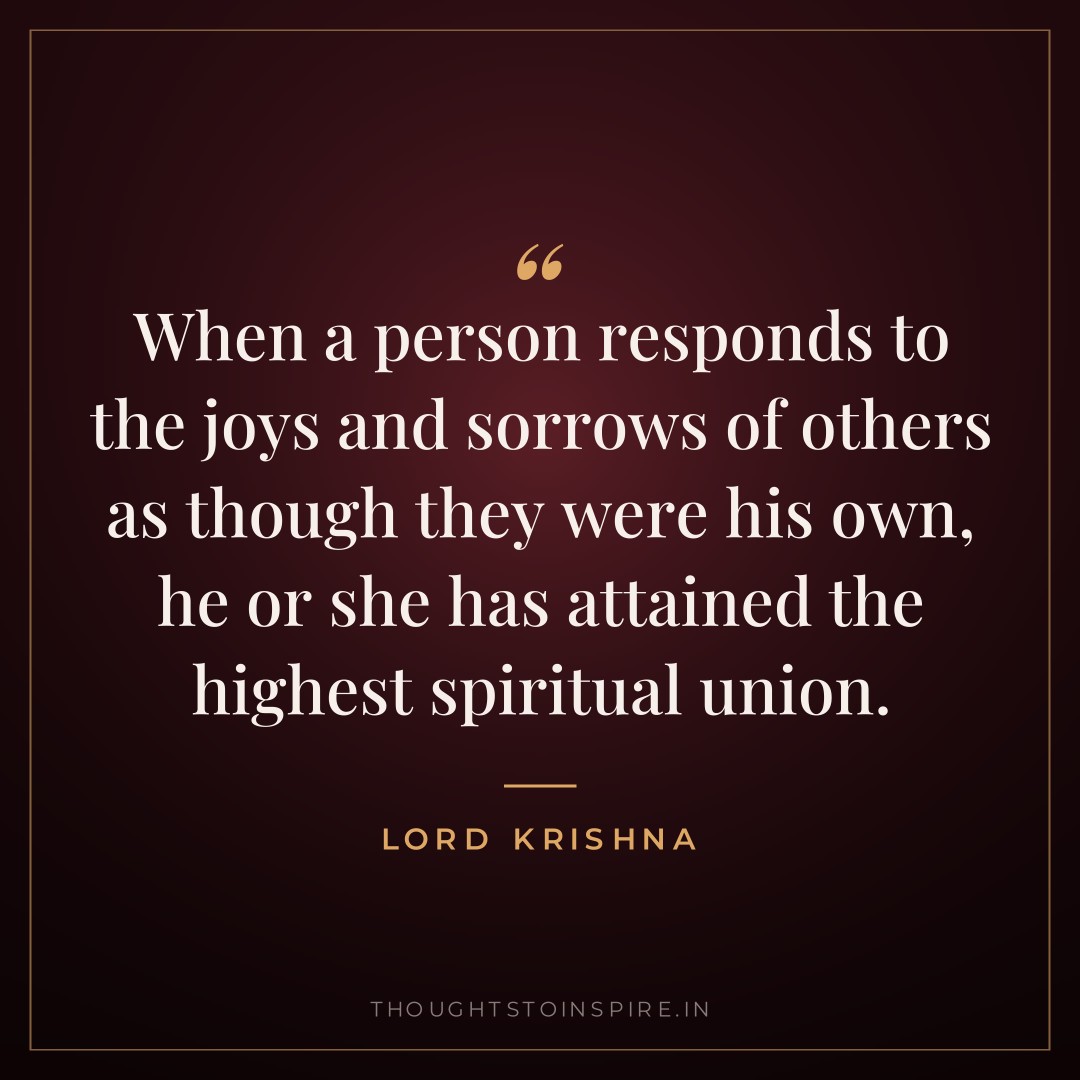
— Modern rendering associated with the Bhagavad Gita; not a translation of any specific verse
About this quote
हिन्दी में
जो दूसरों के सुख-दुख को अपना ही सुख-दुख मानकर महसूस करता है, वही सर्वोच्च योग को प्राप्त कर चुका है।
What it means
This line moves the summit of spiritual life out of private experience. Union is not certified by trance, solitude or ritual accuracy but by one specific capacity: another person’s loss registering in you the way your own does, without the intervening step of deciding to care.
Note how strict as though they were his own is. Sympathy performed as duty does not meet the test — the claim is that at the highest point the boundary between self and other has thinned, so the response is not generous but automatic. That makes it a criterion you can check rather than a state you can announce.
What it teaches you
Use it as a test on yourself rather than a goal to declare: when someone near you is promoted or bereaved, notice whether your first movement is a feeling or a calculation about what it means for you. Watching that gap honestly is the practice, and hours of sitting do not substitute for it.
अर्थ और सीख
यह पंक्ति सर्वोच्च योग को ध्यान, एकांत या कर्मकांड से नहीं, बल्कि एक खास क्षमता से जोड़ती है — दूसरे का सुख-दुख आपके भीतर वैसे ही महसूस हो जैसे अपना। शर्त कड़ी है, क्योंकि कर्तव्य समझकर दिखाई गई सहानुभूति इसमें नहीं गिनी जाती। सीख यह है कि इसे उपलब्धि की तरह न कहिए, कसौटी की तरह बरतिए: किसी अपने के सुख या दुख की खबर पर आपकी पहली हरकत भावना है या हिसाब?
Where it comes from
This is a popular modern rendering associated with the Bhagavad Gita rather than a literal translation of a specific verse. The Gita — Krishna’s dialogue with Arjuna within the Mahabharata — reaches most readers today through such free renderings.
For word-for-word translations with chapter-and-verse citations, see the sourced Gita quotes on this site, drawn from Swami Swarupananda’s 1909 public-domain translation.