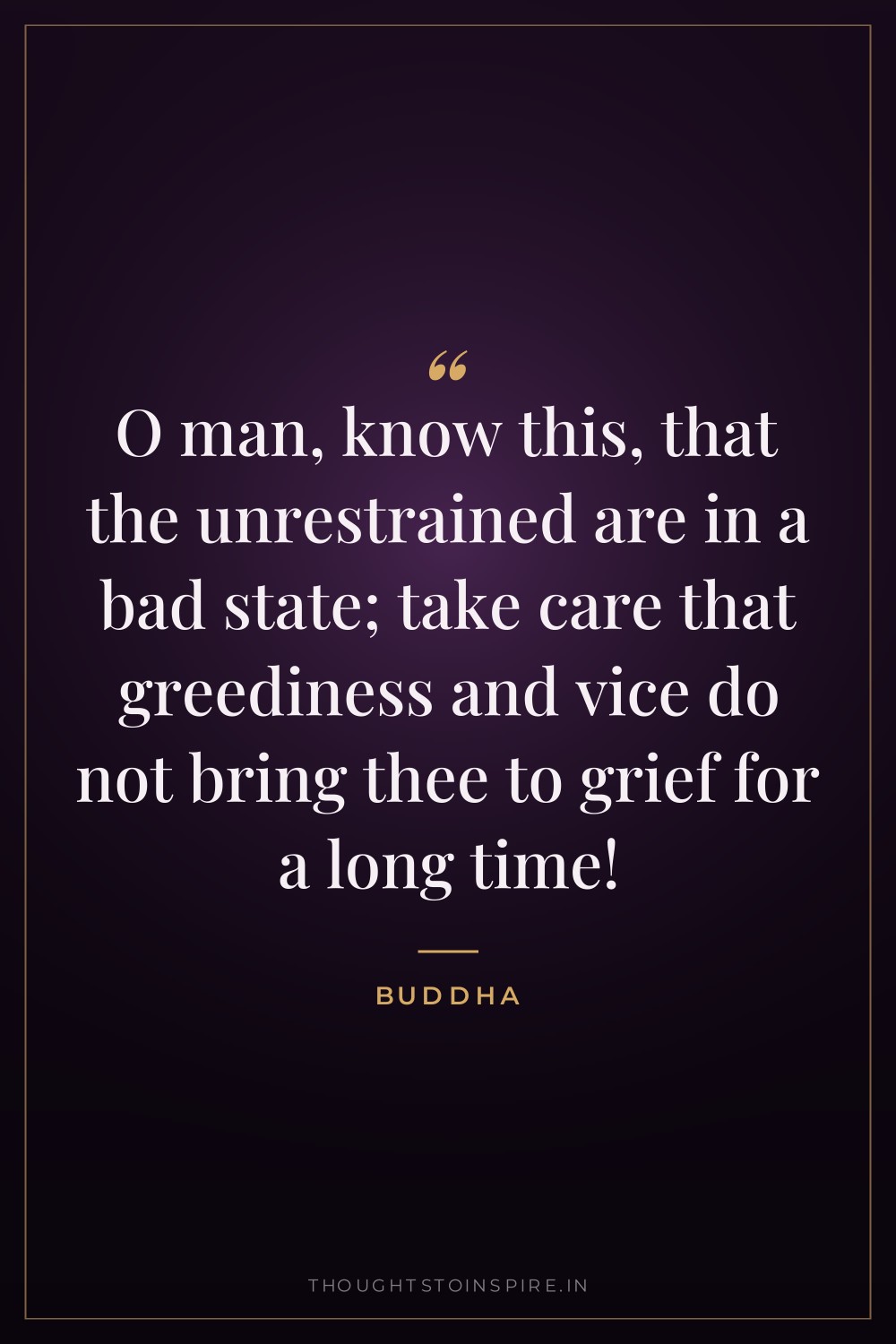
— The Dhammapada, verse 248 (tr. F. Max Müller, 1881)
About this quote
हिन्दी में
हे मनुष्य, यह जान ले कि असंयमी बुरी दशा में हैं; सावधान रह, कहीं लोभ और दुराचार तुझे लम्बे समय तक दुःख में न डाल दें।
What it means
This one is spoken at you, not about the world: O man, know this, and then take care. The diagnosis is not desire but the absence of restraint, and the unrestrained are said to be in a bad state already — a present condition, not a punishment waiting further along. Greediness and vice are the agents of the sentence; nothing external is described as doing the damage.
The measure the verse picks is time. Not that greed is shameful, not that it is forbidden, but that it can hold you in grief for a long time — the cost named is duration. That is a far more checkable standard than wickedness, and it is what keeps the line usable outside any devotional setting.
What it teaches you
Apply the verse’s own unit to a habit you keep arguing with yourself about: instead of asking whether it is bad, ask how long a single instance keeps producing consequences — an hour, a week, a decade of repair. Things that are mildly wrong and quick to recover from belong in a different category from things that are mildly wrong and keep running, and this line is only about the second kind.
अर्थ और सीख
यह श्लोक सीधे हे मनुष्य कहकर चेतावनी देता है — दोष इच्छा में नहीं, असंयम में है, और असंयमी पहले से ही बुरी दशा में है; यह आगे मिलने वाली कोई सज़ा नहीं। नुकसान करने वाले बाहर के लोग नहीं, ख़ुद लोभ और दुराचार बताए गए हैं। सबसे ख़ास बात यह कि यहाँ पैमाना पाप नहीं, समय है — लम्बे समय तक दुःख; इसलिए किसी आदत को परखते वक़्त पूछिए कि उसका असर कितनी देर चलता रहता है।
Where it comes from
This is verse 248 of the Dhammapada, from the chapter called Impurity — the impurities blown off little by little, as a smith purifies silver.
The Dhammapada is a collection of 423 verses in Pali, among the oldest and most widely read records of the Buddha’s teaching. This English translation is by F. Max Müller (1881), the pioneering Oxford scholar of Indian texts; the verse number is cited with this quote.