— Pride and Prejudice (1813), Chapter 5
About this quote
हिन्दी में
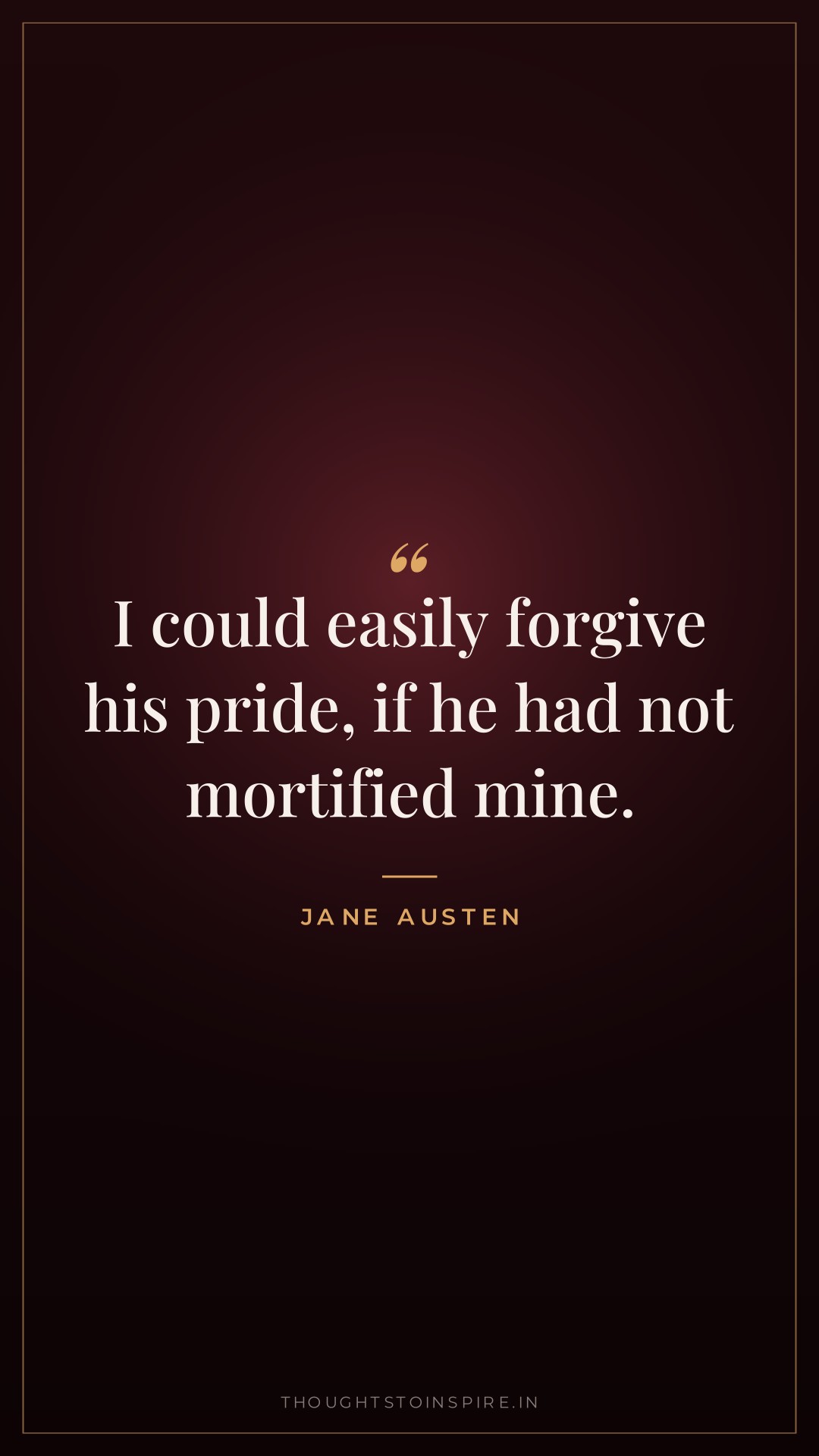
उनके घमंड को मैं आसानी से माफ़ कर देती, अगर उन्होंने मेरे घमंड को चोट न पहुँचाई होती।
What it means
The sentence is a forgiveness offered in a tense that cannot be redeemed. I could… if he had not — the condition is already unmet and unfixable, so the generosity is safe to extend. Austen lets the speaker sound magnanimous while conceding nothing, and the concession she does make is buried in the possessive: mine. Pride is not the charge. Pride at her expense is.
The word doing the damage is mortified, which is stronger than the occasion and was stronger then too — to mortify is to deaden or to kill off. Applied to a slight at a country assembly it is comic and exact at once: it is the scale of the wound as felt, not as inflicted. Quoted on its own the line reads as a tidy epigram about ego in general. In place it is narrower and more useful, because the speaker is describing her own injury while believing she is describing his character.
What it teaches you
Take your current list of reasons for disliking someone and test each item this way: would it still bother you if the same behaviour had been aimed at a stranger? The complaints that survive are about them; the ones that quietly collapse were about your standing. This will not make you like the person, but it tells you which objections you can raise out loud without giving yourself away — and which ones are the more revealing.
अर्थ और सीख
यह माफ़ी ऐसे काल में दी गई है जिसे पूरा किया ही नहीं जा सकता — ‘अगर उन्होंने न किया होता’ — यानी उदारता दिखती है, पर कुछ छोड़ना नहीं पड़ता। असली बात ‘मेरे’ शब्द में छिपी है: आपत्ति घमंड पर नहीं, अपने ऊपर पड़ी चोट पर है; और ‘mortified’ जैसा भारी शब्द बताता है कि चोट जितनी लगी, उतनी दी नहीं गई थी। सीख यह कि किसी के प्रति अपनी नापसंदगी की सूची जाँचिए — क्या यही बात तब भी खटकती, अगर वह किसी अजनबी के साथ हुई होती?
Where it comes from
Elizabeth Bennet, early in the novel, explaining exactly why Darcy irritates her. She is not objecting to pride in principle; she has plenty of her own. She objects to pride that costs her something.
The line is often used as a neat epigram about ego. In the book it is sharper than that — it is Elizabeth admitting, without quite meaning to, that her judgement of Darcy began as wounded vanity. The rest of the novel is her finding that out.