— Sense and Sensibility (1811), Chapter 19
About this quote
हिन्दी में
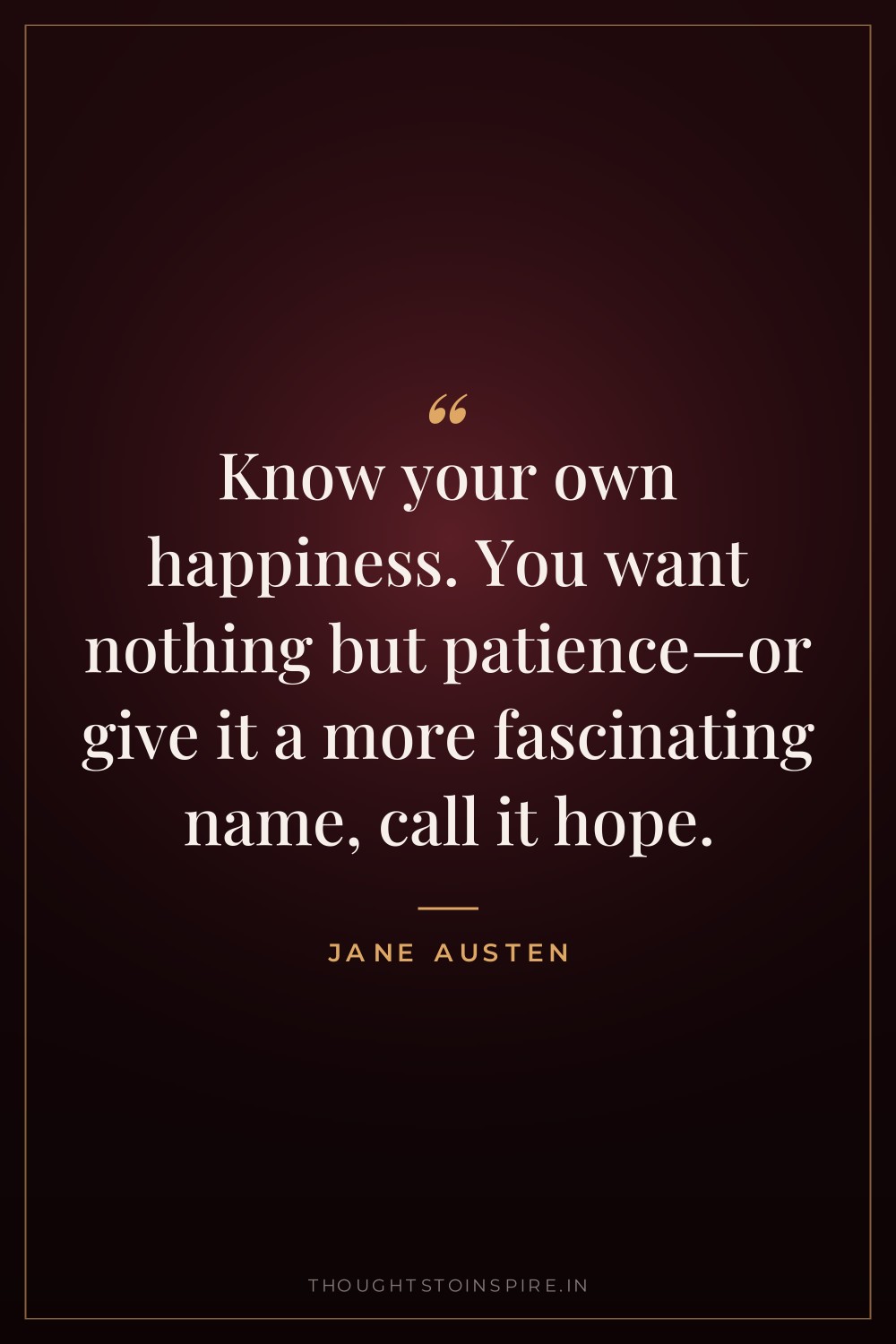
अपनी ख़ुशी को पहचानो। तुममें धैर्य के सिवा किसी चीज़ की कमी नहीं — या उसे कोई ज़्यादा लुभावना नाम दे दो, उसे उम्मीद कह लो।
What it means
Modern readers lose the first half to a shifted word. In 1811 you want nothing but patience means you lack nothing but patience — not that patience is all you desire. Read that way, the two sentences fit together: take an accurate inventory of what you already have, and you will find the only missing item is time served.
The second half is unusually honest for a consolation. Austen does not argue that hope is a different and better thing than patience; she offers the plain word first and then openly invites the swap — give it a more fascinating name. The speaker knows it is a relabelling and says so while doing it, which is why the line survives being quoted by people who have no idea what the wait was for.
What it teaches you
Before deciding what you are short of, do the count — most declarations of lack are made without one, and the phrase to watch for in yourself is if only I had, which almost never survives an actual list. And when you rename something to make it bearable, do what Austen does here: say out loud that it is the same thing under a better name, because a relabelling you can see through keeps working and one you have forgotten about does not.
अर्थ और सीख
यहाँ ‘want’ का पुराना अर्थ ‘कमी’ है — यानी ‘तुममें धैर्य के अलावा किसी चीज़ की कमी नहीं’, न कि ‘तुम सिर्फ़ धैर्य चाहते हो’। इसी से पहला वाक्य समझ आता है: पहले ठीक-ठीक गिनो कि तुम्हारे पास पहले से क्या है। और दूसरी बात की ख़ूबी यह है कि ऑस्टिन नाम बदलने को छिपाती नहीं — वह साफ़ कहकर धैर्य को ‘उम्मीद’ कहने को कहती है, और ऐसा नाम-बदलना, जिसे आप पहचानते हों, फिर भी काम करता है।
Where it comes from
Elinor Dashwood’s counsel — the steady sister in a novel built on the contrast between sense and sensibility. She is not promising that patience will be rewarded, only renaming it so it can be borne.
The second half is what makes the line last: calling patience ‘hope’ is not a trick, it is a way of surviving a wait you did not choose.