— Songs of Kabir, II.75 (tr. Rabindranath Tagore, 1915)
About this quote
हिन्दी में
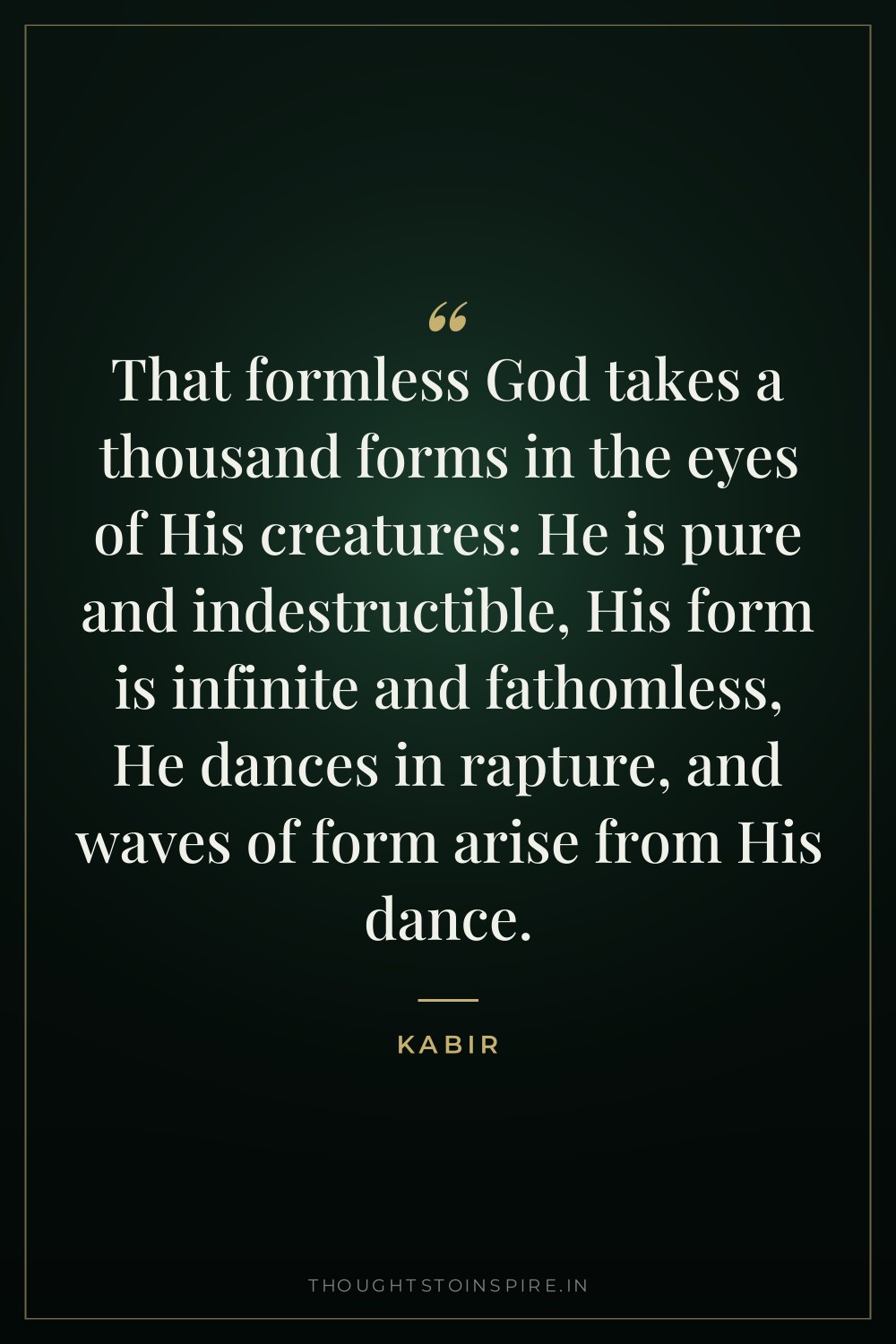
वह निराकार ईश्वर अपने जीवों की आँखों में हज़ार रूप धर लेता है: वह शुद्ध है और अविनाशी, उसका रूप अनंत और अथाह है; वह आनंद में नृत्य करता है, और उसके नृत्य से रूपों की लहरें उठती हैं।
What it means
The line sets down two claims that look like a contradiction — formless, and yet taking a thousand forms — and then supplies the image that dissolves it. The forms are waves thrown off a dance. A wave is real, and it is also nothing but water in motion: not a disguise, not a falsehood, simply something that does not last and was never separate from what it rose out of.
The placement of the multiplicity is the whole argument: the thousand forms are in the eyes of His creatures. The variety sits in the seers, not in what is seen. That is how one sentence manages to refuse to choose among the names people worship under, and also refuses to call any of them false.
What it teaches you
When you meet a form of devotion that is not yours — another name, another image, another book — the question this line hands you is not whether it is correct but what is moving underneath it. Kabir locates the difference in the eye rather than in the object, which means a dispute about the right image is a dispute about eyesight, and arguing harder about the image will not settle it.
अर्थ और सीख
कबीर दो बातें एक साथ कहते हैं — ईश्वर निराकार है, और वही हज़ार रूप धर लेता है — और नृत्य की उपमा से यह विरोध मिटा देते हैं: रूप लहरें हैं, जो सच्ची तो हैं पर पानी से अलग नहीं और ठहरती नहीं। ध्यान दीजिए कि हज़ार रूप ‘जीवों की आँखों में’ हैं, यानी भिन्नता देखने वाले में है, दिखने वाले में नहीं। सीख: किसी और की उपासना का रूप अलग दिखे तो झगड़ा रूप का नहीं, दृष्टि का है — और वह बहस से तय नहीं होता।
Where it comes from
From song II.75 of the Songs of Kabir.
Kabir (15th century) was a weaver of Benares whose songs mock every search for God outside one’s own heart; Hindus and Muslims both claimed him, and he refused both. This rendering is from Songs of Kabir, translated by Rabindranath Tagore (1915); the song number is cited with this quote.