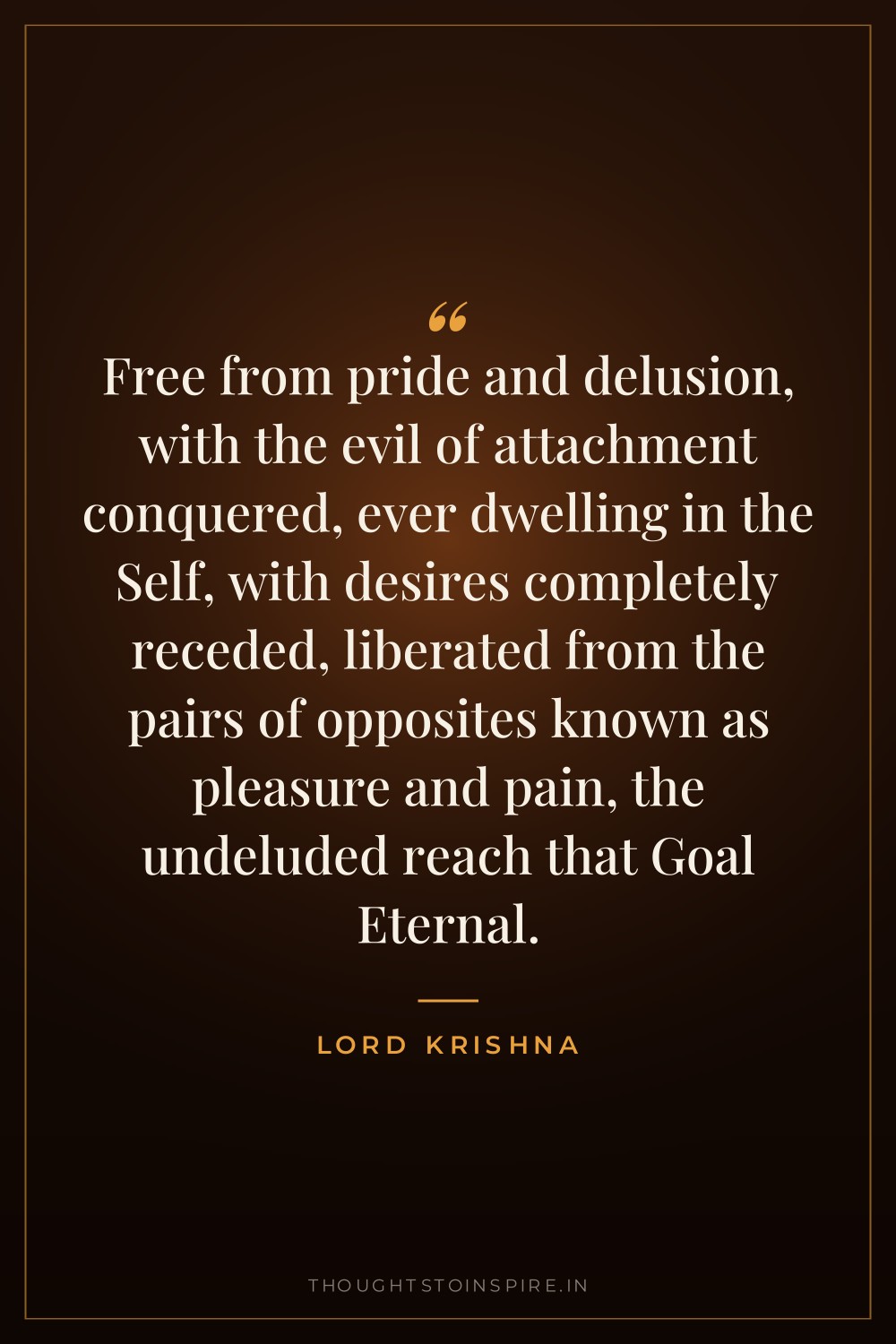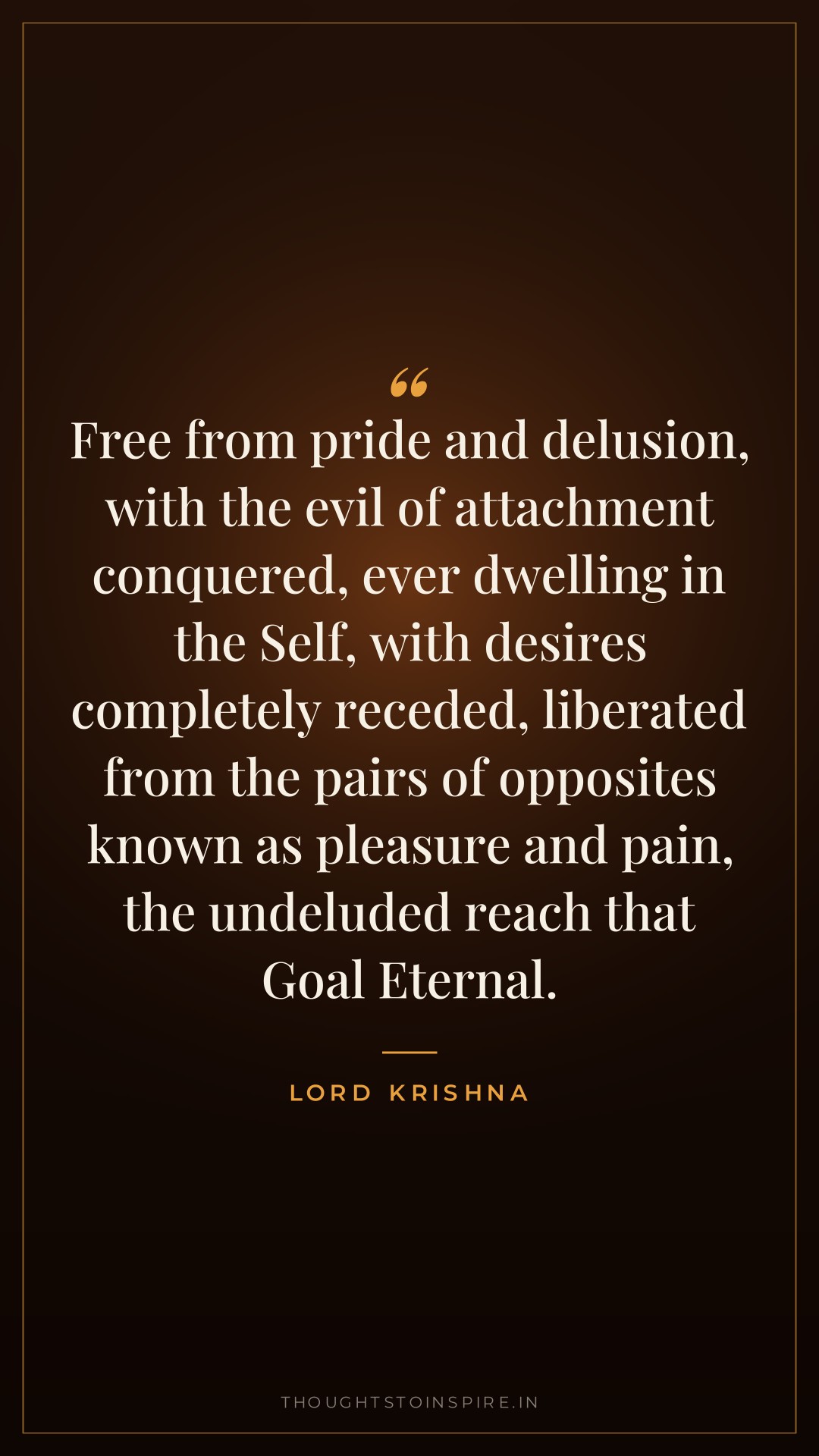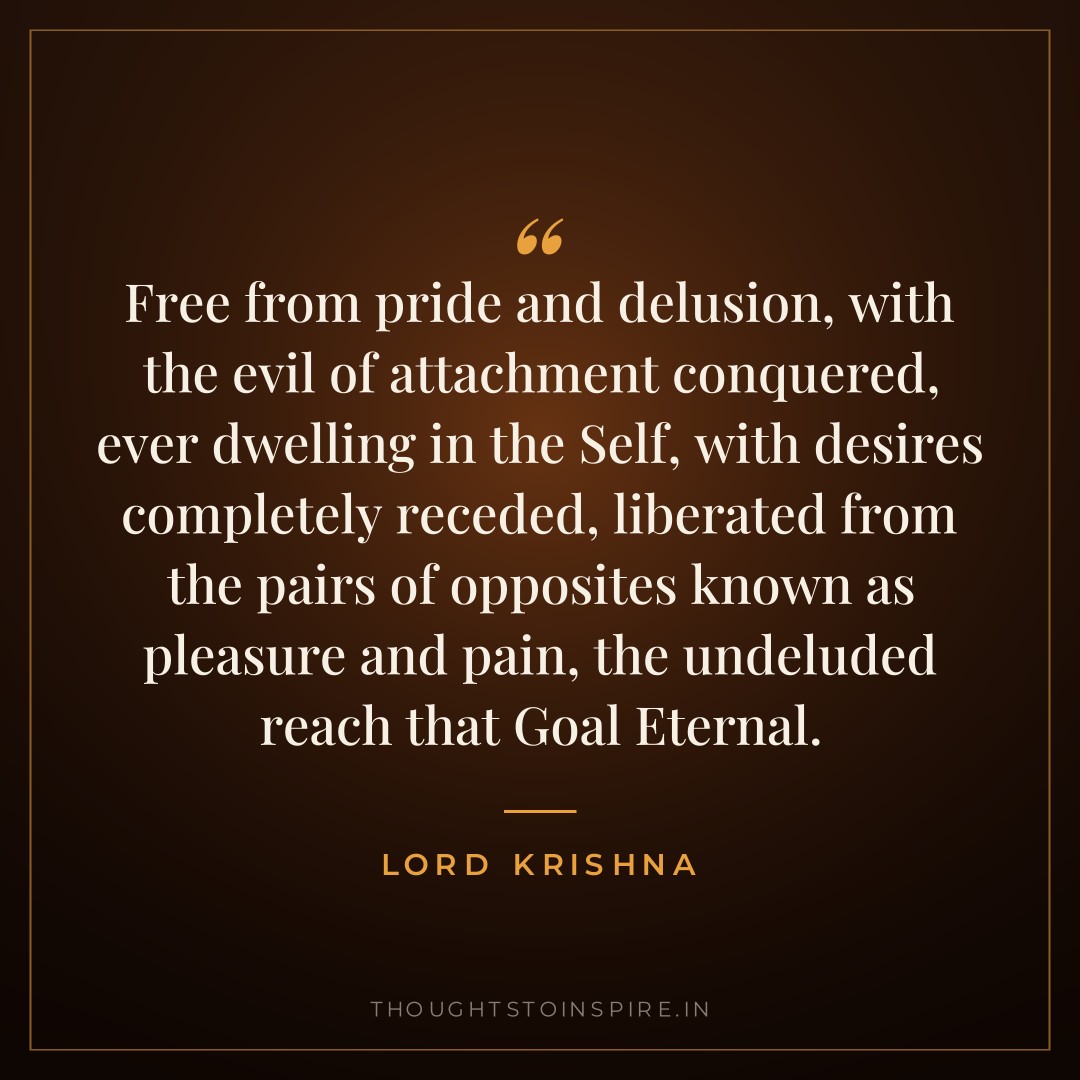
— Bhagavad Gita 15.5 (tr. Swami Swarupananda, 1909)
About this quote
हिन्दी में
जो मान और मोह से रहित हैं, जिन्होंने आसक्ति के दोष को जीत लिया है, जो निरंतर आत्मा में स्थित हैं, जिनकी कामनाएँ पूरी तरह शान्त हो चुकी हैं, और जो सुख-दुःख नामक द्वन्द्वों से मुक्त हैं—वे मोहरहित पुरुष उस अविनाशी परम पद को प्राप्त होते हैं।
What it means
Read the list and notice that almost every item is a subtraction: free from, conquered, receded, liberated from. Nothing is acquired — no vision, no power, no new feeling. The Goal at the end is not described at all; the verse spends its entire length on the conditions and leaves the destination blank.
Two words repay attention. Desires are said to have receded, not been crushed — the image is of something ebbing away on its own, which is a different account of progress than suppression. And the freedom claimed is from the pair of pleasure and pain, not from either one; what ends is the swing between them, not the capacity to feel.
What it teaches you
If you are measuring your own progress by what you have gained — insight, calm as an experience, a sense of advancement — this verse suggests the wrong instrument. What it describes shows up as absence: fewer occasions where you need to be right, a shorter recovery from a bad day, less swing between elation and flatness over the same week. Those are noticeable in a record kept over months and almost invisible day to day, which is the main practical reason to keep one.
अर्थ और सीख
इस श्लोक की पूरी सूची घटाव की है—मान, मोह, आसक्ति, कामना और सुख-दुःख के द्वन्द्व से मुक्ति; कुछ भी नया पाने की बात नहीं, और लक्ष्य का वर्णन तक नहीं किया गया। ध्यान दें कि कामनाएँ ‘दबाई’ नहीं, स्वयं शान्त हुई कही गई हैं, और मुक्ति सुख या दुःख से नहीं, दोनों के झूले से है। सीख यह है कि अपनी प्रगति को किसी नई अनुभूति से मत नापिए—नापिए इससे कि सही सिद्ध होने की ज़रूरत कितनी घटी और बुरे दिन से उबरने में कितना कम समय लगा।
Where it comes from
This verse comes from Chapter 15 of the Bhagavad Gita, Purushottama Yoga (The Supreme Person) — the cosmic fig tree of existence, and the Supreme Person beyond both the perishable and the imperishable.
The Bhagavad Gita — ‘the Song of the Lord’ — is the dialogue between Krishna and the warrior Arjuna set within the Mahabharata, and one of the most influential spiritual texts ever composed. English translation by Swami Swarupananda (1909), a public-domain rendering from the Sanskrit; the exact chapter and verse are cited with this quote.