— Divan-e-Ghalib, from the ghazal "hazaaron khwahishen aisi"
About this quote
देवनागरी
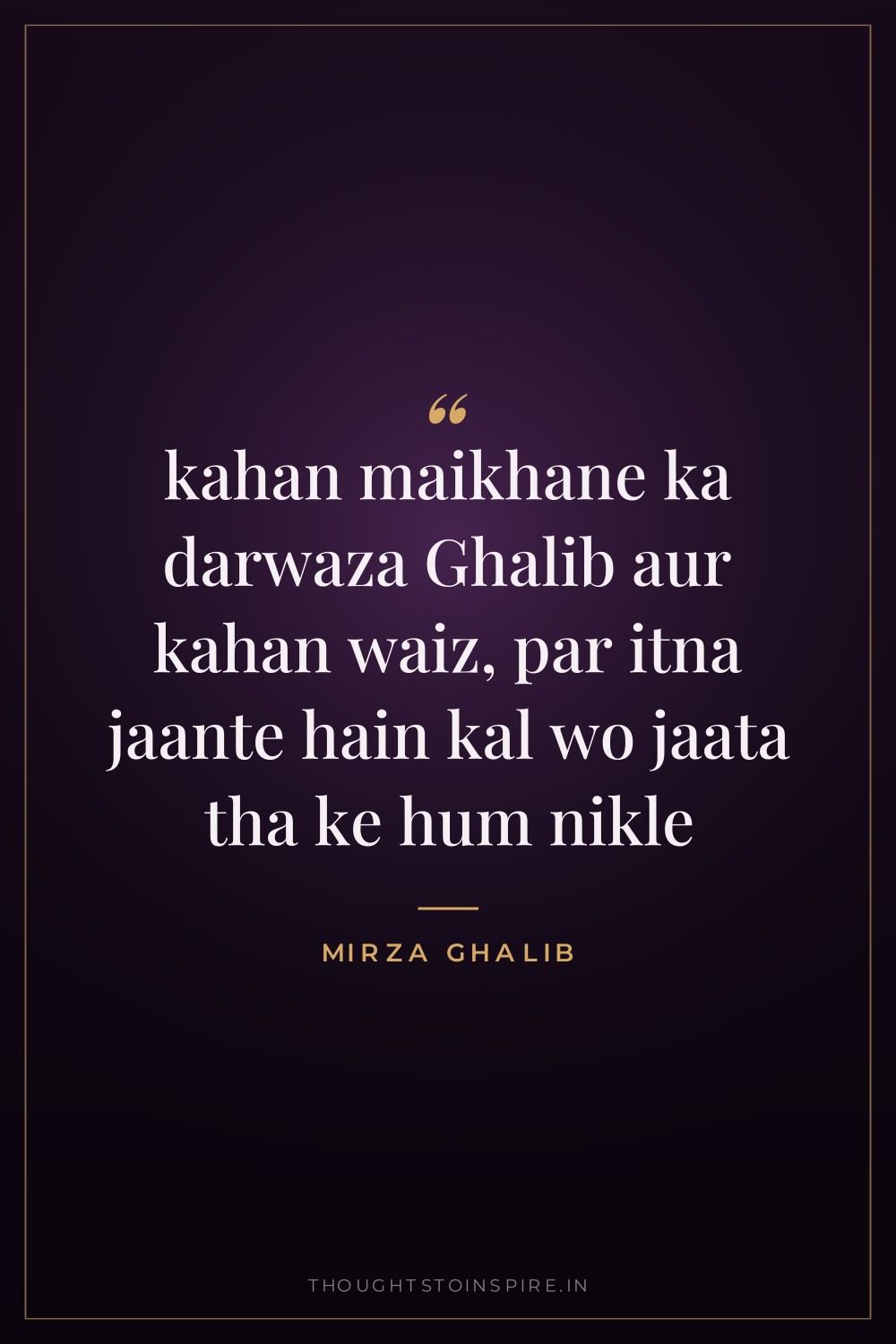
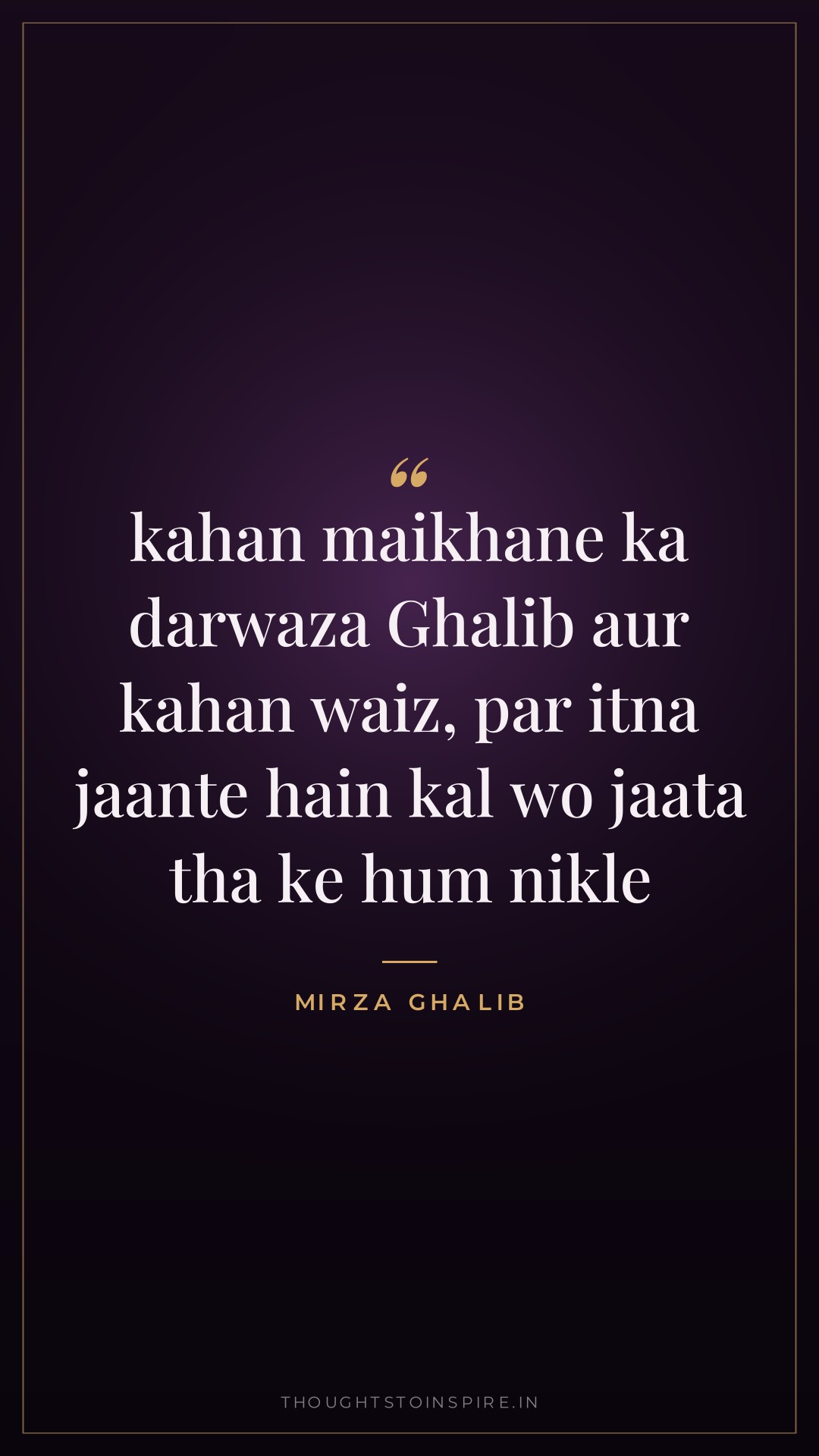
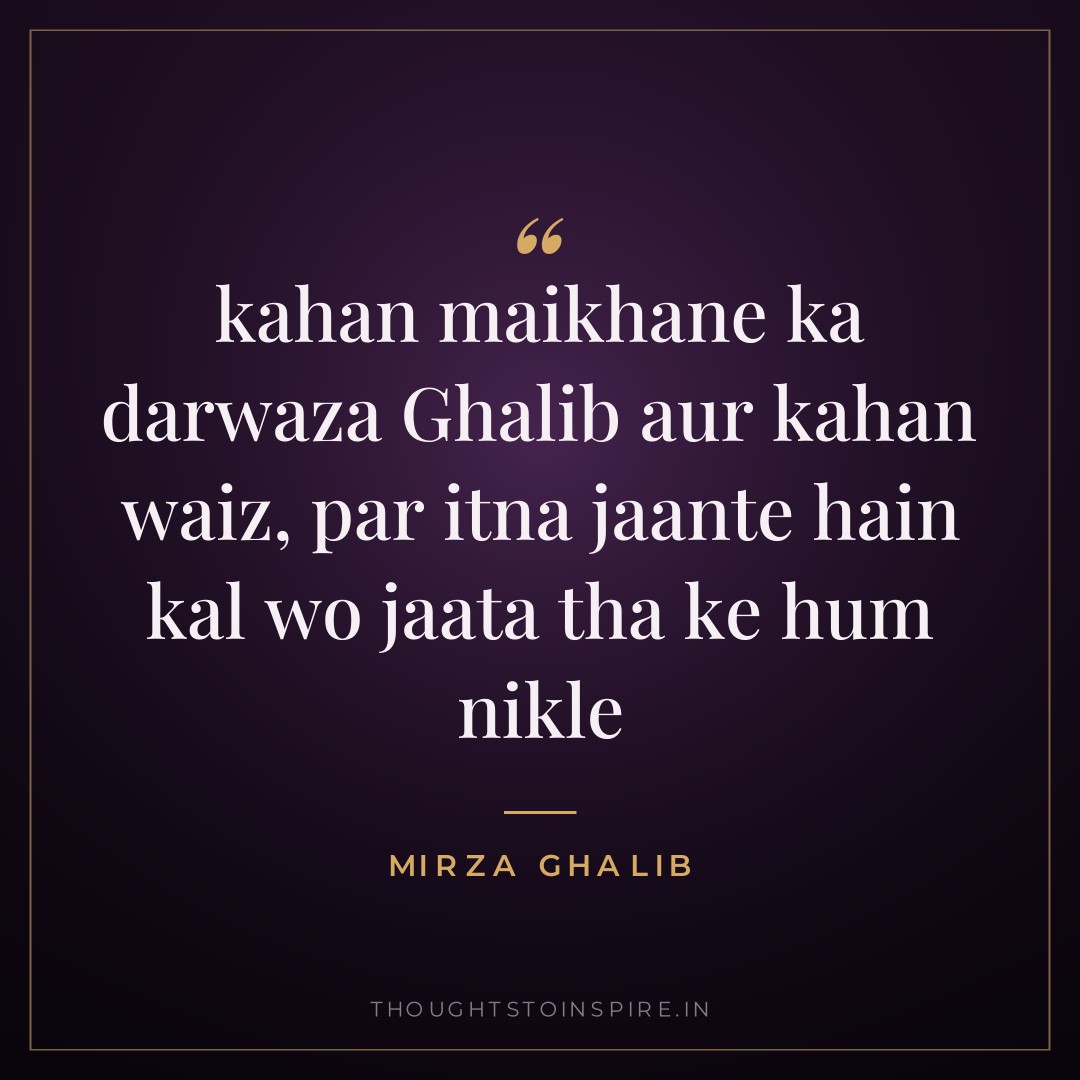
कहाँ मयख़ाने का दरवाज़ा ‘ग़ालिब’ और कहाँ वाइज़
पर इतना जानते हैं कल वो जाता था कि हम निकले
English
What business has the preacher at the tavern door, Ghalib? And yet — I do know I saw him going in, just as I came out.
What it means
Ghalib’s wit at its sharpest: the moraliser who condemns the tavern is spotted entering it. A two-line satire on hypocrisy that has never gone out of date.
The first line is not Ghalib’s opinion but the preacher’s own rhetoric borrowed and set up — kahan … aur kahan, the idiom of things that could never belong together — so the second line breaks a frame the moraliser built himself. The mechanics of the joke are in the timing: jaata tha ke hum nikle, he was going in as the poet was coming out, which quietly places the speaker inside the tavern too. And itna jaante hain, ‘this much I know’, is mock-legal caution: no charge is laid, only a sighting recorded. The couplet is usually read as the poet winning against the cleric, but he has put himself in the same doorway and made no accusation at all.
What it teaches you
When you catch someone’s double standard, report only what you saw and stop there. Ghalib lays out a time, a place and a direction of travel, offers no verdict, and the verdict arrives anyway — a stated fact does more damage than an argument, because there is nothing in it to dispute. The second discipline is harder: check where you were standing. He does not claim to have been anywhere respectable, which is what keeps the line witty instead of preachy.
अर्थ और सीख
जो वाइज़ (उपदेशक) मयख़ाने को बुरा कहता है, ग़ालिब उसे ही मयख़ाने में दाख़िल होते देख लेते हैं। पाखंड पर इससे तीखा व्यंग्य क्या होगा।
जब किसी का दोहरा चरित्र पकड़ में आए तो बस जो देखा वही कहिए, फ़ैसला सुनाना छोड़ दीजिए — देखी हुई बात अपने आप काफ़ी होती है। और यह भी याद रखिए कि आप भी उसी दरवाज़े पर खड़े थे।
Where it comes from
An authentic couplet from the Divan-e-Ghalib, the collected Urdu ghazals of Mirza Asadullah Khan Ghalib (1797–1869), from the ghazal beginning “hazaaron khwahishen aisi”. Transliteration and English rendering are our own.