— The Dhammapada, verse 50 (tr. F. Max Müller, 1881)
About this quote
हिन्दी में
दूसरों की कमियाँ नहीं, उनके किए हुए या न किए हुए पाप नहीं — ज्ञानी को तो अपने ही दोषों और अपनी ही लापरवाहियों पर दृष्टि रखनी चाहिए।
What it means
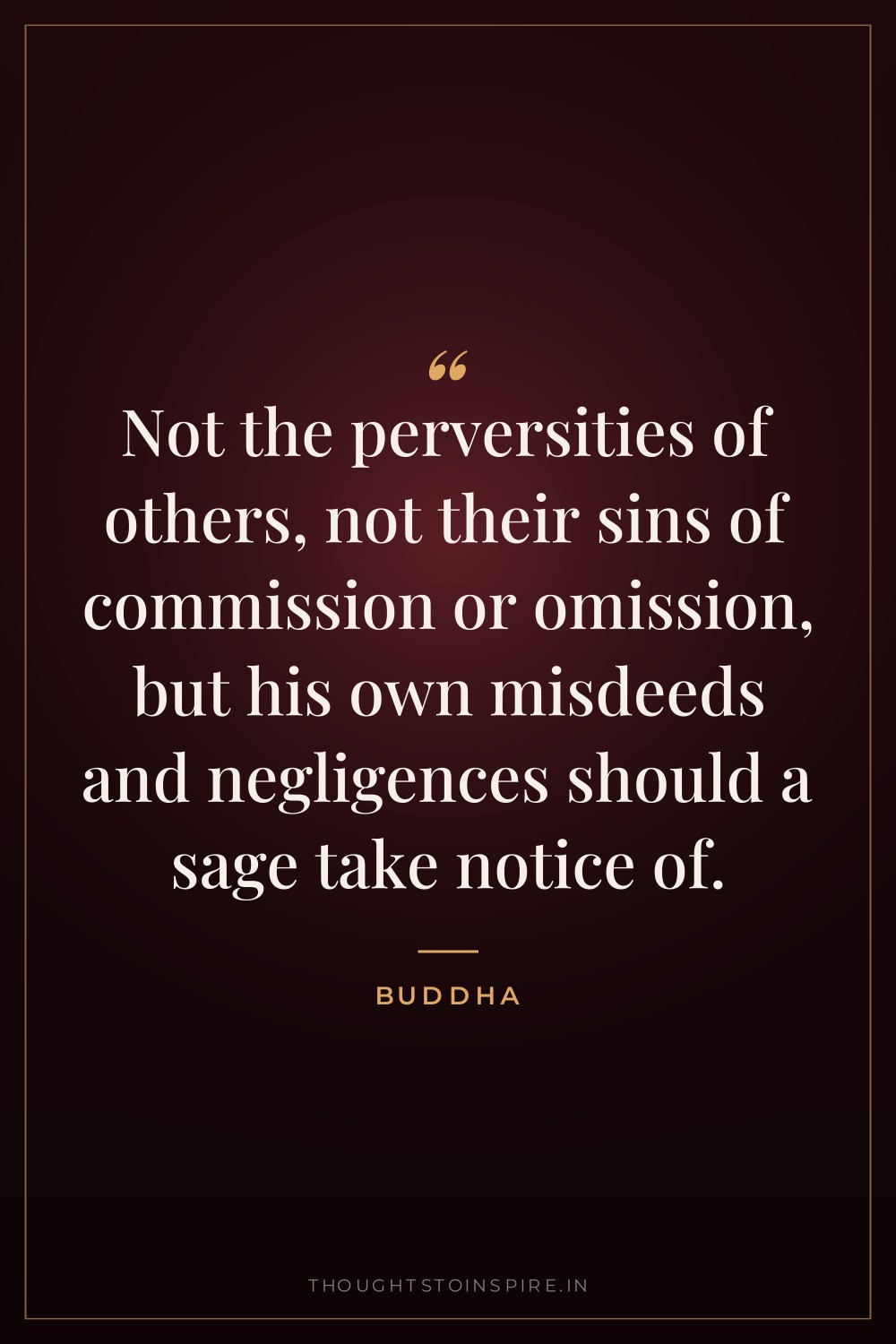
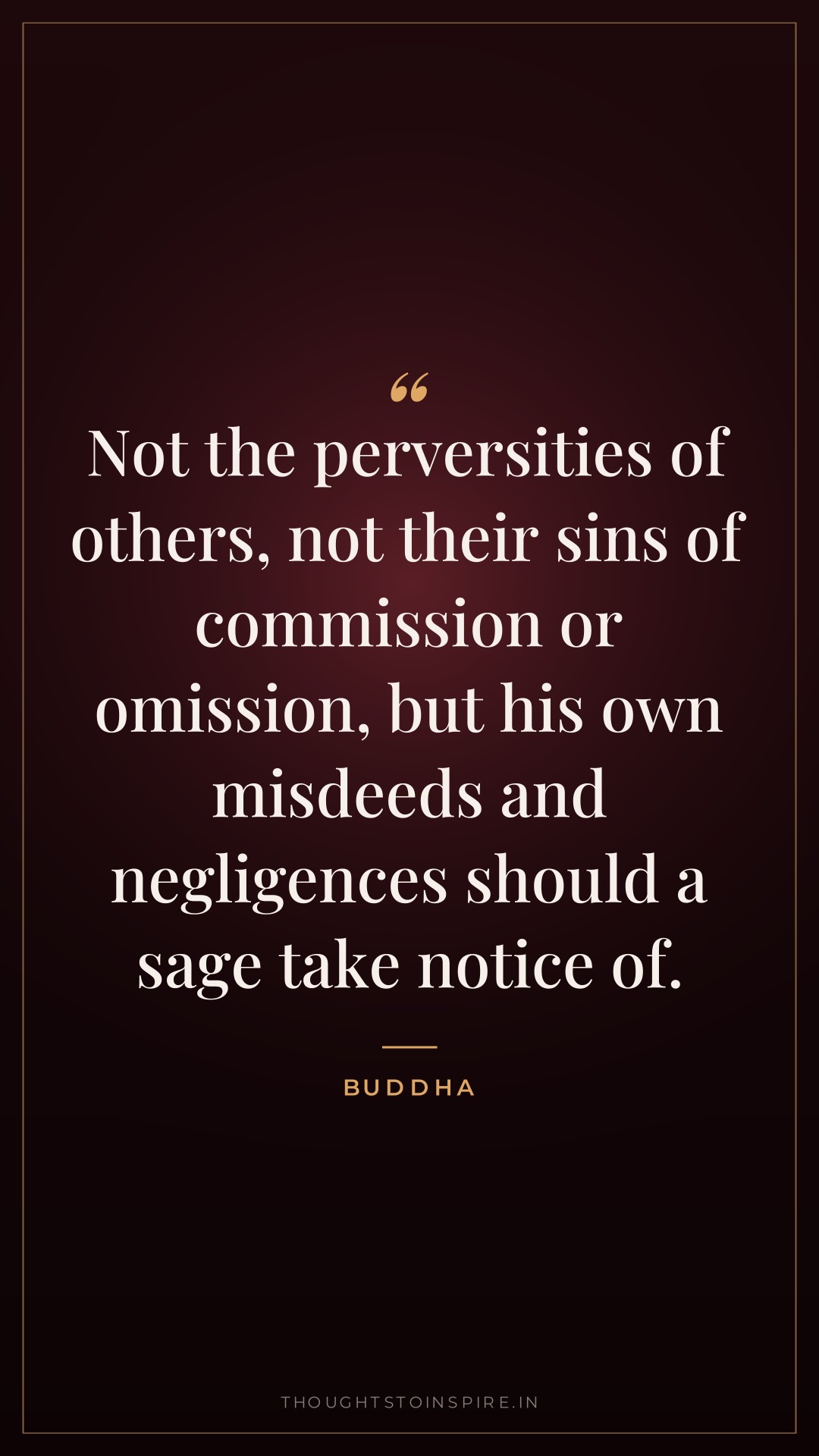
The sentence is built as a redirection of attention, and it is careful to make the two lists match. Others are credited with sins of commission and omission; the sage is told to watch his own misdeeds and negligences. The same two categories, the same completeness — only the direction of the gaze changes. What is forbidden is not judgement but the outward aim of it.
Notice what the line does not claim: it nowhere says that other people’s perversities are imaginary, or that their sins do not matter. It concedes the sins and still says do not take notice of them. The argument is about where a finite attention is spent, and the inclusion of negligences is what makes the self-audit hard — the things you failed to do leave no trace to stumble over.
What it teaches you
In any review of something that went wrong — a project post-mortem, an argument at home — write your own line of the account before you hear or offer anyone else’s, and include what you did not do: the call you never returned, the warning you noticed and let pass. Omissions will not surface on their own, so they have to be searched for deliberately.
अर्थ और सीख
यह पंक्ति कहती है कि ज्ञानी को दूसरों की कमियों और उनके किए या न किए हुए पापों पर नहीं, बल्कि अपने ही दोषों और अपनी ही लापरवाहियों पर ध्यान देना चाहिए। ध्यान दीजिए कि यह नहीं कहा गया कि दूसरों की गलतियाँ हैं ही नहीं — बात यह है कि आपका सीमित ध्यान किस ओर लगे। सीख यह है कि किसी भी गड़बड़ी की समीक्षा में पहले अपना हिस्सा लिखिए, और उसमें वह भी शामिल कीजिए जो आपने करना चाहिए था पर किया नहीं।
Where it comes from
Dhammapada, verse 50. The instruction runs directly against instinct: audit your own misdeeds and negligences, not your neighbour’s. In the surrounding verses the flower is the recurring image — a sage should move through the world as a bee through a garden, taking nectar without bruising the bloom.
Translation by F. Max Müller (1881).