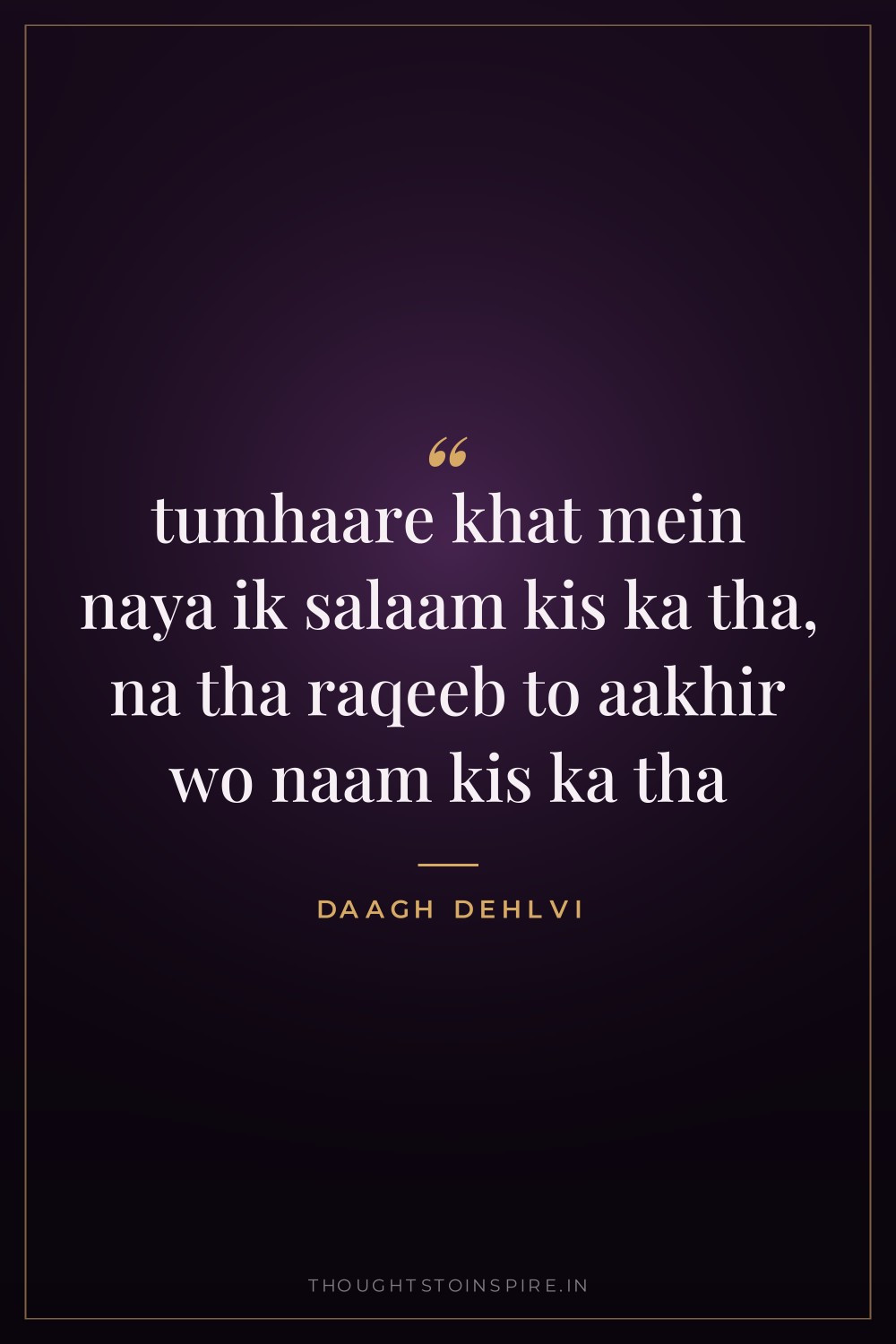
— from the ghazal beginning “tumhaare khat mein naya ik salaam kis ka tha”, Daagh Dehlvi (1831–1905)
About this quote
देवनागरी
तुम्हारे ख़त में नया इक सलाम किस का था
न था रक़ीब तो आख़िर वो नाम किस का था
اردو
تمہارے خط میں نیا اک سلام کس کا تھا
نہ تھا رقیب تو آخر وہ نام کس کا تھا
English
Whose was that new greeting in your letter? If there was no rival, then whose name was that?
What it means
Jealousy conducted as cross-examination, and the couplet has aged unnervingly well — replace the letter with a phone and nothing else needs changing. Daagh gives the speaker no dignity and no doubt, which is why it is funny.
What it teaches you
The tell is the question mark. Both lines are shaped as enquiry, but the speaker has already tried the case — na tha raqeeb to aakhir wo naam kis ka tha supplies the verdict and then invites the accused to explain it away. Use that as a check on yourself: when you find you have collected an item of evidence, rehearsed it, and are now producing it as an innocent question about a message or a name, you are not asking, you are prosecuting, and the other person will hear it correctly even if you do not. If you genuinely want to know something, ask it without the evidence attached. If you have already decided, say that instead, and own it.
अर्थ और सीख
ख़त में एक नया सलाम किसका था? रक़ीब नहीं था तो वो नाम किसका था? शक की जिरह — आज ख़त की जगह फ़ोन रख दीजिए, शेर वैसा ही चलेगा।
यह शेर सवाल की शक्ल में मुक़दमा है — नाम का सबूत पहले रख दिया गया है, फिर सफ़ाई माँगी जा रही है। अगर आप सचमुच जानना चाहते हैं तो सबूत जोड़े बिना सीधा पूछिए; और अगर फ़ैसला कर ही चुके हैं तो उसे सवाल का भेस मत पहनाइए।
Where it comes from
Verified against the collected work of Daagh Dehlvi (1831–1905) on Urdu Wikisource, in the poem beginning تمہارے خط میں نیا اک سلام کس کا تھا (source). Devanagari transliteration and English rendering are our own.