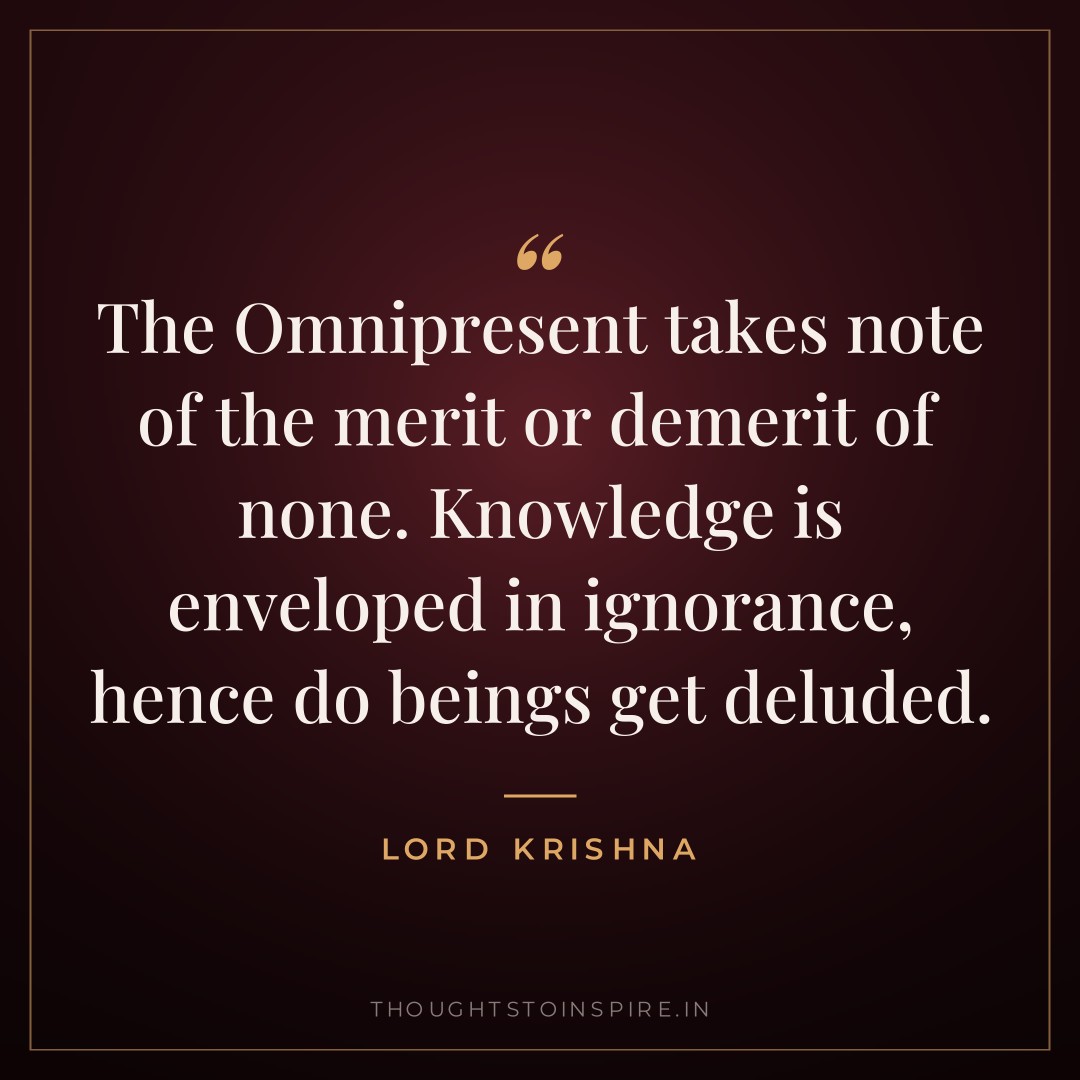
— Bhagavad Gita 5.15 (tr. Swami Swarupananda, 1909)
About this quote
हिन्दी में
सर्वव्यापी प्रभु न किसी का पाप लेते हैं, न किसी का पुण्य। ज्ञान अज्ञान से ढका हुआ है, इसीलिए प्राणी मोह में पड़ जाते हैं।
What it means
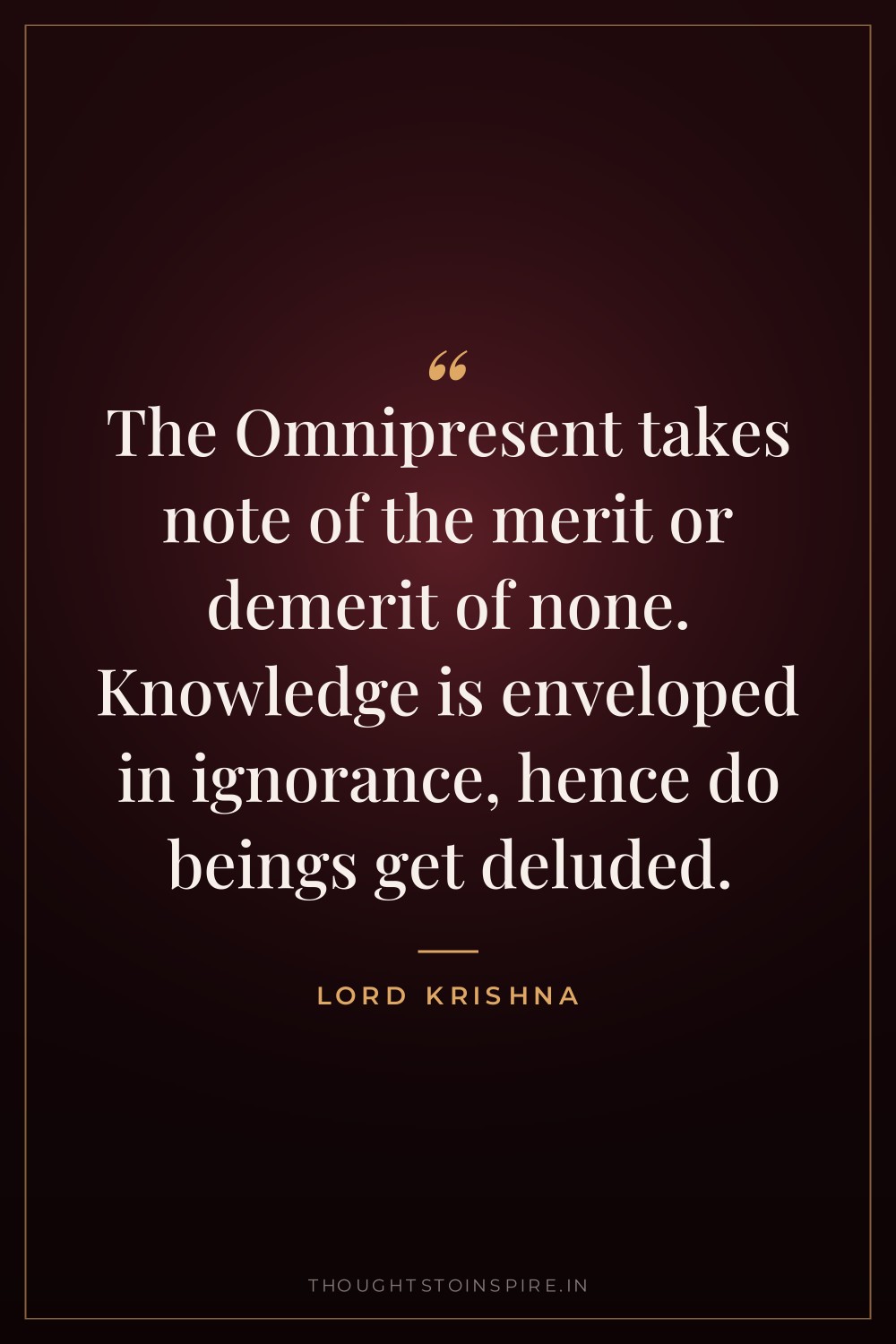
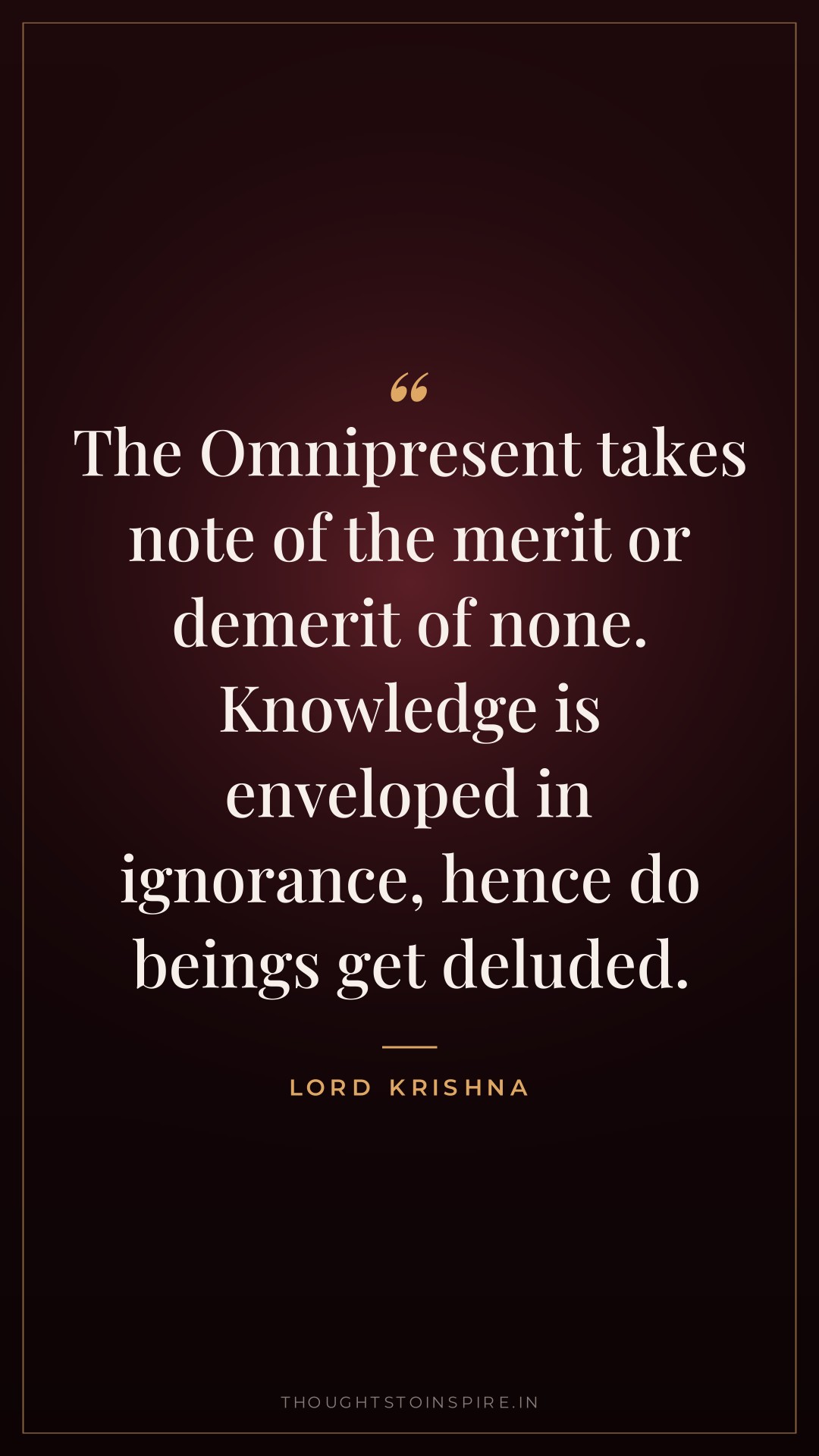
This is one of the bluntest statements in the chapter, and it cuts straight across the everyday picture of God as a scorekeeper. The Omnipresent, it says, takes note of no one’s merit or demerit. Whatever follows from action, the verse declines to describe it as a ledger being maintained by someone above.
The second sentence explains why the ledger nevertheless feels so real: knowledge is enveloped in ignorance, and beings are deluded by that covering. Note the direction of that argument — the trouble is not that we lack knowledge but that what we have is wrapped up. Read as half a verse it becomes a comfortable thought, that misdeeds go unnoticed; the other half says the very sense of being judged and rewarded is one of the things the covering produces.
What it teaches you
When something goes well or badly, watch for the reflex that reads it as a verdict — rewarded for good conduct, punished for a lapse. This verse withdraws that interpretation, which puts the work of understanding what actually happened back on you and on the real chain of causes. It also reframes ignorance as a covering over knowledge rather than an empty space, which makes the task one of uncovering rather than of acquiring.
अर्थ और सीख
यह श्लोक सीधे कहता है कि सर्वव्यापी प्रभु न किसी का पाप अपने ऊपर लेते हैं, न पुण्य — ऊपर कोई बहीखाता नहीं लिखा जा रहा। फिर ऐसा लगता क्यों है? क्योंकि ज्ञान अज्ञान से ढका हुआ है, और उसी परदे से मोह पैदा होता है। सीख यह है कि हर सुख-दुख को इनाम या सज़ा मानना छोड़ें, और अज्ञान को खालीपन नहीं, एक परदा समझें जिसे हटाना है।
Where it comes from
This verse comes from Chapter 5 of the Bhagavad Gita, Karma Sannyasa Yoga (The Yoga of Renunciation) — the reconciliation of renunciation and action: both lead to freedom, but acting without attachment is the more practical path.
The Bhagavad Gita — ‘the Song of the Lord’ — is the dialogue between Krishna and the warrior Arjuna set within the Mahabharata, and one of the most influential spiritual texts ever composed. English translation by Swami Swarupananda (1909), a public-domain rendering from the Sanskrit; the exact chapter and verse are cited with this quote.